
Caterpillar — the larval stage of butterflies and moths
Caterpillars are the soft-bodied larval stage of butterflies and moths. This article explains their appearance, life cycle, diet, defenses, ecological role and interactions with people.
A caterpillar is the juvenile, wormlike stage in the life cycle of a butterfly or moth. After an adult insect lays an egg, the young insect that emerges is a caterpillar, a type of larva specialized for growth and feeding. Depending on the species, that larva will later transform into a pupa (often called a chrysalis in butterflies) before emerging as a winged adult—either a butterfly or a moth. The caterpillar stage is primarily devoted to eating and storing energy needed for metamorphosis.
Image gallery
10 Images


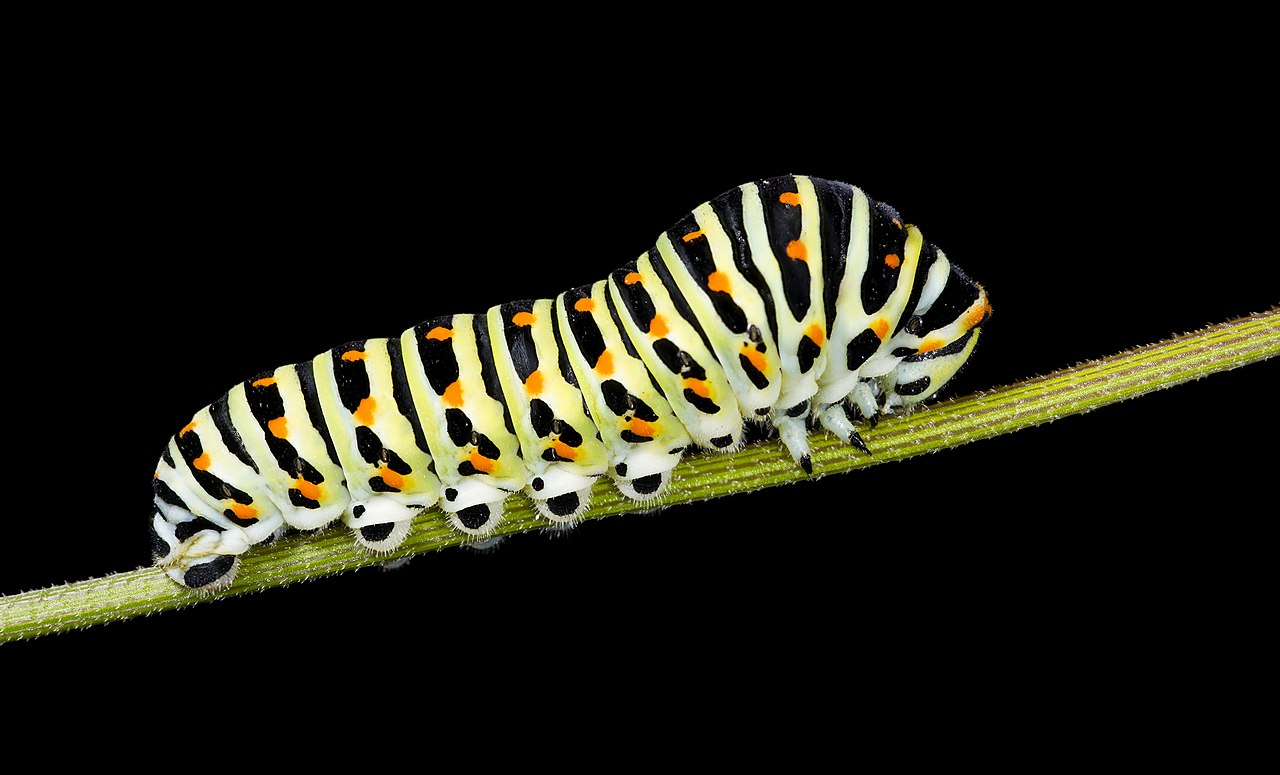


Appearance and anatomy
Caterpillars vary widely in size, shape and color, but share a common body plan. Their bodies are segmented and typically bear both true legs and prolegs. True legs are jointed appendages near the head; prolegs are fleshy, adhesive stubs toward the rear that help the animal grip surfaces. Many caterpillars have simple eyes (ocelli), chewing mouthparts, and short antennae.
- True legs: three pairs near the thorax used for walking and manipulating food.
- Prolegs: up to five pairs of stubby, muscular pads that aid in clinging to plants.
- Setae and scales: fine hairs or flattened scales that can be sensory or defensive.
- Spiracles: small openings along the body for breathing.
Life cycle and behavior
Caterpillars hatch from an egg and pass through several growth stages called instars. Each instar ends when the caterpillar sheds its outer skin (molts). Between the final larval stage and adulthood it enters the pupal stage, during which the body is reorganized into the adult form. Many species are solitary feeders, while others feed in groups. Feeding habits are often highly specific: some caterpillars eat a narrow range of host plants, while others are more generalist.
Diet, ecology and importance
Most caterpillars are herbivores and consume leaves, stems, flowers or roots. Their feeding can influence plant communities and they are a key food source for birds, small mammals, reptiles and predatory insects. Caterpillars also help recycle nutrients when they consume decaying plant matter in some ecosystems. Because of their high nutritional value, they are crucial links in many food webs.
Defenses and adaptations
To survive heavy predation, caterpillars have evolved a broad set of defenses. These include cryptic coloration that blends with foliage, bright warning colors that advertise toxicity, hair-like setae that irritate predators, and chemical defenses derived from their diet. Some species mimic twigs, bird droppings, or even other animals to avoid detection. Others display sudden movements or produce sounds when threatened.
- Camouflage: colors and shapes that reduce detection.
- Aposematism: warning colors indicating noxious chemicals.
- Mechanical defenses: spines or irritating hairs.
- Behavioral tactics: dropping off plants, thrashing or regurgitating.
Human interactions and notable facts
Caterpillars can be beneficial and problematic. Many species are celebrated by gardeners and naturalists for their role in producing butterflies and moths, while others are regarded as agricultural or household pests because they defoliate crops, feed on stored products or damage textiles. Some caterpillars are used in scientific research and education to demonstrate metamorphosis; others are even harvested as food in some cultures. Conservation of caterpillar habitats supports adult pollinators and overall biodiversity.
For further general information on the adult forms and developmental stages, see resources about butterflies and moths: butterflies, moths, and detailed entries on eggs and larval biology available through specialist guides and databases listed here: eggs, larval stages, pupae, chrysalises and pest management overviews pest control.
Questions and answers
Q: What is a caterpillar?
A: A caterpillar is a young butterfly or moth that has just hatched out of its egg.
Q: What is a pupa?
A: A pupa is the stage in which a caterpillar transforms into a butterfly or moth.
Q: How many legs do caterpillars have?
A: Caterpillars usually have three pairs of small, but noticeable, true legs at the front and up to 5 pairs of fleshy false legs at the back.
Q: What do caterpillars eat?
A: Caterpillars are commonly found feeding on leaves, but they are also found inside living stems and branches or on the roots of plants and dead wood.
Q: What colors are most caterpillars?
A: Most caterpillars are shades of green or brown and are relatively hairless, although in many families caterpillars are very hairy and often brightly coloured.
Q: What are some things that certain species of caterpillars can damage?
A: Some species are pests of growing plants, carpets, woollens, organic fabrics and stored food products.
Q: What role do caterpillars have in nature?
A: Caterpillars are an important source of food for birds and other invertebrates and many species help dead animals and plants decompose.
Tags
Related articles
Author
AlegsaOnline.com Caterpillar — the larval stage of butterflies and moths Leandro Alegsa
URL: https://en.alegsaonline.com/art/17610