
Parish: Local Church Community and Ecclesiastical Territory
A parish is the basic local unit of Christian pastoral care — a territory and community served by a church and its minister, found in many denominations with varied history and civil roles.
Overview
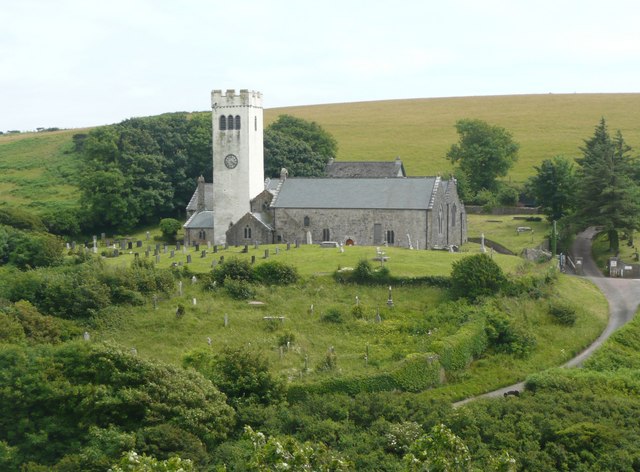
A parish commonly denotes both a geographical area and the community of people served by a particular church. Historically the parish defined the territory for which a single priest or minister had pastoral responsibility; today it continues to function as the principal unit of local worship, sacramental life and pastoral care in many Christian traditions. The area served by a church is often described with the phrase served by a church, while the community of believers associated with that place is usually called its congregation or parish community.
Image gallery
5 Images


Denominational use and leadership
Several major Christian communions maintain parishes as an organizational element. The term is central to the Church of England and the wider Anglican Communion, and is also used in the Eastern Orthodox Church, the Roman Catholic Church, many Lutheran churches and in some Presbyterian and Methodist contexts. In each setting a priest or pastor — variously called a priest or a minister — is normally charged with the spiritual care of the parishioners, often summarized as responsibility for the souls within the territory. In common usage the person caring for the parish is also described as the parish minister of the congregation.
Structure and relationship to wider church administration
Parishes are typically the lowest tier of ecclesiastical administration. Several parishes together form a deanery or comparable district; those districts are grouped into a diocese or episcopal see overseen by a bishop. In many denominations a diocese is the principal regional unit, led by a Bishop, and a parish is a constituent subdivision of that structure. Administrative details vary: some parishes have a single church building as a focus, others include multiple worship sites and associated properties.
Common features and functions
- Pastoral care: conducting services, preaching, visiting the sick and care for families.
- Sacraments and rites: baptisms, marriages, funerals and regular worship services.
- Community life: education, charitable activities, outreach and social gatherings.
- Records and administration: many parishes keep registers of baptisms, marriages and burials and manage local church property.
Historical development
The parish system emerged in late antiquity and took shape in the Middle Ages as Christianity developed stable local institutions. Over centuries the parish served both religious and social functions: it organized care, delivered religious instruction and often provided a framework for local identity. Reformations, the rise of national churches and later moves toward secular local government changed parish roles in some countries, but the basic idea — a defined local community under a single pastoral charge — has persisted across traditions.
Variations and civil uses
In some places, particularly parts of the United Kingdom and former British territories, the term "parish" has a civil meaning as well as an ecclesiastical one. A civil parish is a unit of local government responsible for secular services and local administration, and it may or may not correspond exactly to an ecclesiastical parish. Elsewhere, parishes differ in size and scope: urban parishes may be small and densely populated, while rural parishes often cover wide territories with scattered settlements.
Notable distinctions and modern considerations
Important distinctions include the difference between the territorial parish (a mapped area) and the congregational sense (the people affiliated with a church). Modern challenges for parishes include demographic change, clergy shortages in some regions, and adapting buildings and ministries to contemporary needs. Nevertheless, parishes remain central to the local expression of many Christian churches, serving as the primary point of contact between individuals and organized ecclesiastical life.
For further reading on specific national or denominational arrangements, see resources on the Church of England, the Anglican Communion, the Eastern Orthodox tradition, Lutheran practice, Presbyterian governance, and the role of clerical leaders such as the priest, minister and other pastoral figures. Institutional terms like "diocese" and titles such as "Bishop" remain useful for understanding how parishes relate to larger church structures, while everyday parish life is lived out in congregations and communities across regions and nations.
Related articles
Author
AlegsaOnline.com Parish: Local Church Community and Ecclesiastical Territory Leandro Alegsa
URL: https://en.alegsaonline.com/art/74685