
Parasaurolophus: the crested hadrosaur of Late Cretaceous North America
Parasaurolophus, a genus of crested hadrosaurid, is known for its long tubular skull crest. This article outlines its anatomy, crest hypotheses, fossil history, ecology and significance.
Overview: Parasaurolophus is a genus of lambeosaurine hadrosaurid dinosaur known for an elongated, hollow cranial crest that projected backward and upward from the skull. It lived in what is now western North America during the Late Cretaceous and was an herbivore capable of walking on two or four limbs. Fossil remains are comparatively uncommon, so many aspects of its biology are inferred from related hadrosaurs and the structure of its skull.
Image gallery
10 Images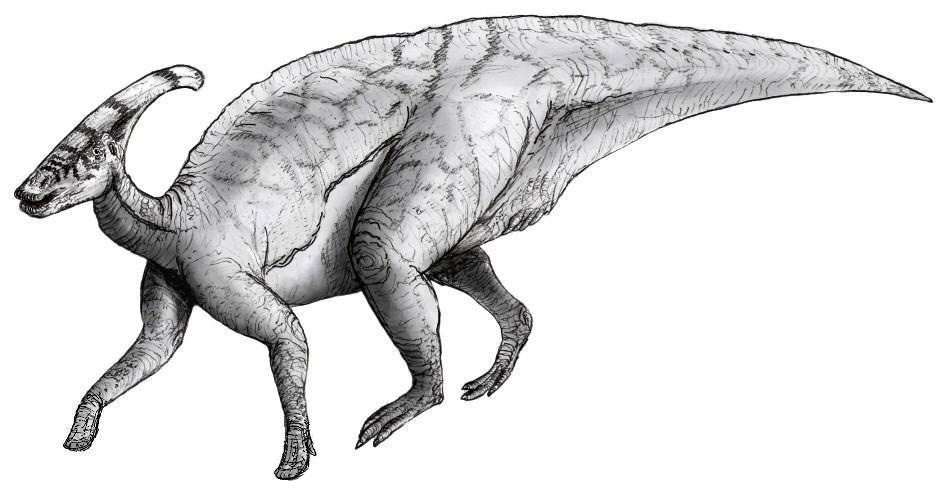


Anatomy and distinguishing features
Parasaurolophus combined the typical features of duck-billed dinosaurs with a highly modified head. The crest housed extended nasal passages and was formed by several skull bones. The remainder of the skull supported tightly packed teeth arranged into grinding batteries suited for processing plants. The body was bulky with strong hind limbs and shorter forelimbs, indicating a facultative biped that could also move on all fours. Size estimates place adult Parasaurolophus among the larger hadrosaurs, though precise dimensions vary by species and specimen.
Crest function hypotheses
Scientists have proposed several complementary explanations for the crest's function:
- Visual display and species or sex recognition: the crest’s shape and size could signal identity to other individuals.
- Acoustic resonance: the hollow tubes likely modified vocalizations, producing low‑frequency calls that might have carried long distances.
- Physiological roles: some researchers have suggested minor roles in thermoregulation or in modifying airflow, though these ideas are less certain.
Evidence for the acoustic hypothesis comes from reconstructions of the internal passages; however, none of these functions are mutually exclusive.
History of discovery and species
The first specimens of Parasaurolophus were recognized as unusual because of the crest and were compared with other crested hadrosaurs. Several species have been named from fossils found in different regions of North America. Exact species-level taxonomy has been debated as new finds and analyses refine relationships among lambeosaurines. Important fossil localities include formations in present-day Canada and the western United States.
Ecology, behavior and importance
Parasaurolophus inhabited river floodplains, coastal plains and subtropical environments rich in vegetation. As a herbivore it fed on a variety of plants and processed food with complex tooth batteries. Like other hadrosaurs, it probably lived in social groups and may have nested in colonies, although direct nesting sites for Parasaurolophus are sparsely documented. Because of its distinctive crest and relatively rare good specimens, Parasaurolophus is important for understanding cranial evolution and social behavior in crested dinosaurs.
Notable facts and further resources
Parasaurolophus remains a popular subject in both scientific literature and public media due to its striking crest. The genus name reflects early comparisons to other crested hadrosaurs. For more technical or introductory material, see resources on the genus and related groups via these links: genus overview, ornithopod classification, dinosaur basics, Upper Cretaceous context, North American fossil sites, comparison to Saurolophus, herbivore adaptations, evidence for herding, hadrosaur characteristics, and thermoregulation and crests.
Readers should note that paleontology is an active field: new discoveries and methods can refine interpretations of Parasaurolophus’ anatomy, behavior, and relationships with other dinosaurs.
Related articles
Author
AlegsaOnline.com Parasaurolophus: the crested hadrosaur of Late Cretaceous North America Leandro Alegsa
URL: https://en.alegsaonline.com/art/74585