
Parides alopius — the white-dotted cattleheart
A medium-sized New World swallowtail, Parides alopius (white-dotted cattleheart) is native to Mexico with rare stray records in southeastern Arizona; notable for black wings with white spots and red markings.
Parides alopius, commonly called the white-dotted cattleheart, is a New World swallowtail butterfly belonging to the family Papilionidae. This species is best known for its dark wing ground color marked by conspicuous white spots and contrasting red patches on the hindwings. The name "cattleheart" is shared by several related Parides species that display similar bold markings.
Image gallery
2 Images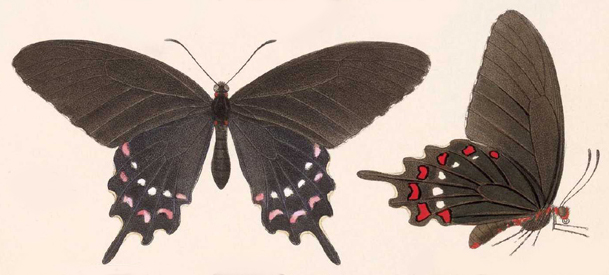

Appearance and identification
Adults are medium-sized with a robust black background on both wings. A series of white dots or spots on the wings gives the species its common name, while one or more red areas on the hindwing provide an additional field mark. Males and females are similar in general pattern; size and exact spot arrangement can vary among individuals. Flight is typically strong and direct, like other members of the genus.
Range and habitat
Parides alopius is native and largely restricted to Mexico, occurring where its larval host plants and nectar sources are available. Occasional vagrants have been recorded north of the Mexican border: there is at least one documented occurrence in the United States, specifically in southeastern Arizona. Within its range it occupies habitats from woodland edges to areas where Aristolochiaceae host plants grow.
Ecology and life cycle
As with many Parides species, caterpillars feed on pipevine family plants (Aristolochiaceae), which often provide chemical defenses that make adults unpalatable to predators. The life cycle follows the usual stages of butterfly metamorphosis: egg, larva (caterpillar), pupa (chrysalis) and adult. Adults visit flowers for nectar and may participate in puddling behavior to acquire salts.
Conservation and notes
This species is not widely known to be threatened on a global scale, but local populations can be sensitive to habitat loss and changes that reduce availability of host plants. Because Parides butterflies are often indicators of healthy native plant communities, preserving their habitats benefits broader biodiversity. For further taxonomic or occurrence details see specialist resources and regional checklists (species account).
Related articles
Author
AlegsaOnline.com Parides alopius — the white-dotted cattleheart Leandro Alegsa
URL: https://en.alegsaonline.com/art/74645