
Montezuma's Cattleheart (Parides montezuma)
A Neotropical swallowtail butterfly, Parides montezuma is known as Montezuma's Cattleheart; this article covers its appearance, life cycle, habitat, ecology, taxonomy, and conservation.
Overview
Parides montezuma, commonly called Montezuma's Cattleheart, is a member of the swallowtail family Papilionidae. It is a striking tropical butterfly found across parts of North America and South America, and more broadly within Central American regions. The species belongs to a group often referred to as the cattlehearts because of the characteristic red or pink patches on the hindwings.
Image gallery
2 Images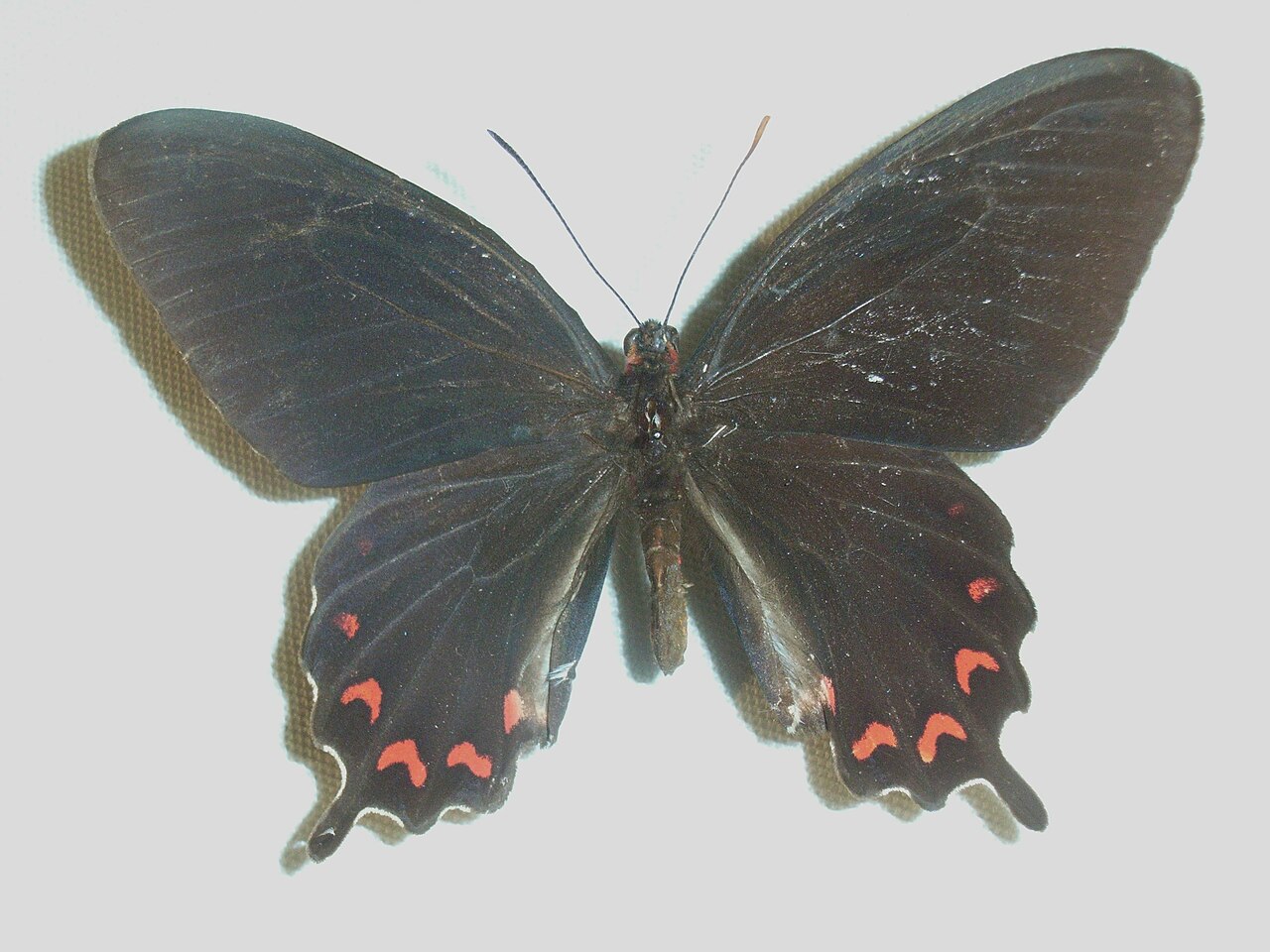

Appearance and life cycle
Adults typically have dark, glossy wings with vivid red or crimson markings on the hindwings and contrasting spots or bands on the forewings. There can be subtle differences between males and females. As with other butterflies, the life cycle includes egg, larva (caterpillar), pupa (chrysalis), and adult stages. Caterpillars undergo several molts before pupation and emerge as winged adults after metamorphosis.
Larval host plants and defenses
Larvae of many Parides species feed on plants in the Aristolochiaceae family (pipevines and birthworts). By sequestering bitter or toxic compounds from these host plants, the caterpillars and resulting adults become distasteful to predators. This chemical defense often participates in mimicry complexes with other unpalatable butterflies, reinforcing warning color patterns.
Distribution and habitat
Montezuma's Cattleheart occupies a range of tropical and subtropical habitats, from humid lowland forests to disturbed woodlands and edges. It favors areas where larval host plants grow. Local abundance varies with elevation, climate, and availability of nectar sources for adults.
Taxonomy and notable facts
The species is placed in the genus Parides, which contains multiple cattleheart butterflies. The common name evokes historical or regional associations (Montezuma) but should be understood as a conventional name rather than an indication of precise historical range. As a papilionid, it is related to the larger group known as swallowtails, though many Parides lack the long tail projections seen in other family members.
Conservation and human interest
Conservation status can differ regionally. Habitat loss, pesticide use, and reduction of host plants are general threats to many tropical butterflies. Montezuma's Cattleheart is of interest to naturalists and ecologists because of its role in mimicry systems and its interactions with toxic host plants. Observations, habitat protection, and host-plant conservation help maintain local populations.
- Species page: Parides montezuma
- General butterfly information: butterfly resources
- Family overview: Papilionidae
- Range notes: North America and South America
Related articles
Author
AlegsaOnline.com Montezuma's Cattleheart (Parides montezuma) Leandro Alegsa
URL: https://en.alegsaonline.com/art/74648