
Palestine Sunbird (Cinnyris osea): Identification, Range, and Ecology
Overview of the Palestine sunbird (Cinnyris osea): identification, sexual dimorphism, range across the Levant, Arabian Peninsula and East Africa, habitat, feeding, breeding and conservation.
The Palestine sunbird (Cinnyris osea) is a small nectar-feeding bird in the sunbird family (Nectariniidae). It occurs naturally across parts of the Middle East and into regions of Africa, where it is often associated with flowering trees, scrub and human-altered habitats.
Image gallery
9 Images
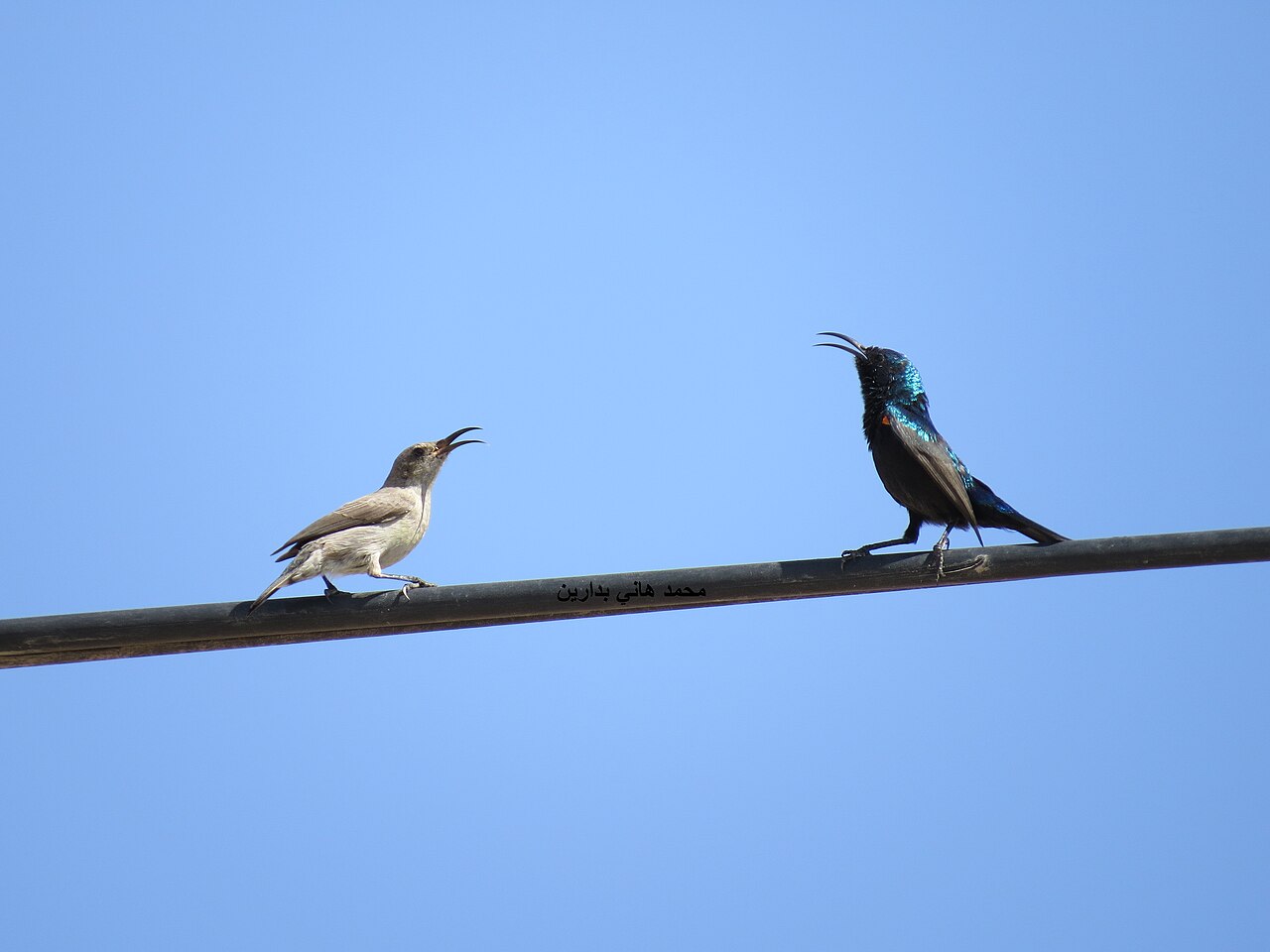


Description
Palestine sunbirds are diminutive, with adults typically measuring around 9–11 cm in length. Males show a strong iridescent sheen in breeding plumage, appearing glossy bluish-black or greenish-black depending on light, and sometimes display small orange feather tufts at the sides of the chest. Females are generally duller, with grey-brown upperparts and paler underparts, and lack the vivid metallic gloss of males. Both sexes have medium-length, curved bills adapted for probing flowers.
Distribution and habitat
This species is native to parts of the Levant and the Arabian Peninsula and extends into some areas of East Africa. It uses a variety of habitats where nectar sources are available, including semi-desert scrub, dry woodlands, cultivated gardens and oases. The Palestine sunbird tolerates proximity to people and can be common in towns and agricultural areas with flowering plants.
Feeding and behaviour
Like other sunbirds, the Palestine sunbird feeds primarily on nectar, which it obtains by inserting its curved bill into flowers. It also supplements its diet with insects and spiders, particularly when feeding chicks. The species is an active, agile forager, often hovering briefly at blossoms or perching to glean insects from foliage. Its movements are quick and it frequently flicks its tail while perched.
Breeding
Breeding pairs construct a compact, purse-shaped nest made from plant fibers, grasses and spider silk, with an entrance typically on the side or top. The nest is usually suspended from a branch, thorn or a man-made structure. Clutch sizes and exact timing of breeding vary by region and local conditions, but both parents may participate in feeding the young.
Conservation
The Palestine sunbird is not regarded as globally threatened and adapts well to many modified landscapes where nectar plants are present. Local population trends can be influenced by changes in habitat, availability of flowering plants and other regional pressures, so monitoring and habitat maintenance are important for ensuring its continued presence in some areas.
Related articles
Author
AlegsaOnline.com Palestine Sunbird (Cinnyris osea): Identification, Range, and Ecology Leandro Alegsa
URL: https://en.alegsaonline.com/art/74176