
Paleothyris: an early Pennsylvanian anapsid reptile
Paleothyris was a small anapsid reptile from the Pennsylvanian of Nova Scotia. Around a foot long and likely insectivorous and nocturnal, it illuminates early amniote anatomy and ecology.
Paleothyris is a genus of small, early amniote known from fossil beds in Nova Scotia. It lived during the late Carboniferous, commonly referred to as the Pennsylvanian epoch, roughly 312–304 million years ago. Paleothyris is typically described as an anapsid form and is often treated as an early reptile or reptile-like sauropsid in broad surveys of early amniote evolution.
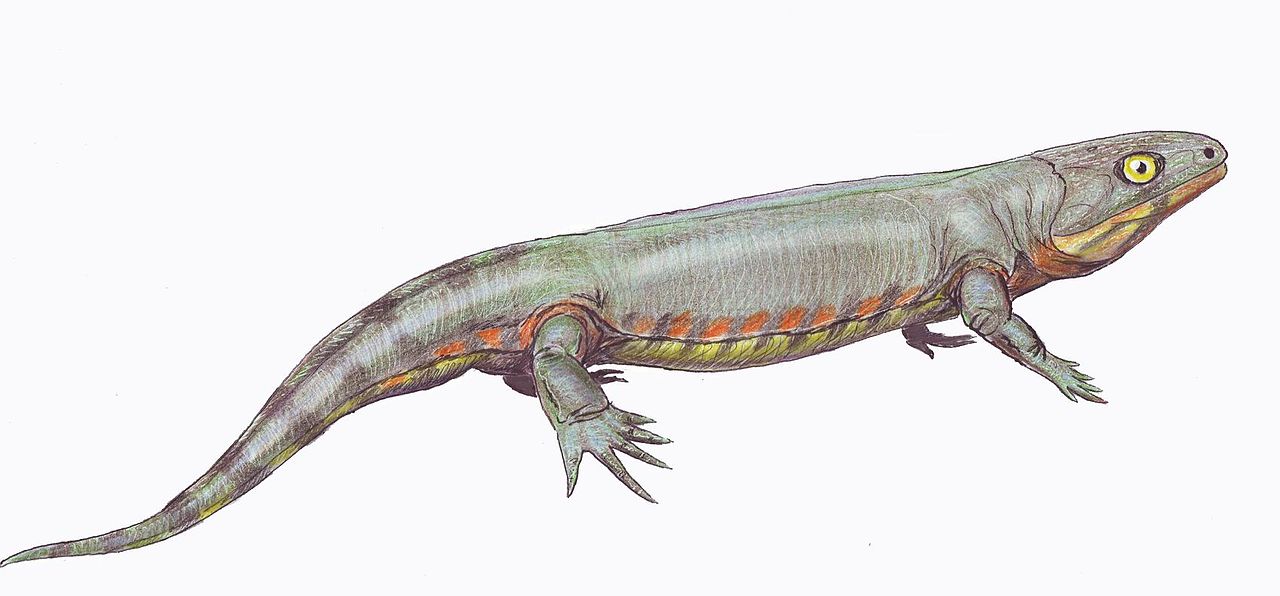
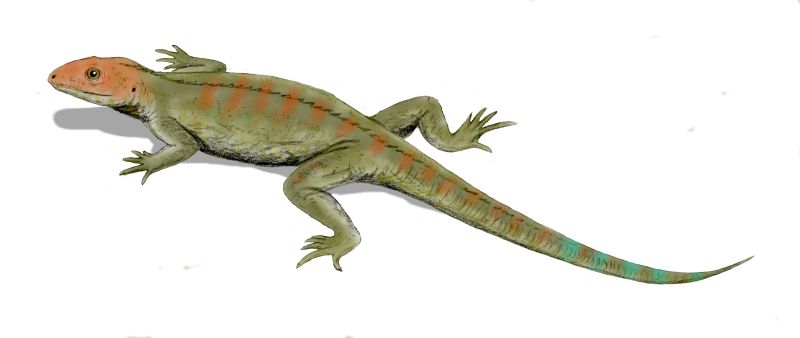
Fossils indicate a modest body size, roughly one foot in total length, with a slender skull and teeth suited to grasping. Large orbits and sharp dentition suggest active predation at night, so many reconstructions portray Paleothyris as a nocturnal hunter of small animals. Its diet probably consisted largely of invertebrates such as insects and other diminutive prey encountered on the forest floor; the skull and jaw structure are consistent with an insectivorous to small-vertebrate diet. Evidence of eye proportions has been used to infer a role for low-light activity (large eyes).
Image gallery
10 Images



Anatomy and classification
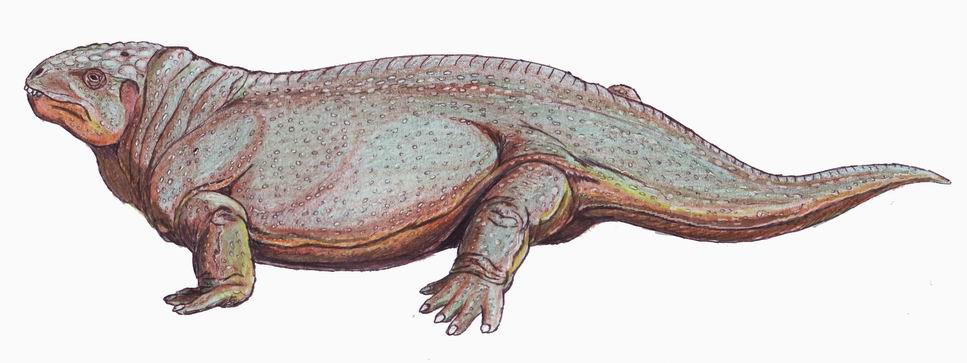
The skull of Paleothyris lacks temporal openings behind the eye sockets, a condition described as anapsid and significant for discussions about early amniote skull evolution. Its overall anatomy shows a mix of primitive features and traits associated with early sauropsids, while retaining some characteristics reminiscent of more primitive, amphibian-like tetrapods sometimes called labyrinthodont-grade forms. This mosaic anatomy places Paleothyris near the base of the reptile-like radiation, although precise relationships among the earliest amniotes remain debated.
Key characteristics
- Small, agile body roughly 30 cm (about one foot) long.
- Anapsid skull with no temporal fenestrae.
- Large eye sockets and sharp, conical teeth consistent with nocturnal insectivory.
- Found in Carboniferous coal-swamp deposits, indicating a humid, forested habitat.
The fossil record that preserves Paleothyris contributes to understanding how early amniotes diversified in swampy, forested environments of the late Carboniferous. Its combination of primitive and derived features makes it a useful reference point when comparing later reptile groups and when tracing the origin of defining amniote traits, such as changes in skull architecture and terrestrial feeding strategies.
Although not viewed as a direct ancestor of modern reptiles, Paleothyris is important for illustrating the anatomical experimentation that occurred near the base of the reptile lineage. Its remains, recovered from classic Carboniferous localities, continue to inform discussions about ecology, diel activity patterns, and the early branching of sauropsids and other amniote lineages.
Questions and answers
Q: What is Paleothyris?
A: Paleothyris was a small, agile, anapsid reptile.
Q: When did Paleothyris live?
A: Paleothyris lived in the Pennsylvanian epoch in Nova Scotia, about 312 to 304 million years ago.
Q: What did Paleothyris look like?
A: Paleothyris had sharp teeth, was about a foot long, and had large eyes.
Q: Was Paleothyris a hunter?
A: Yes, Paleothyris was a nocturnal hunter.
Q: What did Paleothyris eat?
A: Paleothyris probably fed on insects and other smaller animals found on the floor of its forest home.
Q: Was Paleothyris a reptile?
A: Yes, Paleothyris was an early sauropsid, which is a type of reptile.
Q: What was unique about Paleothyris' skull?
A: Paleothyris' skull lacked fenestrae, which are holes found in the skulls of most reptiles and mammals.
Related articles
Author
AlegsaOnline.com Paleothyris: an early Pennsylvanian anapsid reptile Leandro Alegsa
URL: https://en.alegsaonline.com/art/74165