
Pachypleurosaur: small marine sauropterygians of the Triassic
Pachypleurosaurs were early marine sauropterygians of the Triassic with elongated bodies, paddle-like limbs, and peg-like teeth; their fossils illuminate the origin of later plesiosaurs and nothosaurs.
Overview
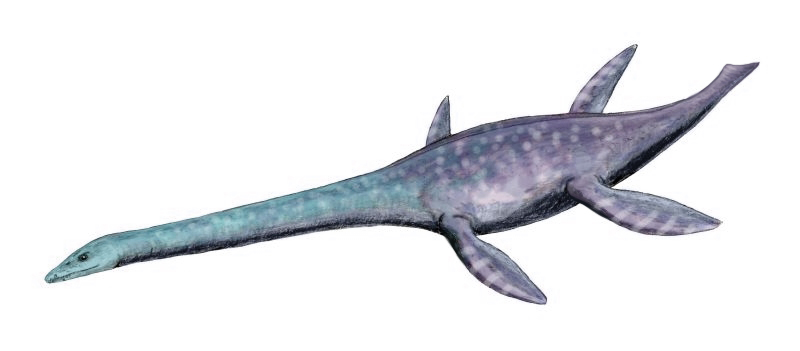
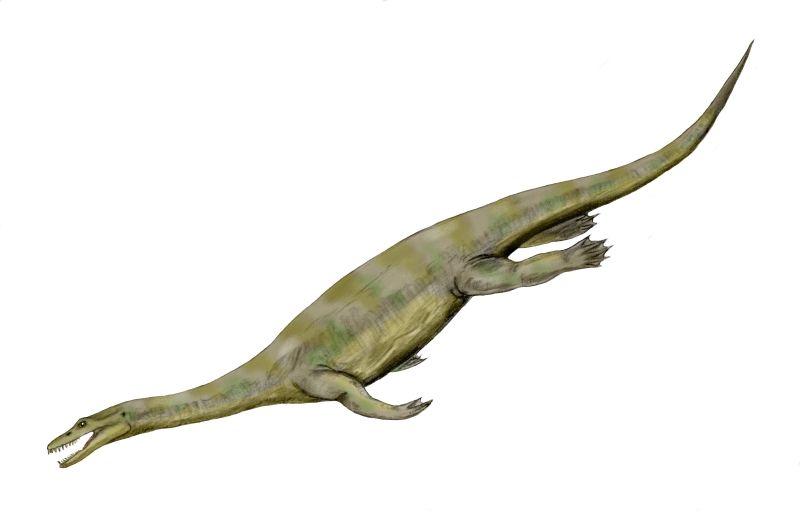
Pachypleurosaurs were small to medium-sized marine reptiles that belonged to the early radiation of sauropterygian reptiles. They lived during the Triassic period and show a mix of primitive and aquatic specializations. Many had long necks, small heads and streamlined bodies that give them a lizard-like, water-adapted appearance often compared to modern aquatic squamates; this resemblance is discussed in older accounts as "aquatic lizard-like" forms.
Image gallery
10 Images




Key characteristics
Pachypleurosaurs varied in size from roughly 20 cm to about four metres in length. Typical features include small skulls with widely spaced, peg-shaped teeth concentrated toward the front of the jaws, long neck vertebrae, elongate tails and paddle-like limbs. The pelvic and pectoral limb girdles are reduced relative to fully terrestrial reptiles, suggesting limited capacity for terrestrial locomotion.
Common anatomical traits:
- Elongated bodies with many vertebrae and a long tail used in swimming.
- Paddle-like limbs that aided steering and propulsion.
- Peg-like teeth adapted for seizing small, slippery prey such as fish and soft-bodied invertebrates.
Fossil record and distribution
Fossils of pachypleurosaurs are best known from Triassic marine deposits in Europe and parts of Asia. Several genera have been described from reasonably complete skeletons, which has allowed paleontologists to reconstruct their body plan and infer swimming styles. Some well-known genera include the type genus Pachypleurosaurus and other Triassic forms recovered in what are now continental shelves and lagoonal settings.
Evolutionary relationships
Pachypleurosaurs are considered an early branch of sauropterygians and are often grouped close to or within primitive nothosaur-like assemblages; historically they have frequently been associated with the nothosaurs. They occupy an important position in understanding how fully aquatic plesiosaurs later evolved from more generalized, semi-aquatic ancestors.
Ecology and significance
These reptiles appear to have been primarily piscivorous, using their slender jaws and peg teeth to capture fish and small invertebrates. Their combination of axial undulation and paddle-assisted swimming shows an intermediate locomotor strategy between amphibious reptiles and the powerful flipper-driven plesiosaurs that followed. As such, pachypleurosaurs provide key evidence about the transition from shore-associated to fully marine lifestyles among Mesozoic reptiles.
Modern research continues to refine their precise relationships and paleobiology; visitors seeking further technical discussions can follow specialist literature and museum summaries for updated phylogenetic and functional interpretations (sauropterygian reviews, Triassic marine vertebrate surveys).
Related articles
Author
AlegsaOnline.com Pachypleurosaur: small marine sauropterygians of the Triassic Leandro Alegsa
URL: https://en.alegsaonline.com/art/73906
Sources
- blackwellpublishing.com : classification