
Olm (Proteus anguinus): the European cave salamander
The olm (Proteus anguinus) is a blind, aquatic salamander of the Dinaric karst. This subterranean amphibian is notable for paedomorphosis, slow metabolism, specialized cave adaptations, and conservation concern.
Overview
The olm, scientifically Proteus anguinus, is a fully aquatic salamander adapted to life in underground waters. It is the sole species of the genus Proteus and the only member of the family Proteidae native to Europe. Common English names include "olm", "human fish" and "white salamander"; in local languages it is known variously as Čovječja ribica and related forms. As an amphibian restricted to subterranean habitats, it has evolved traits that distinguish it from most surface-dwelling species.
Image gallery
9 Images



Physical characteristics and adaptations
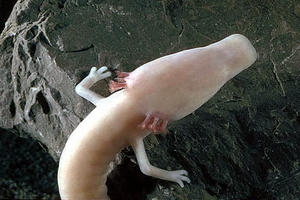
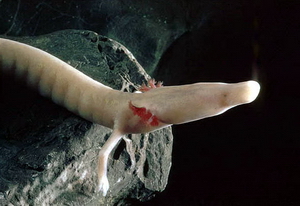
The olm has a slender, eel-like body and external feathery gills that enable underwater respiration. Its skin is often pale or translucent, giving rise to the name "white salamander," and eyes are reduced or covered by skin, rendering the animal essentially blind. Olms display paedomorphosis: they retain larval features such as gills into adulthood, although in rare cases exposed individuals can undergo further metamorphosis. Adults are typically around 20–30 cm long, move slowly, and conserve energy with a low metabolic rate.
Life history and behaviour
Olms live in complete darkness in groundwater systems and cave streams. They feed on small invertebrates and have remarkable physiological resilience: they can survive long periods without food and mature slowly, reproducing infrequently. Sexual maturity occurs after several years, and females lay eggs in sheltered spots. In captivity and monitored populations, individuals have been documented to live for many decades, a fact that highlights their slow pace of life.
Range and habitat
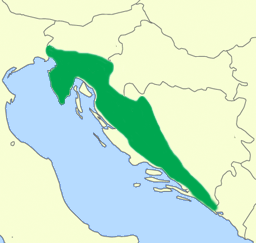
The species is endemic to the Dinaric karst region of southern Central Europe. Its natural range includes subterranean waters running through the Dinaric karst, the Soča river basin area near Trieste, and extends across parts of southern Slovenia, southwestern Croatia and into Herzegovina. Suitable habitat consists of caves, sinkholes and aquifers fed by karst springs and creeks; water quality and stable conditions are essential for survival.
Conservation, research and importance
The olm is a species of conservation concern because its restricted subterranean range makes it vulnerable to groundwater pollution, habitat disturbance and changes in hydrology. It is legally protected in several countries and is the subject of monitoring and conservation programs. Scientists study the olm for insights into evolution in darkness, regenerative biology, and adaptations to extreme low-energy environments. Its ecological role as a top predator in cave ecosystems is locally significant.
Notable facts and cultural role
The olm is often described as the only European cave-dwelling chordate and is sometimes called the Cave Salamander. It appears in regional folklore and has become a symbol of karst biodiversity. For accessible further reading and conservation resources see regional museum pages and specialist sites indicated by local authorities: for example, museum and research pages from areas in the species' range are available through institutional links such as European species pages, and national conservation portals in Slovenia and Croatia (Slovenia, Croatia). Additional background and outreach materials can be found via broader natural history references and specialist research networks (amphibian portals, regional sites, karst resources).
Related articles
Author
AlegsaOnline.com Olm (Proteus anguinus): the European cave salamander Leandro Alegsa
URL: https://en.alegsaonline.com/art/72420