
Old English (Anglo-Saxon): history, structure and literary legacy
Old English (Anglo-Saxon) was the early Germanic language of England (c. 450–1100). This article explains its dialects, writing, grammar, literature (including Beowulf) and its transformation into Middle English.
Overview
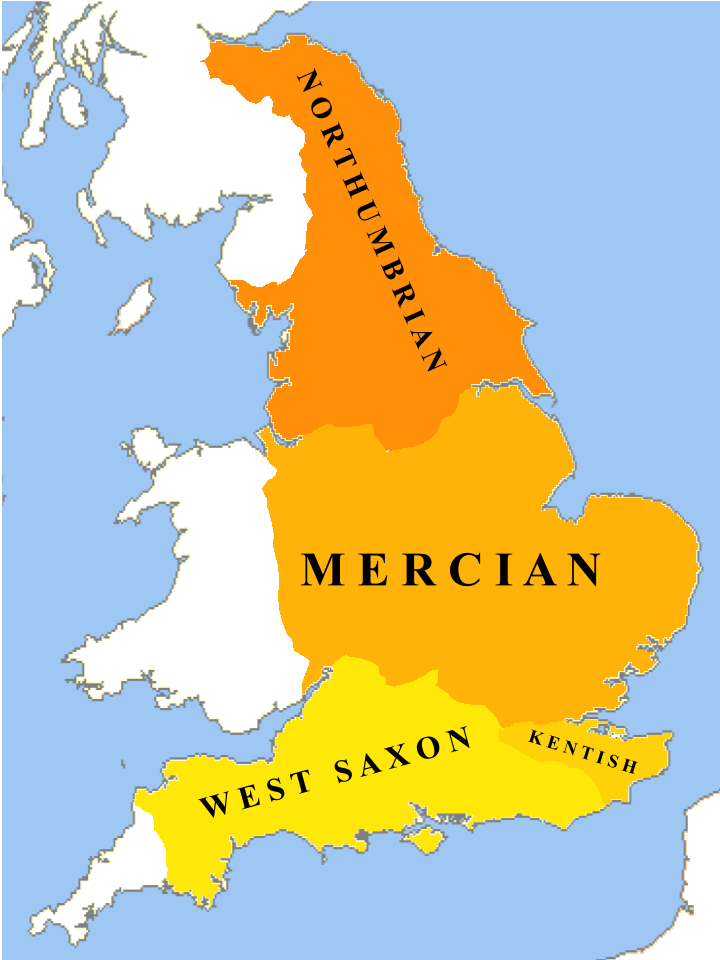
Old English, often called Anglo-Saxon, is the earliest recorded form of the English language spoken in Anglo-Saxon England roughly from the mid-5th century until about 1100. It was the vernacular of the Anglo-Saxons, settlers who arrived in Great Britain from regions now part of Germany and Denmark. Political units of the period—various Anglo-Saxon kingdoms—produced distinct local varieties rather than a single uniform tongue.
Image gallery
9 Images




Dialects and relations
Several regional dialects existed; West Saxon later served as the principal literary standard for surviving texts. Old English belongs to the West Germanic branch of the broader Germanic family and is the direct ancestor of Modern English and, through shared development, related to Scots. Although many modern words descend from Old English roots, the later language underwent major changes in vocabulary, grammar and pronunciation.
Writing and manuscripts
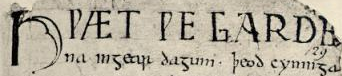
Early Old English appears in short runic inscriptions; later texts use the Latin alphabet. Surviving manuscripts were copied by scribes who adopted and adapted orthography to represent sounds not native to Latin. The early runic tradition is reflected in inscriptions and occasional poetic uses (runes), while the manuscript culture preserved historical, religious and legal works. Important ecclesiastical writers, such as Bede, used Latin alongside vernacular compositions.
Grammar and structure
Old English grammar is considerably more synthetic than Modern English. Nouns, adjectives and pronouns were declined for case and number; verbs showed strong and weak conjugation patterns. The system included several cases and a richer inflectional morphology, often compared to Old German. Discussions of its complex form are commonly found under the heading of Old English grammar and the topic of inflection.
- Cases and genders for nouns and adjectives
- Strong (ablaut) vs weak verb classes
- Flexible word order with pragmatic emphasis
- Extensive use of compounding and derivation
History and development
From a set of related dialects spoken by Germanic settlers, Old English developed through contact with native Brittonic languages, Norse-speaking settlers, and church Latin. The decisive political turnover of 1066 known as the Norman Conquest accelerated social and linguistic change; over the next centuries Old English evolved into Middle English, absorbing large numbers of Romance words and simplifying many inflectional endings.
Literature and legacy
Surviving Old English literature includes poetry, hagiography, law codes, charters and homilies. The epic Beowulf is the most famous poetic work preserved in a single manuscript and shows many features of the tradition, including alliteration and formulaic diction; most poetic texts were transmitted in an alphabetic script after Latin letters became widespread. Though largely unintelligible to modern readers without study, Old English remains foundational for historical linguistics, place-name studies and the modern English lexicon.
For introductions, corpora and translations, consult scholarly editions and academic surveys that treat dialectal variation, orthography and the pathways by which Old English contributed to later English.
Related articles
Author
AlegsaOnline.com Old English (Anglo-Saxon): history, structure and literary legacy Leandro Alegsa
URL: https://en.alegsaonline.com/art/72273