
Bede: the Venerable Anglo‑Saxon Monk, Historian and Scholar
Bede (c.672/3–735) was an Anglo‑Saxon monk at Monkwearmouth‑Jarrow, author of the Ecclesiastical History of the English People and an influential early historian, teacher and chronologist.
Bede (Old English Bǣda or Bēda; Latin Beda Venerabilis; c. 672/3–26 May 735) was an Anglo‑Saxon monk, teacher and writer whose works shaped how later generations understood early medieval England. He spent most of his life in the twin foundations of Monkwearmouth and Jarrow in the kingdom of Northumbria and is best known for his Historia ecclesiastica gentis Anglorum (Ecclesiastical History of the English People). Bede wrote in Latin and was respected in later centuries as a careful compiler of sources, a commentator on scripture, and an author on chronology and computus.
Image gallery
10 Images
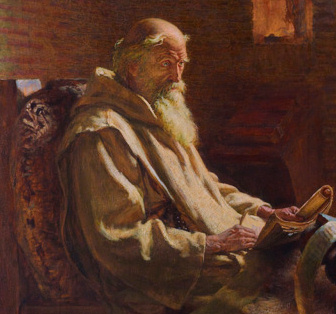




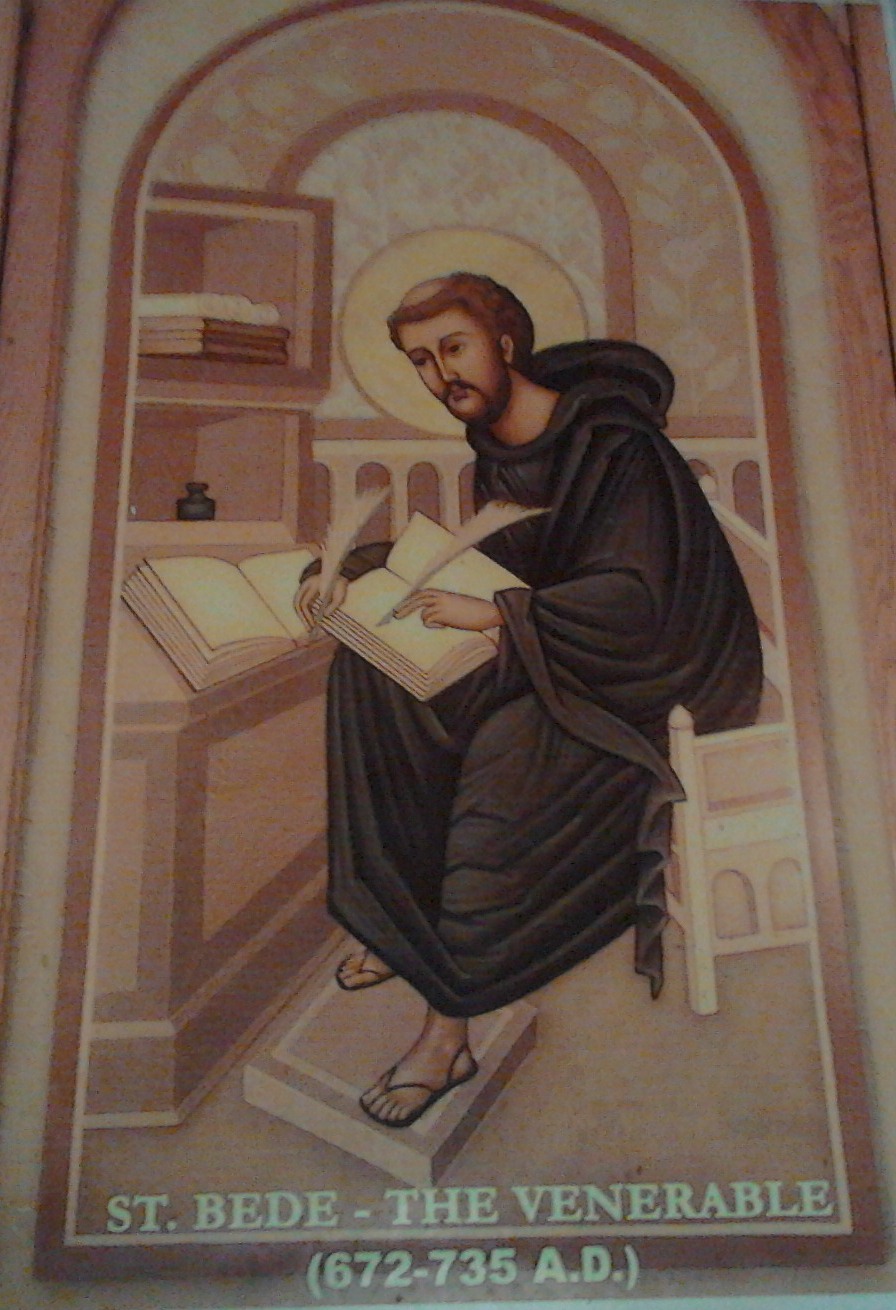
Early life and monastic formation
According to medieval accounts that are widely cited by scholars, Bede was presented as a child to the monastery at the age of seven and received his education there. He lived most of his life within the linked communities often called Monkwearmouth‑Jarrow, institutions important for their schools and library collections. In those houses he was formed in the Benedictine tradition and served as a teacher, copyist and local historian. The monastic context encouraged study of scripture, liturgy and the practical arts needed for the church calendar, known as the computus.
Monastic setting and regional context
The foundations where Bede lived lay in the kingdom of Northumbria, an important political and cultural centre in early medieval England. The twin houses are often treated together as the Monkwearmouth‑Jarrow community or as linked monasteries. In later descriptions their locations are associated with County Durham and, in modern terms, Tyne and Wear. The communities possessed a comparatively large library for the period, which supported Bede’s wide reading and his work as a teacher of younger monks.
Writings and subjects
Bede’s output was varied. His best known work, the Historia ecclesiastica gentis Anglorum (completed in 731), presents the conversion and ecclesiastical organization of the English peoples up to his time. He also composed biblical commentaries, lives of saints, poems, letters and technical treatises. One of his important scientific works, commonly known in Latin as De temporum ratione (The Reckoning of Time), discusses calendrical calculation and the dating of Easter; it reflects the practical concerns of the liturgical year and the computus tradition.
- Major works: Historia ecclesiastica; biblical commentaries; treatises on computus and chronology; hagiographies and instructional letters.
- Languages and methods: primarily Latin; frequent citation of sources; use of oral testimony, letters and local records; concern for chronology and dates.
Historical method and reliability
Bede generally attempted to cite his sources and to distinguish report from personal knowledge, an approach that made his writings unusually useful to later historians. He combined compilation of earlier materials with local inquiry and correspondence. Modern historians appreciate his documentary curiosity and systematic use of dates, while also noting the limits of surviving evidence and instances where hagiographical aims or theological concerns shaped narrative detail. Bede’s perspective is that of a Christian monk writing to explain the history of the Church and its relation to contemporary rulers and missions.
Influence and legacy
For centuries Bede’s history was a foundational text for medieval and later English historians; he is often called the father of English history because his work provided a coherent narrative framework that later chroniclers used. His compilation of information about bishops, kings, missionary activity and monastic foundations helped shape the memory of early English Christianity. Material from Bede was incorporated into later works, and his reputation contributed to the transmission of the Anno Domini dating system in historical writing, although he did not invent that system.
Veneration, transmission and modern study
Bede was venerated as a saint in medieval devotion and was later honoured with the title “Venerable.” Manuscripts of his works circulated widely in the Middle Ages, and copies survive in many medieval libraries; the survival of these manuscripts is a major reason his writings have had long influence. Modern scholarship continues to study his sources, manuscript tradition and influence on liturgy, chronology and national memory. For general introductions to his context and works consult standard reference works on monastic life, regional history of Northumbria and the development of the early English church.
Bede’s writings remain central for students of early medieval Britain, church history and the history of learning. Editions, translations and commentaries are widely available for those who wish to read his Latin texts or modern-language renderings; many studies address his method, his use of sources and the ways his works were received by later generations. For further online and library resources on the period and Bede’s works see introductory surveys and scholarly guides that treat his life, his principal works and the monastic networks that supported learning in early medieval England.
Questions and answers
Q: Who was Bede?
A: Bede was a monk and historian of the church in England who lived from 672/3 to 735.
Q: What were Bede's titles?
A: Bede was known as Saint Bede, The Venerable Bede, and Bede the Venerable.
Q: Which monasteries was Bede a member of?
A: Bede was a member of the sister Northumbrian monasteries of Monkwearmouth-Jarrow.
Q: Where did Bede spend a lot of his time?
A: Bede spent a great deal of time at Jarrow, which had a large library, in the English county of Durham (now Tyne and Wear).
Q: What is Bede most famous for?
A: Bede is best known for his work, Historia ecclesiastica gentis Anglorum (The Ecclesiastical History of the English People), which earned him the title "The father of English history".
Q: What language was Bede's name originally in?
A: Bede's name was originally in Old English as Bǣda or Bēda.
Q: What was Bede's Latin title?
A: Bede's Latin title was Beda Venerabilis, which means Bede the Venerable.
Tags
Related articles
Author
AlegsaOnline.com Bede: the Venerable Anglo‑Saxon Monk, Historian and Scholar Leandro Alegsa
URL: https://en.alegsaonline.com/art/10023