
Oestrogen (estrogen): roles, types, production and clinical significance
Comprehensive overview of oestrogen: major forms, sources, biological roles in development and reproduction, mechanisms, clinical uses and risks, and distinctions from related hormones.
Overview
Oestrogen (also spelled estrogen) refers to a group of steroid hormones important in sexual development and reproductive function. Historically associated with female physiology, these compounds act as key signaling molecules across many tissues. The term covers several related molecules and is used in clinical, physiological and pharmacological contexts; see hormones and the alternative spelling estrogen for naming conventions.
Image gallery
2 Images
Major types and chemical distinctions
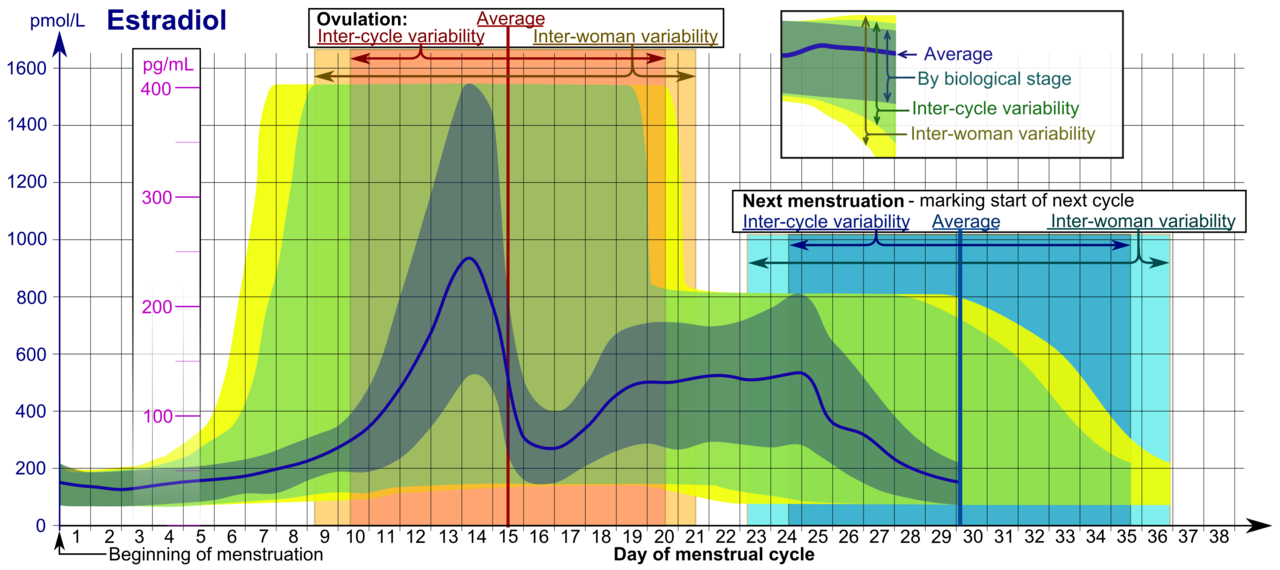
The main naturally occurring oestrogens in humans are commonly named as three forms: oestrone (E1), oestradiol (E2) and oestriol (E3). Of these, oestradiol is the most biologically active and predominant in the reproductive years. Oestrone is present in greater relative amounts after menopause and can be converted to oestradiol in peripheral tissues. Oestriol is produced in larger quantities during pregnancy and has distinctive metabolic and receptor interaction profiles.
Sources and biosynthesis
Oestrogens are synthesized from cholesterol through steroidogenic pathways. The ovaries are the principal source of oestrogen in premenopausal women; the ovarian contribution is often emphasized in clinical descriptions—see ovary. Other tissues are capable of producing or transforming oestrogens: the liver participates in metabolism, the adrenal cortex provides precursor steroids, and mammary tissue can both respond to and locally modulate levels (breast). During pregnancy the placenta becomes a major source and contributes substantially to circulating levels; clinical descriptions sometimes note increased placental secretion. Males also produce small amounts of oestrogen, largely via aromatization of androgens in the testes and peripheral tissues.
Physiological roles and life stages
Oestrogens regulate sexual maturation, reproductive cycling and many non-reproductive systems. They are central to the changes of puberty in girls, coordinate the ovarian events of the menstrual cycle, and decline in amount and effect during menopause. Actions include development of secondary sexual characteristics, regulation of endometrial growth, bone maintenance, modulation of lipid metabolism, and influences on mood and cognition. Oestrogen effects are mediated primarily by intracellular oestrogen receptors that change gene expression, with additional faster non-genomic pathways described in many tissues.
Clinical importance, uses and risks
- Therapeutic uses: oestrogens are employed in contraceptives, hormone replacement therapy for menopausal symptoms, and some fertility treatments.
- Diagnostic roles: measurement of serum oestrogen helps evaluate ovarian function, menstrual disorders and pregnancy-related conditions.
- Risks and pathology: abnormal oestrogen exposure or sensitivity is linked to conditions such as endometrial hyperplasia and certain breast cancers; these relationships are managed clinically by balancing benefits and risks.
- Interactions: oestrogen action is often discussed relative to androgens, and environmental compounds with estrogen-like activity (xenoestrogens) can influence physiology and are the subject of ongoing study.
Measurement, pharmacology and notable distinctions
Laboratory assessment typically measures circulating oestradiol, oestrone or oestriol depending on clinical context. Synthetic oestrogens used in medicine differ in potency and metabolic profile from natural forms and may carry distinct side-effect profiles. In scientific and clinical writing, "oestrogen" preserves the British spelling while "estrogen" reflects American usage; both refer to the same family of hormones. Because oestrogen affects many organ systems, its therapeutic use requires individualized assessment of benefits and risks, and it remains a central focus in reproductive health and endocrine research.
For further introductory resources, consult clinical guidelines and reliable endocrine references: see general entries on oestradiol and reproductive endocrinology (estrogen), plus targeted material about pregnancy endocrinology (pregnancy) and menopause management (menopause).
Related articles
Author
AlegsaOnline.com Oestrogen (estrogen): roles, types, production and clinical significance Leandro Alegsa
URL: https://en.alegsaonline.com/art/72006