
Oestradiol (E2): roles, biology, and clinical significance
Oestradiol (E2) is the principal female sex steroid that regulates reproductive development, menstrual cycling, bone health, and has measurable roles in males; commonly measured in serum for diagnosis and therapy monitoring.
Oestradiol, often abbreviated E2, is the most potent naturally occurring oestrogen produced in mammals. It belongs to the class of steroid hormones and is the dominant estrogen in premenopausal females. Oestradiol controls the development and function of reproductive tissues, contributes to secondary sexual characteristics, and influences non-reproductive systems such as bone and cardiovascular physiology. For introductory material see oestrogen overview.
Image gallery
4 Images


Chemistry and biosynthesis
Chemically, oestradiol is a steroid derived from cholesterol through a cascade of enzymatic steps that occur primarily in the ovaries, and to a lesser extent in the adrenal glands and peripheral tissues. The biosynthetic pathway links cholesterol, androgens and estrogens; enzymes such as aromatase convert androgens into estrogens. For context on steroid hormones and synthesis pathways see steroidal hormones and hormone physiology. The ovaries are the principal source in reproductive-age women (ovarian function).
Physiological roles
Oestradiol has multiple actions across organ systems. In the reproductive tract it stimulates growth and maturation of the uterus, fallopian tubes and vagina, and it regulates the menstrual or oestrous cycle by interacting with the hypothalamic–pituitary–gonadal axis. It promotes breast ductal development and prepares the endometrium for possible pregnancy. Outside reproduction, oestradiol helps maintain bone density, affects lipid metabolism, and modulates certain aspects of cognition and mood. Readers may find focused reviews at female reproductive development and menstrual cycle dynamics.
Concentrations and life stages
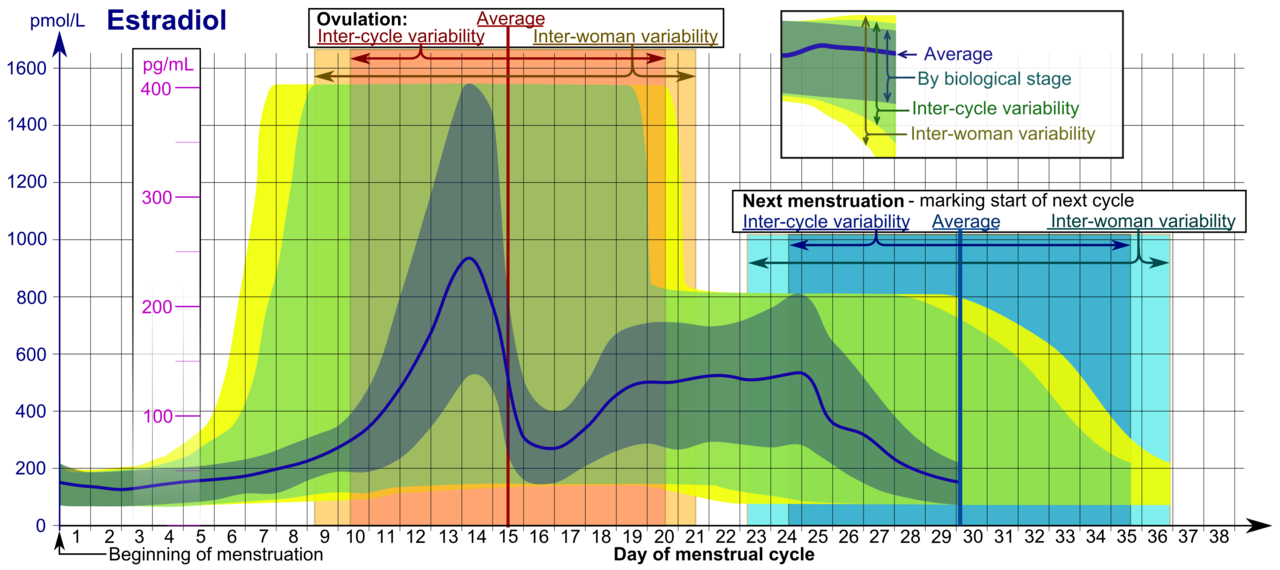
Serum concentrations of oestradiol vary markedly with the menstrual cycle, rising before ovulation and falling during the luteal phase; levels also change during pregnancy when other estrogens (notably estriol) become prominent. After menopause the balance of circulating estrogens shifts toward estrone and overall estrogen levels decline, contributing to physiological changes such as bone loss. Comparative data and clinical context can be found via mammary and breast physiology, serum hormone measurement, and gestational endocrinology.
Men and non-reproductive roles
Although typically considered a female hormone, oestradiol has measurable functions in males. It is produced by peripheral aromatization of testosterone and contributes to bone maintenance, libido, and modulates certain metabolic processes. Typical circulating levels in men are lower than in premenopausal women; clinical sources indicate concentrations commonly below 35 pg/mL in many men (menopause and comparative levels).
Clinical uses, measurement and distinctions
Oestradiol measurement in serum is used in fertility evaluation, ovulation monitoring, diagnosis of reproductive disorders, and in monitoring hormone replacement therapy or endocrine tumors. Preparations of estrogens for therapy differ in potency and composition; estrone and estriol are related but distinct estrogens with different clinical roles and metabolic interconversion. For assay methods and therapeutic considerations see estrone interactions and bone health and estrogen.
- Overview: principal circulating estrogen in reproductive-age females.
- Production: ovaries, plus peripheral conversion in adipose and other tissues.
- Functions: reproductive organ development, menstrual cycle regulation, bone preservation.
- Clinical relevance: fertility work-up, menopause management, endocrine assessment.
Because oestradiol impacts many systems, clinicians interpret its concentrations alongside clinical signs, other hormones and patient age. Measurement techniques and reference ranges vary by laboratory and clinical context; values should be evaluated cautiously and in context of the whole clinical picture.
Questions and answers
Q: What is oestradiol?
A: Oestradiol is an oestrogen, a steroidal hormone mainly secreted by the ovaries and is a main female hormone.
Q: What are the functions of oestradiol in females?
A: Oestradiol regulates female characteristics, the maturation of female sex organs, the oestrus and menstrual cycle, and stimulates the production of mammary glands.
Q: How do the serum concentrations of oestradiol and other female hormones change during the menstrual cycle?
A: The serum concentrations of oestradiol and other female hormones change throughout the menstrual cycle.
Q: What happens to the serum concentrations of oestradiol during gestation?
A: During gestation, there is a high serum concentration of oestradiol E3.
Q: What happens to the serum concentrations of oestrone during menopause?
A: During menopause, oestrone has the higher concentration.
Q: How does oestradiol affect bone formation?
A: Oestradiol has a big effect on bone formation. Women past menopause have an accelerated loss of bone because they have less oestrogen.
Q: Does Oestradiol have any functions in males?
A: Yes, oestradiol also has some functions in males but at a much lower level. Its serum concentration in men is < 35 pg/mL, equivalent to that seen in post-menopausal women.
Related articles
Author
AlegsaOnline.com Oestradiol (E2): roles, biology, and clinical significance Leandro Alegsa
URL: https://en.alegsaonline.com/art/72005
Sources
- jama.jamanetwork.com : "Postmenopausal Osteoporosis: Its Clinical Features"
- doi.org : 10.1001/jama.1941.02820220007002