
On the Origin of Species — Charles Darwin's 1859 work
Charles Darwin's On the Origin of Species (1859) introduced evolution by natural selection, reshaping biology, science, and public debate. This article summarizes its content, publication, reception, and lasting impact.
Overview
On the Origin of Species is the landmark scientific book authored by Charles Darwin and first published in 1859. It assembled evidence that living organisms change over time and proposed a mechanism to explain how such change occurs. The work framed biological diversity as the product of descent with modification rather than fixed, independently created forms.
Image gallery
10 Images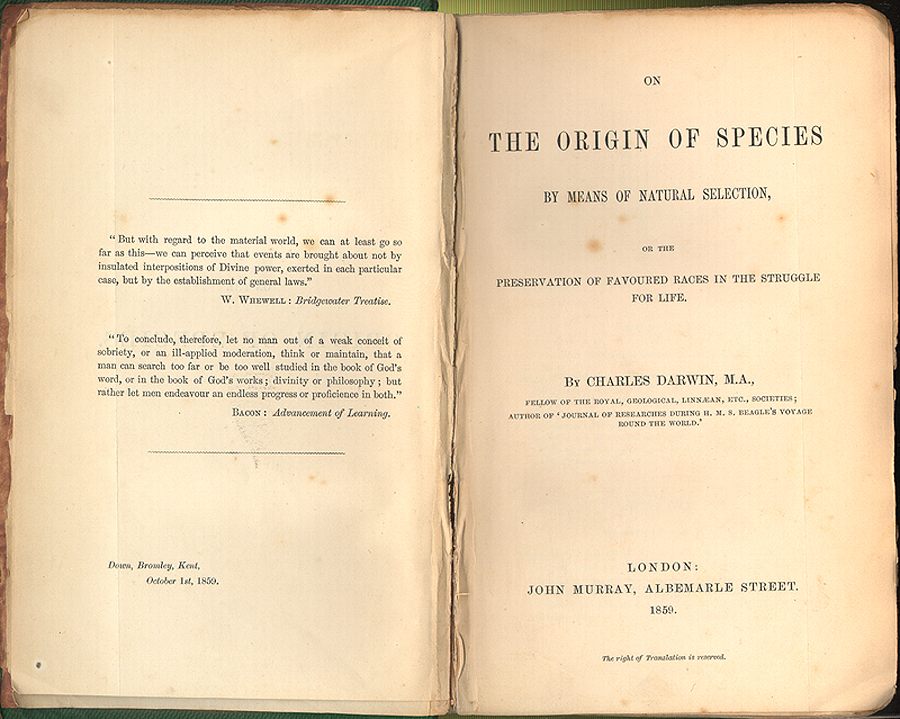




Main ideas and mechanics
Darwin did not invent the idea that species change, but he advanced a clear, testable explanation: natural selection. The core claims can be summarized as follows:
- Variation exists among individuals within populations.
- Organisms tend to produce more offspring than can survive, creating competition.
- Certain heritable traits confer advantages in survival or reproduction, so those traits become more common over generations.
- Given enough time, cumulative changes can lead to new species.
Evidence and examples
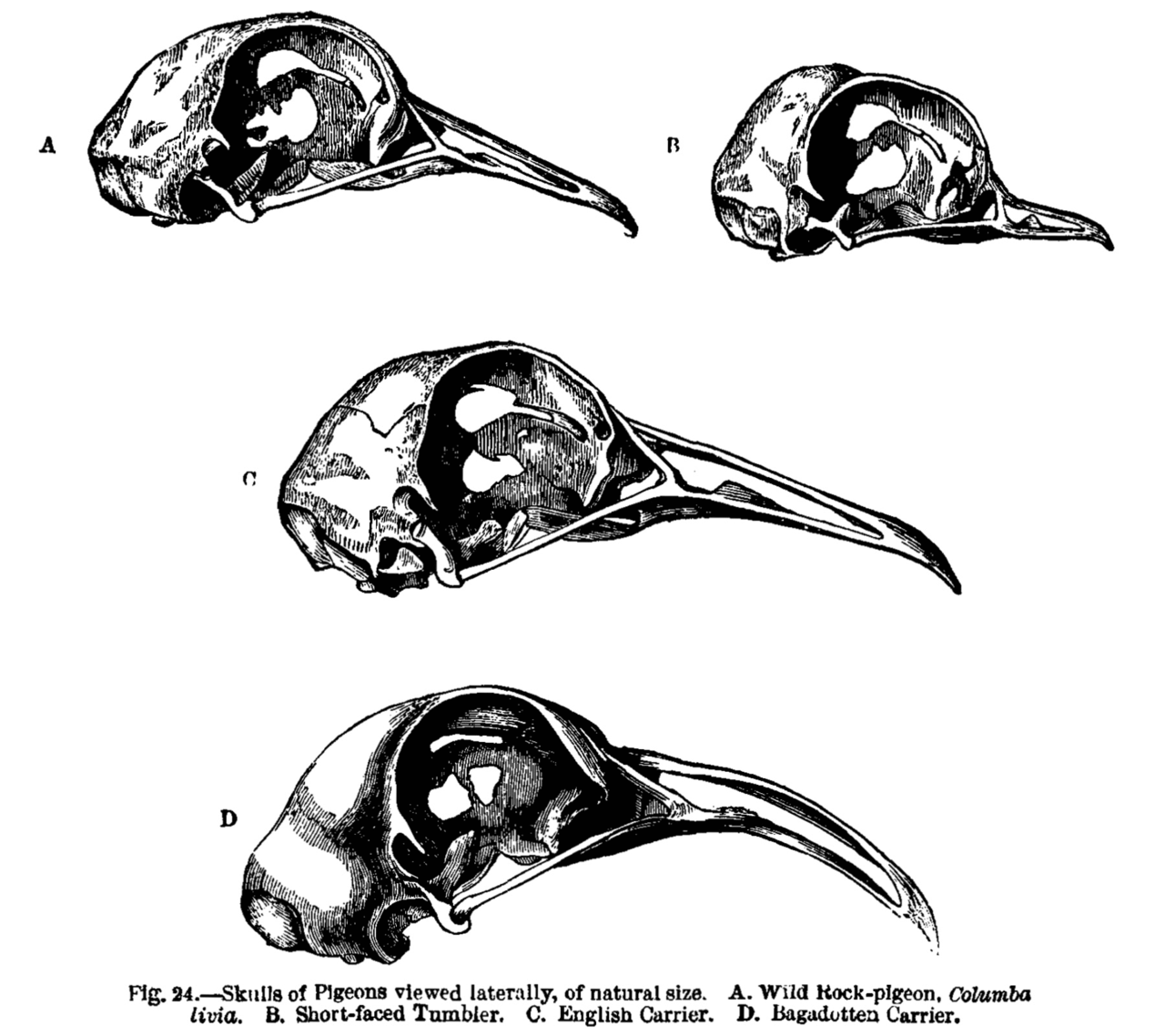
Darwin marshaled observations from domesticated breeds, biogeography, paleontology, embryology, and comparative anatomy to support the idea of evolution. He drew on familiar examples such as selective breeding in animals and plants to illustrate how selection can produce large changes. Although he lacked knowledge of Mendelian genetics, later discoveries of heredity supplied mechanisms that complemented and strengthened his argument.
Publication, title, and editions
The book's original long title was notable: On the origin of species by means of natural selection, or the preservation of favoured races in the struggle for life. Published in London by John Murray in November 1859, it quickly went through multiple editions; by the sixth edition (1872) Darwin had shortened the title to The Origin of Species. He revised the text across editions to respond to critiques and to incorporate further evidence.
Reception and influence
Initial reactions ranged from enthusiastic support among many naturalists to vigorous religious and scientific objections. Over decades the idea of evolution by natural selection became a cornerstone of biology, especially after the 20th-century synthesis that integrated genetics and population biology. The book altered how scientists and the public understand humanity's place in nature.
Legacy and notable facts
Today the book is widely regarded as foundational in biological sciences. Its influence extends beyond biology into philosophy, ethics, and the history of science. Key distinctions include Darwin's methodical accumulation of evidence, the shift from teleological explanations to natural causes, and the enduring role of natural selection as a central explanatory principle. For further reading on Darwin, editions, and scholarly analysis see additional resources and annotated editions linked below.
More on Darwin | Evolution overview | Original title and text | Natural selection explained | Publication history
Questions and answers
Q: Who wrote 'On the Origin of Species'?
A: Charles Darwin wrote 'On the Origin of Species'.
Q: What is the book about?
A: The book is about evolution and what caused evolution to happen.
Q: When and where was the book published?
A: The book was published in London by John Murray in November 1859.
Q: Has the book been translated into many languages?
A: Yes, the book has been translated into many languages.
Q: What is the full title of the book?
A: The full title of the book is 'On the origin of species by means of natural selection, or the preservation of favoured races in the struggle for life'.
Q: How has the title of the book changed over time?
A: The title of the book has been changed to 'The Origin of Species' since the 6th edition of 1872.
Q: What is the significance of the book?
A: The book is the most important single book in the biological sciences, and its main ideas are well-supported by modern research.
Related articles
Author
AlegsaOnline.com On the Origin of Species — Charles Darwin's 1859 work Leandro Alegsa
URL: https://en.alegsaonline.com/art/72531
Sources
- darwin-online.org.uk : "On the Origin of Species"
- vatican.va : Humani Generis
- darwin-online.org.uk : 152