
Numerical analysis: methods, history, and applications
Study of algorithms that compute approximate solutions to mathematical problems, covering methods, error control, historical origins, and applications in science, engineering, and beyond.
Numerical analysis is the branch of mathematics concerned with designing, studying and implementing algorithms that produce useful approximations to problems arising in mathematical analysis and applied science. Rather than seeking closed-form expressions, numerical analysts focus on stability, convergence and computational efficiency so that answers are accurate enough for practical use. This pragmatic orientation links theory and computation: proofs show what an algorithm guarantees, while tests and implementations measure its behavior on real hardware such as modern computers.
Image gallery
3 Images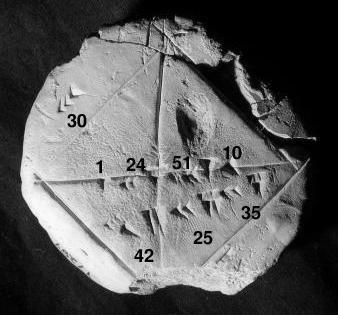


Core characteristics
Typical numerical tasks include solving equations, evaluating integrals, approximating derivatives, and simulating dynamical systems. Work in the field emphasizes three interrelated properties:
- Accuracy — how close the computed value is to the true value and how error propagates;
- Stability — how algorithmic operations amplify input or rounding errors;
- Efficiency — how much time and memory are required as problem size grows.
Many classical mathematical problems resist exact treatment with elementary calculus; for example the Navier–Stokes equations governing fluid motion or the three-body problem in celestial mechanics are typically explored numerically. Even when analytical formulas exist, they may be impractical to evaluate directly (for instance, truncating a power series leads to numerical methods that are more efficient).
Historical background
Numerical calculation has a long practical history. Ancient tablets show approximations to roots, such as the computation of the square root of two on a Babylonian clay record, reflecting early needs in sewing, land surveying and building. Craftspeople used such estimates for carpentry and construction. Over centuries, tables of logarithms and trigonometric values supported navigation and astronomy. Before electronic machines, practitioners relied on hand interpolation and printed tables; these same interpolation techniques remain part of modern solvers and are still taught as fundamental tools (archival records, historic methods and interpolation techniques).
Common methods and examples
Numerical analysis is an umbrella for many specialized techniques. Major families include:
- Root-finding and nonlinear solvers (Newton-type methods, secant methods);
- Numerical linear algebra for systems and eigenproblems — central to data processing and scientific computing (numerical linear algebra);
- Ordinary differential equation (ODE) solvers used to model motion and dynamics (ODEs), for example in simulating stellar motion;
- Stochastic methods and simulation tools such as stochastic differential equations and Markov chains applied in probabilistic modeling;
- Optimization algorithms that tune parameters or design systems, important in control and finance (optimization).
Applications and impact
Numerical analysis underpins virtually all quantitative fields. Engineers use it to design structures and systems (engineering); physicists simulate complex processes; biologists and medical researchers rely on numerical models to interpret data and simulate cells and tissues (biology, medicine). In finance, algorithms estimate risk and optimize portfolios. The rise of large-scale computing has extended reach into data science and the arts where realistic rendering, animation and signal processing require efficient numerical methods.
Distinctions, challenges and practice
Practical numerical work blends analysis with software engineering. Analysts must choose algorithms whose theoretical error bounds apply in floating-point arithmetic and whose cost fits available resources. Choosing between direct and iterative linear solvers, explicit or implicit ODE integrators, or deterministic and stochastic models often depends on problem structure. Continued research explores faster solvers, tighter error estimates, and algorithms that exploit modern hardware. For both historical perspective and modern practice, numerical analysis remains a discipline that connects abstract mathematical ideas to concrete computational tools via rigorous study and empirical verification.
Further reading: introductory texts and surveys give systematic treatments of algorithmic properties, implementation issues and domain-specific adaptations; consult specialized sources for deep dives into topics mentioned above, or follow linked entries for algorithm descriptions and applied case studies: algorithms overview, approximation theory, analysis foundations, calculus limitations, Navier–Stokes resources, three-body literature, power series methods, ancient computations, root approximations, construction math, engineering applications, ODE techniques, astronomical models, optimization guides, linear algebra tools, stochastic analysis, Markov theory, medical simulations, biological modeling, computing platforms, and interpolation techniques.
Related articles
Author
AlegsaOnline.com Numerical analysis: methods, history, and applications Leandro Alegsa
URL: https://en.alegsaonline.com/art/71432
Sources
- it.stlawu.edu : Photograph, illustration, and description of the root(2) tablet from the Yale Babylonian Collection
- nzqa.govt.nz : CARPENTRY THEORY: Demonstrate knowledge of setting out a building