
Probability theory: foundations, concepts, history, and applications
An accessible overview of probability theory: core concepts, historical development, common examples, and applications across science, engineering, and statistics.
Probability theory is the mathematical study of randomness, chance, and uncertainty. It provides a language and a set of tools for quantifying how likely events are to occur, reasoning about outcomes of experiments, and modeling systems influenced by chance. At its core are concepts such as events, sample spaces, and probability measures; it also formalizes random variables and their functions so that numerical questions about uncertainty can be answered.
Image gallery
1 Image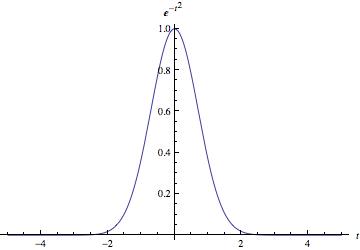
Core concepts and basic examples
An elementary probability model begins with a sample space: the set of all possible outcomes of an experiment, for example the sides of a coin or the faces of a die. An event is a subset of that space. A probability measure assigns a number between 0 and 1 to each event in a consistent way, so that the whole space has probability 1. Common examples include tossing a fair coin, drawing cards, and rolling dice; these discrete examples help build intuition for continuous cases such as measuring lengths, times, or physical quantities.
- Random variables: functions from outcomes to numbers that let us compute averages and other summaries using expectation, variance, and moments. See random variables.
- Distributions: describe how mass or probability is spread (e.g., binomial, Poisson, normal).
- Stochastic processes: collections of random variables indexed by time or space that model evolving systems; examples include Markov chains and Brownian motion. See stochastic processes.
History and formal foundations
Origins of modern probability trace to correspondence in the 17th century between mathematicians such as Blaise Pascal and Pierre de Fermat, who analyzed gambling problems and expectations. Over subsequent centuries, probability grew through contributions in statistics, actuarial science, and physics. In the 20th century, a rigorous measure-theoretic foundation was established (notably by Andrey Kolmogorov), which formalized probability as a branch of mathematics built on set theory and measure theory.
Applications and importance
Probability theory underpins statistical inference, which is used to draw conclusions from data in science, medicine, economics, and social research. It is central to risk assessment in insurance and finance, to reliability engineering and queuing theory in operations research, and to algorithms in computer science and machine learning. In the physical sciences, probabilistic models explain phenomena in statistical mechanics and are integral to the interpretation of quantum mechanics, since microscopic behavior of atoms and particles is inherently probabilistic.
Distinctions and notable facts
Several complementary perspectives exist within probability: frequentist interpretations view probability as long-run frequencies of events, while Bayesian approaches treat probability as a degree of belief updated by evidence. Models may be discrete or continuous; they may emphasize single experiments or dynamic systems evolving in time. Although random events such as lotteries or dice rolls seem unpredictable individually, aggregate patterns often emerge — for example the law of large numbers and the central limit theorem explain why averages tend to stabilize and why many sums of small independent effects appear approximately normally distributed. Randomness thus admits quantitative prediction at the level of distributions, even when individual outcomes remain uncertain. See also discussions of non-deterministic events and how apparent patterns arise from stochastic rules.
Probability theory continues to expand as data become larger and systems more complex. From modeling epidemics and networks to powering probabilistic programming, it supplies conceptual tools and practical methods for dealing with uncertainty across disciplines. For introductions and deeper treatments, consult standard textbooks and resources in probability and measure theory; many introductory texts also link probability concepts with applied subjects through examples and exercises.
Related articles
Author
AlegsaOnline.com Probability theory: foundations, concepts, history, and applications Leandro Alegsa
URL: https://en.alegsaonline.com/art/79306
Sources
- britannica.com : Probability theory, Encyclopaedia Britannica
- wikidata.org : wikidata.org/wiki/Q5862903
- d-nb.info : 4079013-7
- id.ndl.go.jp : 00564753