
Differential equation: definitions, types, history, and applications
An overview of differential equations: definition, classification (ODE/PDE, linear/nonlinear), historical development, solution approaches, applications, and key distinctions.
A differential equation is an equation that relates one or more unknown quantities to their derivatives — the rates at which those quantities change. Unlike algebraic equations whose solutions are numbers, a differential equation is typically solved for an unknown function or a family of functions. Solutions describe how a quantity evolves in space or time and are central to modeling continuous change across the sciences and engineering.
Image gallery
1 Image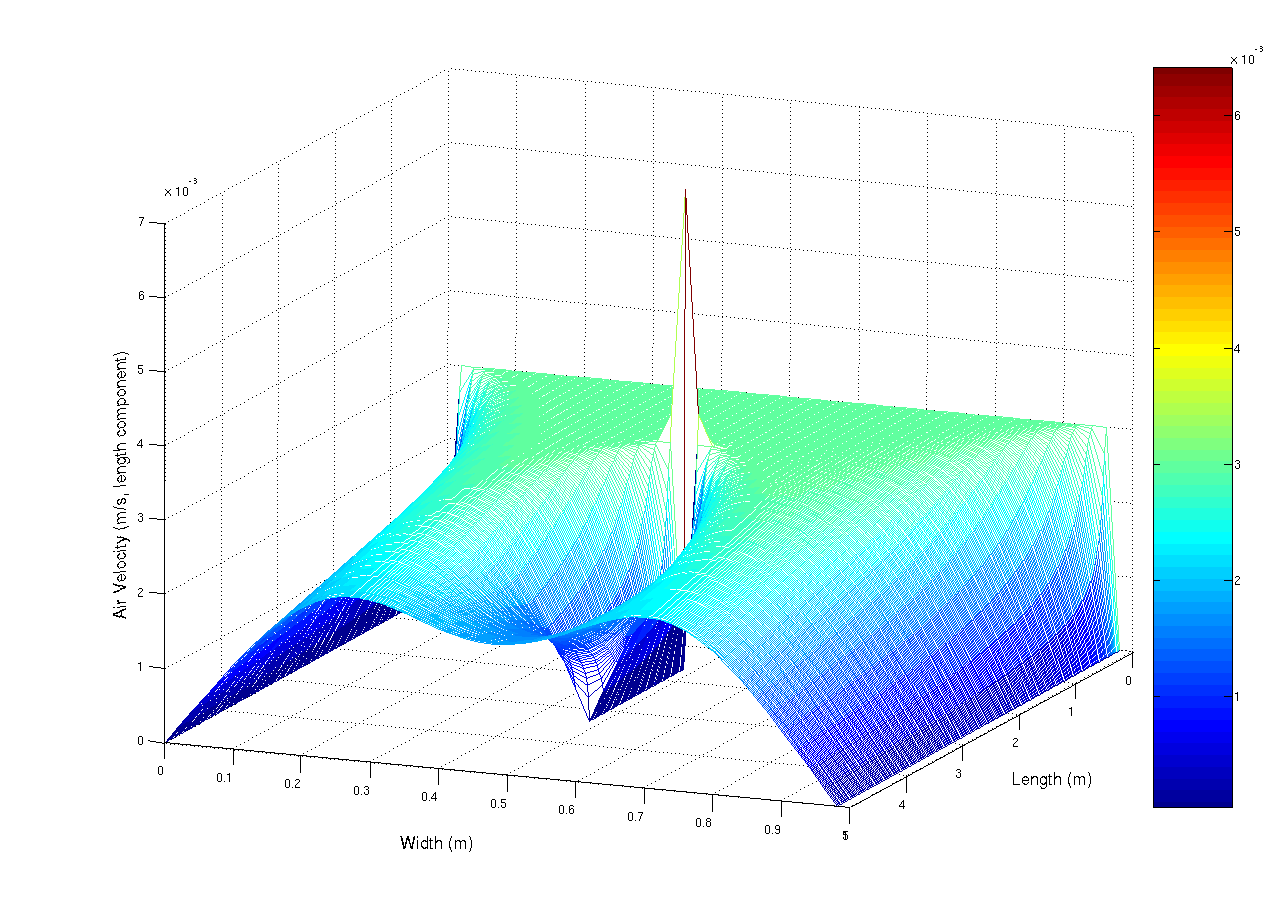
Classification and basic characteristics
Differential equations are classified in several overlapping ways:
- Ordinary vs. partial: Ordinary differential equations (ODEs) involve derivatives with respect to a single independent variable. Partial differential equations (PDEs) involve partial derivatives with respect to two or more independent variables.
- Order: The order is the highest derivative that appears. First-order and second-order equations are especially common in applications.
- Linear vs. nonlinear: Linear equations combine the unknown function and its derivatives linearly; nonlinear equations include products, powers, or other nonlinear operations on the unknowns and are often more difficult to analyze.
- Homogeneous vs. nonhomogeneous: Homogeneous linear equations have zero on the forcing side; nonhomogeneous equations include an external forcing term.
- Initial value vs. boundary value problems: An initial value problem specifies the solution and its derivatives at a point, while a boundary value problem prescribes conditions across a domain boundary.
Historical development
The concept of relating a quantity to its rate of change emerged in the 17th century with the independent development of calculus. Early contributors used differential equations to describe motion, tangents, and change. Subsequent work by mathematicians such as those in the Bernoulli and Euler schools consolidated methods for solving many types of equations and established general strategies. Over time the field expanded to include qualitative theory, existence and uniqueness results, and numerical techniques that permit practical computation when exact solutions are unavailable.
Solution methods and theory
A variety of techniques exist for solving or analyzing differential equations. For some equations there are closed-form methods: separation of variables, integrating factors, reduction of order, and characteristic equations for linear constant-coefficient ODEs. For more complicated linear systems and many PDEs, transform methods and special function theory are important. Nonlinear equations may admit exact solutions only in special cases; often one studies qualitative behavior such as stability, periodicity, or long-term trends.
Rigorous results establish when solutions exist and whether they are unique. Under commonly encountered regularity conditions (continuity and a Lipschitz-type condition on the right-hand side), initial value problems for ODEs have a unique local solution. When analytic solutions are unavailable, numerical methods — from simple step methods to higher-order Runge–Kutta and finite element schemes — are used to approximate solutions in practice.
Applications and examples
Differential equations model a wide range of phenomena: laws of motion and conservation in physics, wave and diffusion processes in engineering, population dynamics and epidemiology in biology, and optimization and pricing in economics. Simple illustrative examples include first-order growth or decay models, and second-order equations describing oscillations. In many applied problems the choice between an ODE or a PDE model is dictated by whether the dependent quantity varies with one variable (e.g., time) or with several (e.g., space and time).
Important distinctions and notable facts
The difficulty of solving differential equations varies sharply with type: linear ODEs are often tractable, whereas nonlinear PDEs can present deep theoretical challenges and may exhibit complex phenomena such as shock formation or chaos. The interplay between analytic, qualitative, and numerical approaches is a defining feature of the subject: theoretical results guide modeling and computation, while numerical experiments often reveal behaviors that stimulate further mathematical study.
For further reading on foundational definitions and examples see introductory texts and reference articles on differential equations. Many resources present step-by-step techniques for elementary classes of problems as well as broader discussions of existence, uniqueness, and stability. Related overview and conceptual background entries provide accessible starting points for learners.
Questions and answers
Q: What is a differential equation?
A: A differential equation is a mathematical equation that involves variables and their rates of change.
Q: Why are differential equations special?
A: Differential equations are special because the solution is a function instead of a number.
Q: What kind of problems do differential equations help solve?
A: Differential equations help solve problems in which the dependence of one parameter on another is unknown but can be expressed as a derivative.
Q: What is the relationship between differential equations and finding functions?
A: Differential equations help in finding a function by its derivative that is related to other expressions.
Q: What variables are involved in a differential equation?
A: A differential equation involves variables like x or y and their rates of change.
Q: How do differential equations differ from regular equations?
A: Differential equations differ from regular equations because the solution is a function rather than a number.
Q: In what situations might a differential equation be useful?
A: Differential equations are useful in problems where the dependence of one parameter on another is unclear but can be expressed as a derivative.
Related articles
Author
AlegsaOnline.com Differential equation: definitions, types, history, and applications Leandro Alegsa
URL: https://en.alegsaonline.com/art/27345
Sources
- nature.ac.cn : Nonlinstor-An electronic circuit element based on the form of the nonlinear differential equation
- wikidata.org : wikidata.org/wiki/Q11214
- d-nb.info : 4012249-9
- id.loc.gov : sh85037890
- id.ndl.go.jp : 00560651