
O (letter)
O is the fifteenth letter of the English alphabet, a vowel represented by a circular glyph; it has diverse pronunciations, a long written history from Semitic pictograms to Latin, and many symbolic uses.
Overview
The character O is the fifteenth letter in the modern alphabet used for English and many other languages. It functions primarily as a vowel and appears in both an uppercase form (O) and a lowercase form (o). Visually it is most often rendered as a circle or rounded oval, and that simple shape contributes to its use as a symbol beyond writing.
Image gallery
3 Images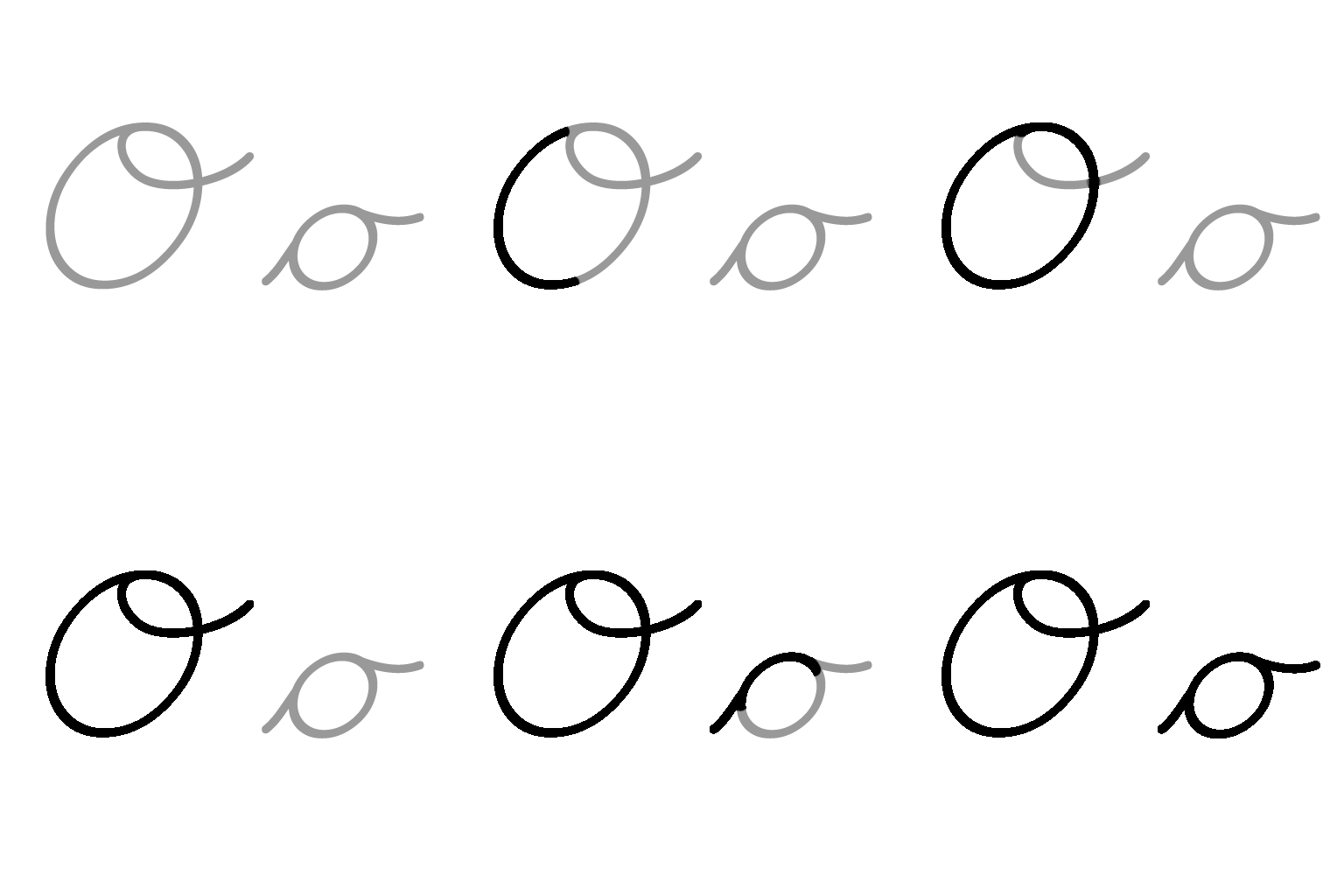


Origin and historical development
The letter traces its ancestry to ancient Semitic scripts where a sign that likely depicted an eye evolved into Phoenician and then Greek forms. In Greek the character became omicron (literally “small o”), and the Romans adapted that form into the Latin alphabet used today. Over centuries typography produced many stylistic variants, but the core circular outline remained consistent.
Form, pronunciation and orthography
In English the letter represents several sounds: the long "o" as in "go," a shorter vowel as in "not" in some accents, and participates in digraphs and diphthongs (for example "oo," "ow," "ou"). Pronunciation depends on stress, syllable structure and the surrounding letters. Typographically, the glyph can be narrow, wide, or slashed in some fonts to avoid confusion with similar characters.
Uses and symbolism
Beyond language, O appears as a common symbol: it is the chemical symbol for oxygen, denotes blood type O in medicine, and is used to mark circular shapes. In literature and speech the letter sometimes appears as the archaic vocative "O" (as in "O Lord"). In computing and mathematics a capital O is used in expressions such as Big O notation to describe algorithmic growth.
Distinctive facts and common confusions
- Shape confusion: The letter is frequently mistaken for the numeral zero; typographers and fonts often introduce distinguishing marks to reduce errors.
- Greek relatives: It corresponds to Greek omicron, distinct historically from omega, which represents a different long vowel sound.
- Names and surnames: Variants such as the Irish prefix "Ó" derive from different linguistic processes and should not be conflated with the plain Latin letter.
For concise reference and further reading, see resources on letter history, phonetics, and typographic practice via general alphabet guides and linguistic introductions (letter studies, alphabet history, script overviews, language references).
Related articles
Author
AlegsaOnline.com O (letter) Leandro Alegsa
URL: https://en.alegsaonline.com/art/71589