
Nintendo Virtual Boy — 1995 stereoscopic game console
A compact encyclopedia overview of Nintendo's Virtual Boy: hardware, how its red-and-black stereoscopic display worked, library, reception, and legacy.
Overview
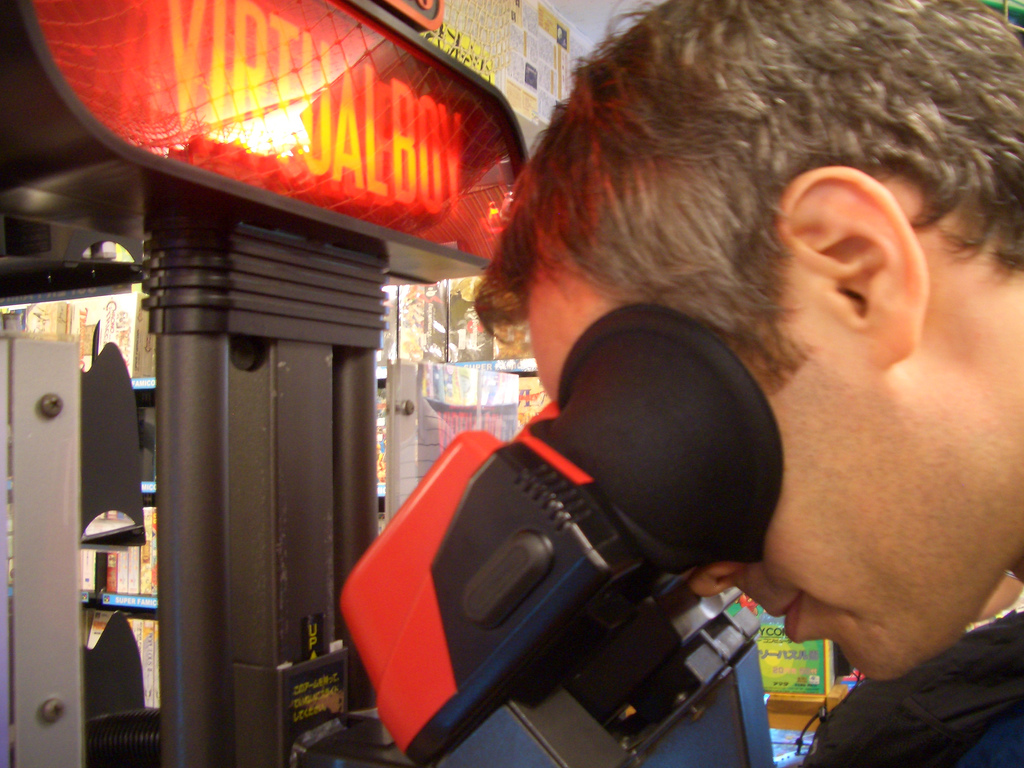
The Nintendo Virtual Boy was a tabletop stereoscopic game console released by Nintendo in 1995. Presented as a 3D gaming system, it used two separate display channels—one for each eye—to produce a sense of depth rather than relying on traditional perspective tricks. The unit is best known for its distinctive red-and-black visuals, unusual headset-like cabinet and brief commercial life.
Image gallery
7 Images


How it worked
Instead of an LCD panel, the Virtual Boy employed a pair of vertical arrays of red LEDs and a mechanical scanning system. Each array produced a single column of pixels that was swept across the user’s field of view by small vibrating mirrors, and lenses magnified the result. By presenting slightly different images to the left and right eyes, the system created stereoscopic depth through binocular parallax and the human eye’s persistence of vision. The display’s red monochrome palette and the rapid scanning process were key contributors to the console’s unique appearance and user experience.
Design, ergonomics and health considerations
The system was designed to sit on a tabletop with a visor-like eyepiece that the player placed their face against so each eye looked into its respective screen. Nintendo marketed it as a mostly portable device because it was small and could be moved easily, but gameplay required the stand and positioning that limited true handheld use. Some users reported eye strain, headaches or dizziness after extended play sessions. Nintendo mitigated these concerns partly through software features—such as an automatic pause to encourage breaks—as well as usage guidance in manuals and packaging.
Games and software
The Virtual Boy’s commercial library was small. Nintendo and third-party developers released a limited number of titles, with notable examples including Mario Tennis and Virtual Boy Wario Land. The system’s catalogue was restricted to a couple dozen official releases in major markets, making many of its games rare and sought after by collectors today. Games attempted to exploit the console’s depth effect in genres such as platformers, shooters and sports simulations.
Commercial performance and legacy
Launched in 1995 during a dynamic period in the videogame industry, the Virtual Boy struggled commercially. Criticisms often focused on its high initial price, monochrome display, ergonomic limitations and competition from next-generation systems. Nintendo discontinued the system the following year. Despite the short run and modest sales, the device is remembered for being an ambitious and unconventional entry in Nintendo’s lineup, designed under the leadership of Gunpei Yokoi, the creator of the Game Boy and the Game & Watch series. Over time it has gained attention from historians and collectors as an intriguing experiment in early consumer virtual-reality and stereoscopic gaming.
Notable facts and distinctions
- The Virtual Boy used red LED illumination rather than full-color displays, which helped with brightness and cost but limited the palette.
- Its stereoscopic effect relied on presenting separate images to each eye rather than lens-based head-tracking or modern VR headset techniques.
- Because its production life was short and the library small, many of its games are now rare and of interest to collectors and preservationists.
Further reading
For more detailed technical information, historical context and lists of software, consult the following resources and archival materials:
- Manufacturer notes and product briefs
- Technical breakdown and hardware analysis
- Contemporary reviews and press coverage
- Game library index and release dates
- Interviews with designers and engineers
- Explanations of stereoscopic imaging and parallax
- Sales data and market context for 1995–1996
- Ergonomics and health advisories
- Collector guides and rarity assessments
- Comparisons with contemporary consoles
- Preservation projects and emulation efforts
- Regional variants and packaging differences
- Biographical material on Gunpei Yokoi
- Related handheld products and design lineage
- Academic work on the history of virtual reality
Note: This article summarizes broadly reported facts about the Nintendo Virtual Boy and does not attempt to exhaust the literature. Exact sales figures, regional marketing names and the number of releases are matters of public record reported by multiple sources; readers seeking original documentation should consult primary archival material linked above.
Related articles
Author
AlegsaOnline.com Nintendo Virtual Boy — 1995 stereoscopic game console Leandro Alegsa
URL: https://en.alegsaonline.com/art/70309