
Noise (electronics): causes, types, measurement, and mitigation
Random electrical disturbances in circuits that limit signal quality. Covers common noise types, measurement concepts, sources, practical examples, and engineering methods to reduce noise.
Noise in electronics is any random or unpredictable fluctuation that appears on an electrical signal and degrades its intended content. In practice, noise is present in all electronic circuits and systems to varying degrees, and it is a principal factor limiting the sensitivity, fidelity, and capacity of sensors, amplifiers, and communication links. Engineers treat noise statistically rather than deterministically because individual disturbances are not repeatable; instead they describe average power, spectral content, and how noise combines with useful signals.
Image gallery
1 Image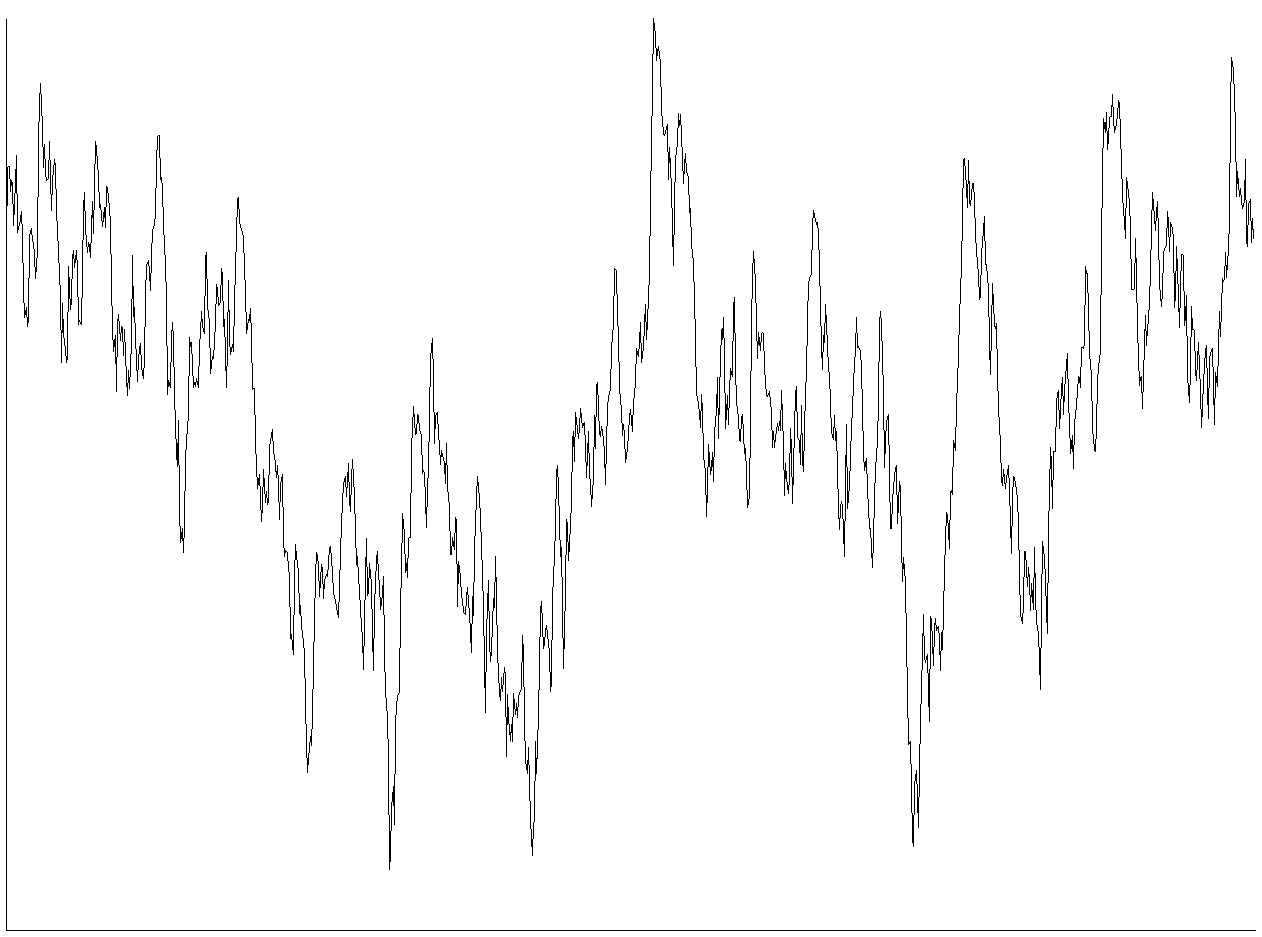
Characteristics and common types
Different physical mechanisms produce noise with distinct characteristics. Commonly discussed categories include:
- Thermal (Johnson–Nyquist) noise: generated by the random motion of charge carriers in resistive elements; its power increases with temperature and with the measurement bandwidth.
- Shot noise: arises from the discrete nature of electric charge when current flows across junctions or barriers, notable in diodes and transistors.
- Flicker (1/f) noise: a low-frequency excess noise found in many semiconductors and resistors whose intensity grows at lower frequencies.
- Burst/popcorn noise: random abrupt jumps in level from defects or traps in semiconductor devices.
- External and man-made noise: environmental radio-frequency emissions, power-line hum, or switching transients that couple into circuits.
Measurement and impact
Noise is quantified in terms such as root-mean-square (rms) voltage, power spectral density, and signal-to-noise ratio (SNR). The effective impact of noise depends on bandwidth: wider bandwidth admits more noise power. In communications, noise reduces achievable data rates and increases bit error rates; in instrumentation it limits the smallest detectable signal. Devices are often specified by a noise figure or equivalent input noise, which relates an amplifier's output noise to a hypothetical noiseless reference.
Origins and historical context
Understanding of electronic noise developed alongside statistical physics and early radio technology. The thermal-noise concept was clarified in the early 20th century through the work of physicists who related random electrical fluctuations to temperature and fundamental constants. Since then, improvements in semiconductor manufacturing and materials science have reduced some noise sources, while the proliferation of electronic devices has increased man-made interference in crowded frequency bands.
Mitigation techniques and design practices
Engineers use many strategies to reduce or tolerate noise depending on the application. Typical approaches include:
- Careful circuit layout, shielding, and grounding to prevent unwanted coupling.
- Filtering and bandwidth limitation to exclude frequencies dominated by noise.
- Differential signaling and balanced amplification to cancel common-mode disturbances.
- Low-noise component selection, cooling to reduce thermal noise, and biasing to minimize device-specific noise.
- Digital techniques such as averaging, error correction coding, and spread-spectrum modulation to improve reliability in noisy channels.
Practical examples and distinctions
In audio systems, hiss from thermal and semiconductor noise limits perceived dynamic range; in radio astronomy, natural background noise sets detection limits for faint cosmic signals; in wireless links, noise combined with interference determines coverage and throughput. It is useful to distinguish noise from deliberate interference: interference often has identifiable structure or source (for example intentional jamming), whereas noise is random and statistical. For practical troubleshooting and specification reading, linking to general electronics references can help: see electronics overview, a definition of random processes, design guidance for circuit layout, and communications concepts at communications.
Because noise is unavoidable, much of electronic design is about managing its effects rather than eliminating it completely. Understanding the types, how they add and scale, and which mitigation methods are most effective for a given application is essential to achieving reliable and high-performance systems.
Questions and answers
Q: What is noise in electronics?
A: In electronics, noise is a random fluctuation in an electrical signal.
Q: Does noise happen in all electronic circuits?
A: Yes, noise happens in all electronic circuits.
Q: How does noise vary in electronic devices?
A: Noise made by electronic devices varies greatly.
Q: What is noise in communication systems?
A: In communication systems, noise is an error or random disturbance of useful information in a communication channel.
Q: What comprises noise?
A: The noise is the total of unwanted or disturbing energy from natural and sometimes man-made sources.
Q: Is noise the same as interference?
A: No, noise is usually distinguished from interference, such as deliberate jamming or other unwanted electromagnetic interference.
Q: Which language is more resistant to noise, a spoken language or a natural language?
A: If a message is transmitted in a natural language (a series of letters which make sense), then it is more resistant to noise than a spoken language.
Related articles
Author
AlegsaOnline.com Noise (electronics): causes, types, measurement, and mitigation Leandro Alegsa
URL: https://en.alegsaonline.com/art/70566