
Nēnē (Hawaiian goose)
The Nēnē, or Hawaiian goose (Branta sandvicensis), is an endemic waterbird of Hawaii noted for its reduced toe webbing, ground‑oriented habits, and conservation recovery from near‑extinction.
The Nēnē (Branta sandvicensis), commonly called the Hawaiian goose, is a species endemic to the Hawaiian Islands. Its common name imitates the soft, repeated call of the bird. Taxonomically placed in the genus Branta, the Nēnē is a true goose that evolved in relative isolation after ancestors related to the Canada goose reached the archipelago. Today the species persists only on a few islands and in managed populations, and it remains a powerful example of island endemism and of modern conservation efforts. Species profile and identification are discussed below.
Image gallery
10 Images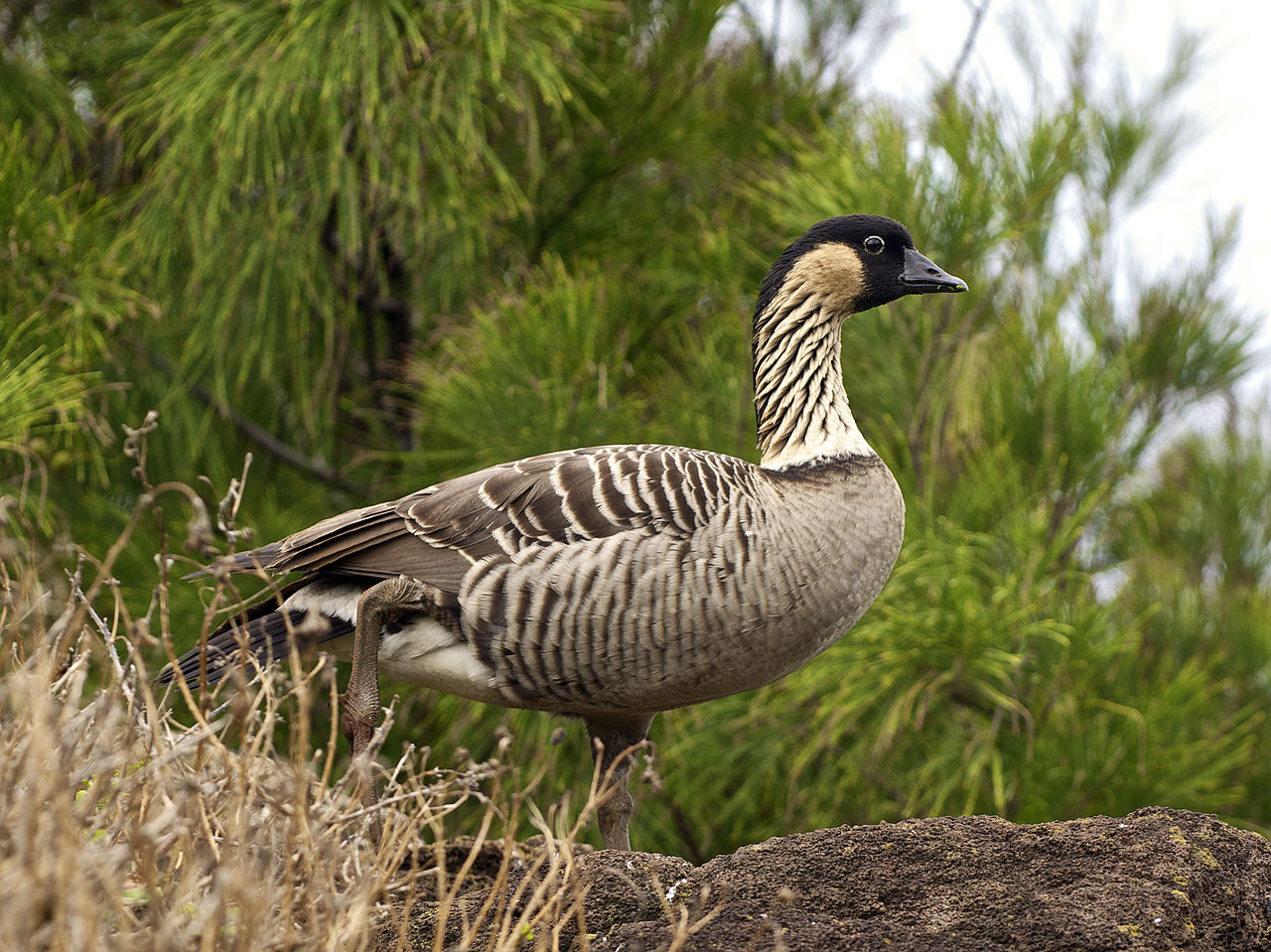


Description and adaptations
The Nēnē is unmistakable in the field for its generally brown, streaked body and darker head and neck with lighter face markings. Compared with many other waterfowl it walks more often than it swims; its feet have reduced webbing between the toes, an adaptation that improves traction on rough, rocky lava terrain where it commonly forages and nests. During the annual moult the birds become temporarily flightless, a vulnerable period that historically increased their susceptibility to hunting and predation.
- Plumage: brownish back and flanks with paler underparts and darker head.
- Feet and gait: reduced toe webbing for terrestrial locomotion.
- Behavior: primarily grazers and ground feeders; more terrestrial than many other geese.
- Vocalization: soft, repeated notes that gave rise to the name "Nēnē."
Range, origins and history
The species is endemic to Hawaii and historically occurred on multiple islands. After colonization by an ancestral Branta population, the birds adapted to island conditions and diversified in behavior and morphology from their mainland relatives. The Nēnē now nests mainly on open lava flows, grasslands and shrublands and is found on only a few islands in the wild. Evidence from natural history and genetic studies supports the view that the Nēnē represents a long‑term insular lineage of the Branta geese.
Threats and conservation
Human arrival in the islands, hunting pressure and the introduction of non‑native mammals had devastating effects. Introduced predators and competitors—such as the small Indian mongoose, feral pigs and feral or domestic cats—preyed on eggs, goslings and adults or degraded nesting habitat. The population reached an extremely low point in the mid‑20th century, reported at only a few dozen birds. Intensive conservation actions, including captive breeding, predator control and reintroduction into protected areas, have produced a substantial recovery from that nadir. Captive breeding programs in zoos and managed releases have played a central role in restoring wild populations. For more on threats and waterfowl status see resources on waterfowl conservation and specific accounts of predators such as the mongoose, feral pigs and cats.
Cultural, legal and ecological importance
The Nēnē is the state bird of Hawaii and occupies a visible place in local culture, public education and tourism. Its recovery is often cited as a conservation success story, though the species continues to require management where invasive predators and habitat change persist. The bird also contributes to island ecosystems by grazing vegetation and, in some locations, shaping plant communities through seed dispersal and short‑distance movement.
Current efforts focus on maintaining secure breeding sites, controlling predators, supporting captive programs and fostering public awareness. For official state symbolism and cultural references see the Hawaiian state resources linked here: Hawaii state bird information. Further scientific and conservation summaries are available through general species databases and review pages: detailed species information and related habitat descriptions.
Though once among the world's most threatened waterfowl, the Nēnē demonstrates how long‑term, coordinated conservation—combining habitat protection, predator control and captive rearing—can reverse declines in insular species. Continued vigilance is needed to ensure that this emblematic Hawaiian goose remains a living part of the islands' natural heritage.
Related articles
Author
AlegsaOnline.com Nēnē (Hawaiian goose) Leandro Alegsa
URL: https://en.alegsaonline.com/art/69115
Sources
- iucnredlist.org : "Branta sandvicensis"
- news.bbc.co.uk : "BBC - Wear - Rare bird lays first spring eggs"
- 50states.com : "Hawaii State Bird - Nene - Hawaiian Goose"
- ducks.org : "Hawaiian 'Nene' Goose Facts, Figures, Description and Photo"