
Mongoose (Herpestidae): appearance, behavior, and human interactions
Small carnivores of the family Herpestidae, mongooses are agile, often social mammals found across Africa, Asia, parts of Europe and introduced islands; known for varied diets and occasional snake‑fighting behavior.
Overview
Mongooses are small to medium-sized mammals belonging to the family Herpestidae. Often described as cat-like in posture and movement, they are actually part of a distinct carnivore lineage. The family includes solitary species and highly social ones such as the meerkat; the common plural is mongooses though mongeese is sometimes heard.
Image gallery
10 Images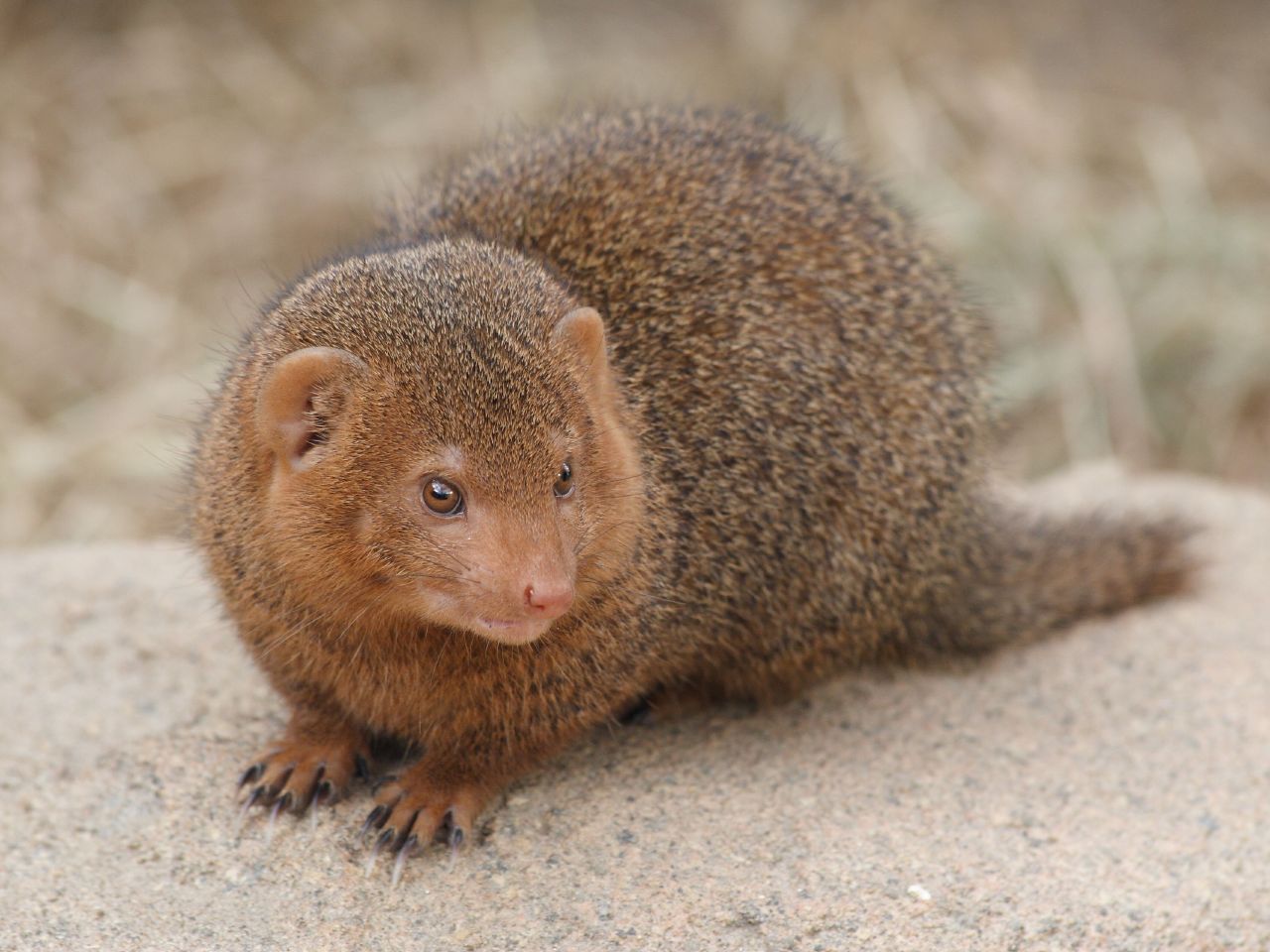


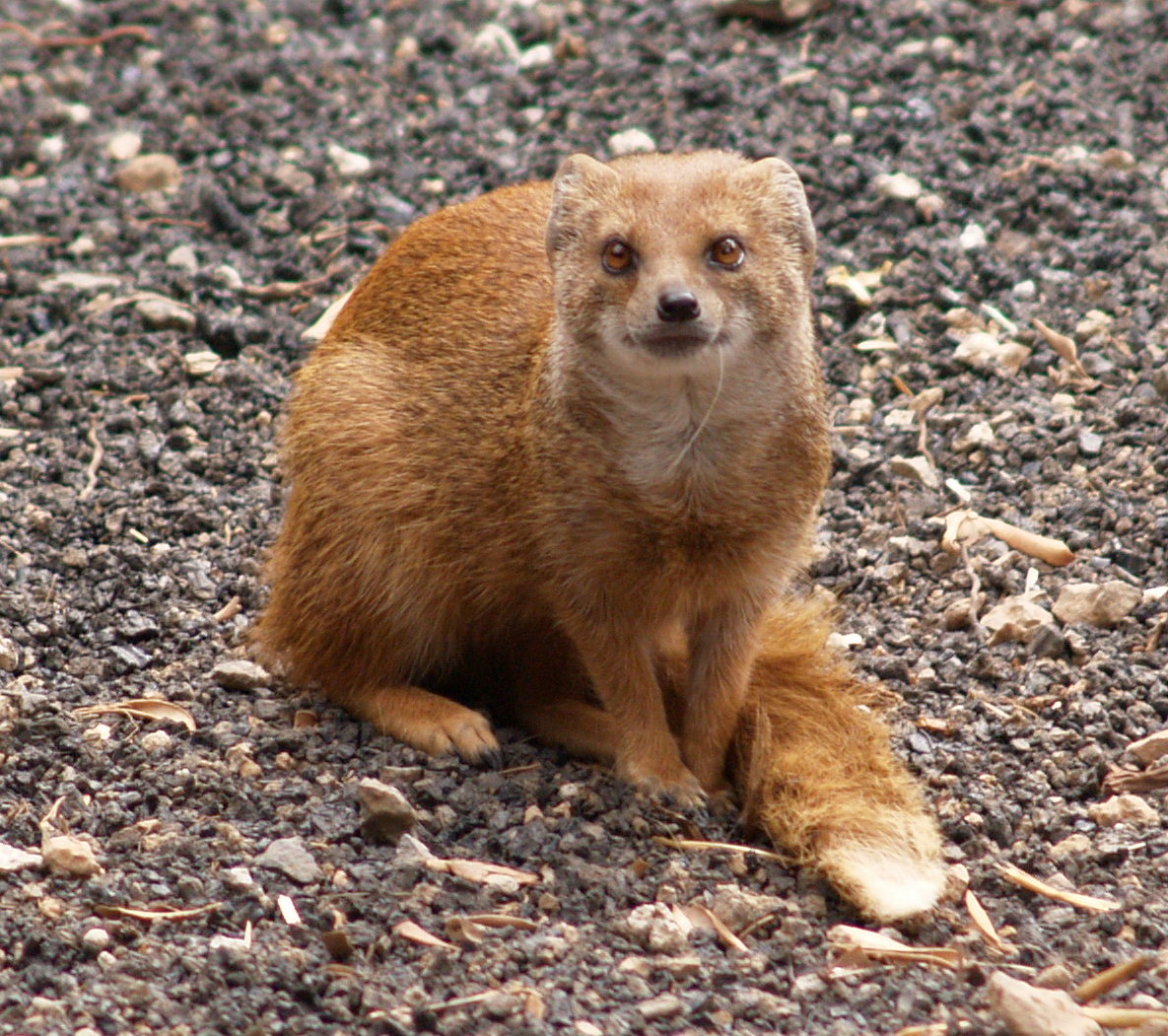
Physical characteristics
Members of Herpestidae typically have elongated bodies, short legs and long tails. They possess sharp teeth and claws suited to a primarily meat-eating diet but many are opportunistic feeders. Senses are acute—good vision and hearing aid in hunting—and coats range from plain grays and browns to patterned pelage that provides camouflage.
Behavior, diet and reproduction
Diet varies by species and habitat: common prey items include insects, small mammals, birds, eggs and reptiles. Some species specialize on particular food types, while others exploit a wide range of resources. Reproductive systems range from solitary breeding to cooperative care in social species; litter sizes are small and young are often provisioned by adults in group-living species.
Snake encounters and defenses
Certain species are famous for confronting venomous snakes. They use speed, agility and coordinated tactics to avoid strikes; a degree of physiological tolerance to some venoms has been reported in several species, but this is not universal across the family and does not make them immune.
Distribution and human introductions
Native mongooses occur across Asia, Africa and parts of southern Europe. Humans have introduced small species to islands such as those in the Caribbean to control rodents and snakes; these introductions have sometimes caused harm to native wildlife and ecosystems.
Conservation and human interactions
Some species adapt well to altered landscapes and remain widespread; others decline because of habitat loss, persecution or competition with introduced predators. Mongooses are used for pest control in some regions but can become invasive and impact ground‑nesting birds, reptiles and amphibians. Conservation status therefore varies by species and region.
Taxonomy and further reading
The family Herpestidae sits within the order Carnivora and contains several genera and species with diverse ecologies. For general references on their classification and regional accounts see material on family Herpestidae and regional faunas for Asia, Africa, the Caribbean and southern Europe.
- Social range: solitary hunters to highly social cooperative breeders (e.g., meerkats).
- Diet: insectivores to generalist carnivores.
- Human impact: valued for pest control but sometimes invasive.
Related articles
Author
AlegsaOnline.com Mongoose (Herpestidae): appearance, behavior, and human interactions Leandro Alegsa
URL: https://en.alegsaonline.com/art/66051