
Astrodon — Early Cretaceous sauropod known for star-shaped teeth
Astrodon is an Early Cretaceous sauropod known from teeth and fragmentary bones in Maryland. Its distinctive star-shaped teeth and debated taxonomy, including links to Pleurocoelus, are notable.
Overview
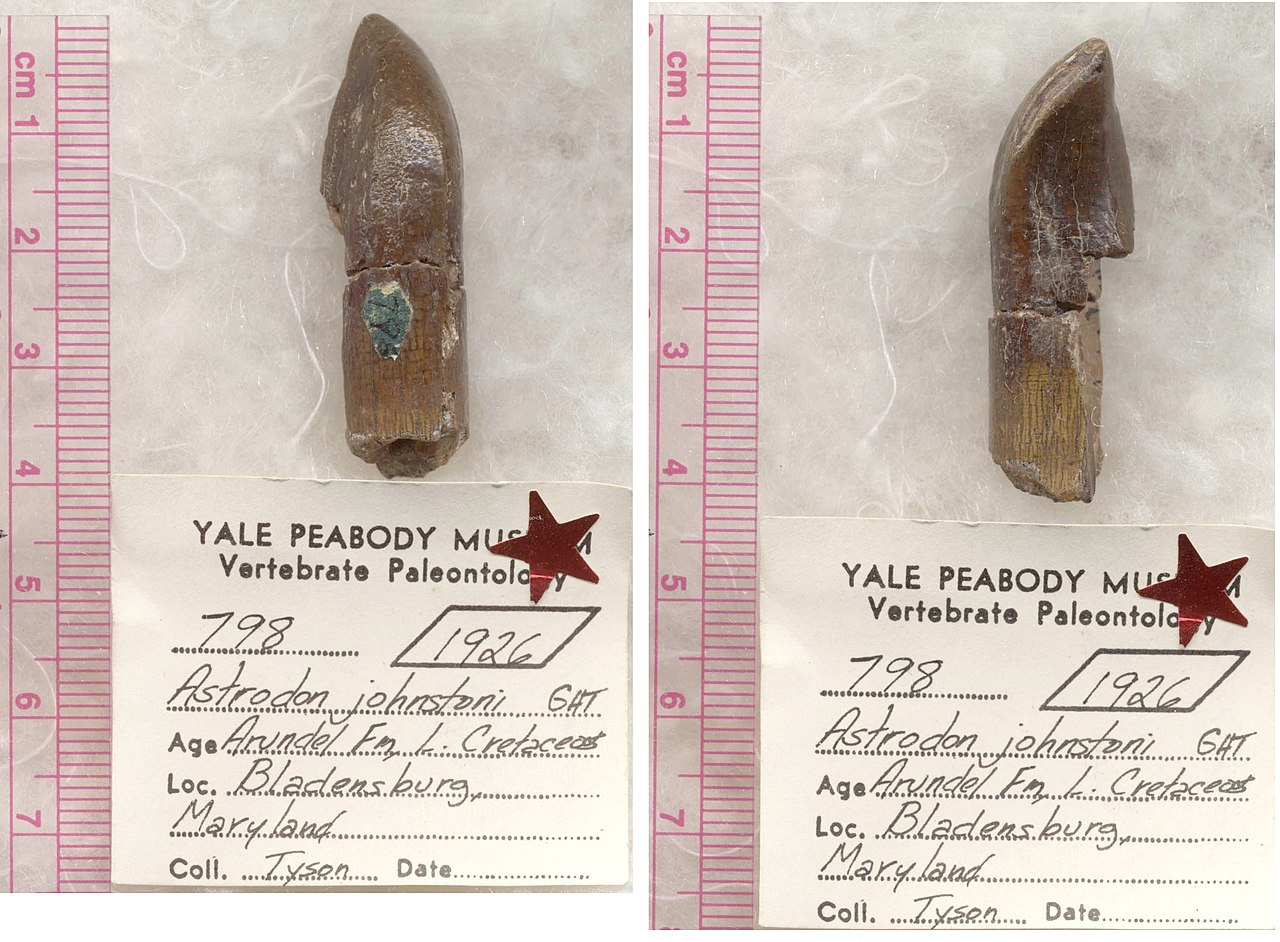
Astrodon is a genus of long-necked, plant-eating dinosaur first identified from fragmentary remains in the eastern United States. The name means "star-tooth," a reference to the unusual cross-sectional shape of its teeth. It lived during the Early (Lower) Cretaceous, roughly in the time interval often cited as about 130–120 million years ago, and is known primarily from material recovered in Maryland and associated formations. Early descriptions emphasized its sauropod proportions and herbivorous lifestyle.
Image gallery
10 Images



Physical characteristics
Astrodon was a quadrupedal sauropod with a relatively long neck and tail and a modestly sized body compared with some later giant sauropods. Estimates based on available remains suggest an animal on the order of around 9 metres (about 30 feet) in length for individuals represented by the fragmentary record, although preservation is incomplete and size likely varied with age.
Distinctive features include:
- Teeth: narrow, peg-like teeth with a star-shaped or ridged cross-section that gave the genus its name and help distinguish its isolated teeth from those of other sauropods.
- Postcranial bones: largely fragmentary and dispersed; there are no complete skeletons attributable with certainty to the genus.
- Ontogenetic variation: a high proportion of the known specimens are juvenile, which has complicated assessments of adult proportions and variation.
Discovery and naming
The genus was named in the mid-19th century from teeth and a small amount of associated bone material found in the Atlantic coastal plain deposits. The type species is Astrodon johnstoni, named by Johnston in 1859. Fossils come mainly from the Arundel Formation of Maryland and other broadly contemporaneous sediments. The Early Cretaceous age of these deposits places Astrodon among the earlier records of large sauropods in North America. For overview references and regional context see Early Cretaceous strata summaries.
Taxonomy and scientific debate
The precise relationships of Astrodon are debated. It has often been regarded as a brachiosaur-like sauropod or a close relative of genera such as Brachiosaurus, but fragmentary material makes confident placement difficult. In the past, several species described from the same region under the name Pleurocoelus were thought to represent distinct taxa; subsequent reassessments have argued that many of those names likely represent juveniles or growth stages of a single sauropod species.
Notably, Hatcher and later workers argued that the Arundel Formation contains only one species of sauropod, and a detailed review by Carpenter and Tidwell (2005) accepted the view that Astrodon johnstoni should be used for that material. However, because much of the material is incomplete and dominated by young individuals, alternative interpretations persist and some authors prefer to treat the taxonomy as uncertain pending discovery of more diagnostic adult material.
Paleoecology and life habits
As a sauropod, Astrodon was herbivorous and likely fed on vegetation at a range of heights, using its long neck to browse foliage inaccessible to smaller herbivores. The predominance of juvenile bones in some localities has prompted suggestions that these sites could represent nursery or aggregation areas, but taphonomic factors may also explain the demographic pattern.
Astrodon lived in a coastal plain environment with rivers, floodplains, and a warm climate that supported diverse plant and animal communities. Its role would have been that of a large-bodied browser contributing to plant turnover and ecosystem engineering through feeding and movement.
Cultural and scientific significance
Astrodon holds a place in regional paleontology as one of the few dinosaur genera named from the eastern United States and is officially recognized as the state dinosaur of Maryland. Its fragmentary nature has made it a focal point for debates about naming practices based on limited remains, ontogenetic variation in dinosaurs, and how to manage historical names in modern systematic studies. For public-facing information and outreach examples see regional museum resources.
Continued fieldwork and new discoveries in Early Cretaceous deposits are needed to refine the anatomy, relationships, and life appearance of Astrodon. Until more complete and diagnostic adult material is found, its exact placement among sauropods and the validity of related named species will remain topics of active research.
For additional general reading on sauropod biology and Cretaceous ecosystems, consult general paleontology summaries and reviews at introductory resources and specialized literature linked through taxonomic databases and regional synthesis pages (comparative genera, stratigraphic context, museum guides).
Related articles
Author
AlegsaOnline.com Astrodon — Early Cretaceous sauropod known for star-shaped teeth Leandro Alegsa
URL: https://en.alegsaonline.com/art/6830