
Atelopus (harlequin frogs): appearance, habitat, decline, and conservation
Atelopus, the harlequin frogs, are small, often brightly colored toads of Central and South America that live near mountain streams. Many species have declined from chytrid and habitat threats; research and conservation continue.
Atelopus, commonly called harlequin frogs, is a genus of small, often brightly patterned true toads in the family Bufonidae. These amphibians are primarily diurnal and are well known for their vivid colors and association with flowing water. They occur across parts of Central America and South America, with northern records extending into Costa Rica and southern records reaching Bolivia.
Image gallery
10 Images


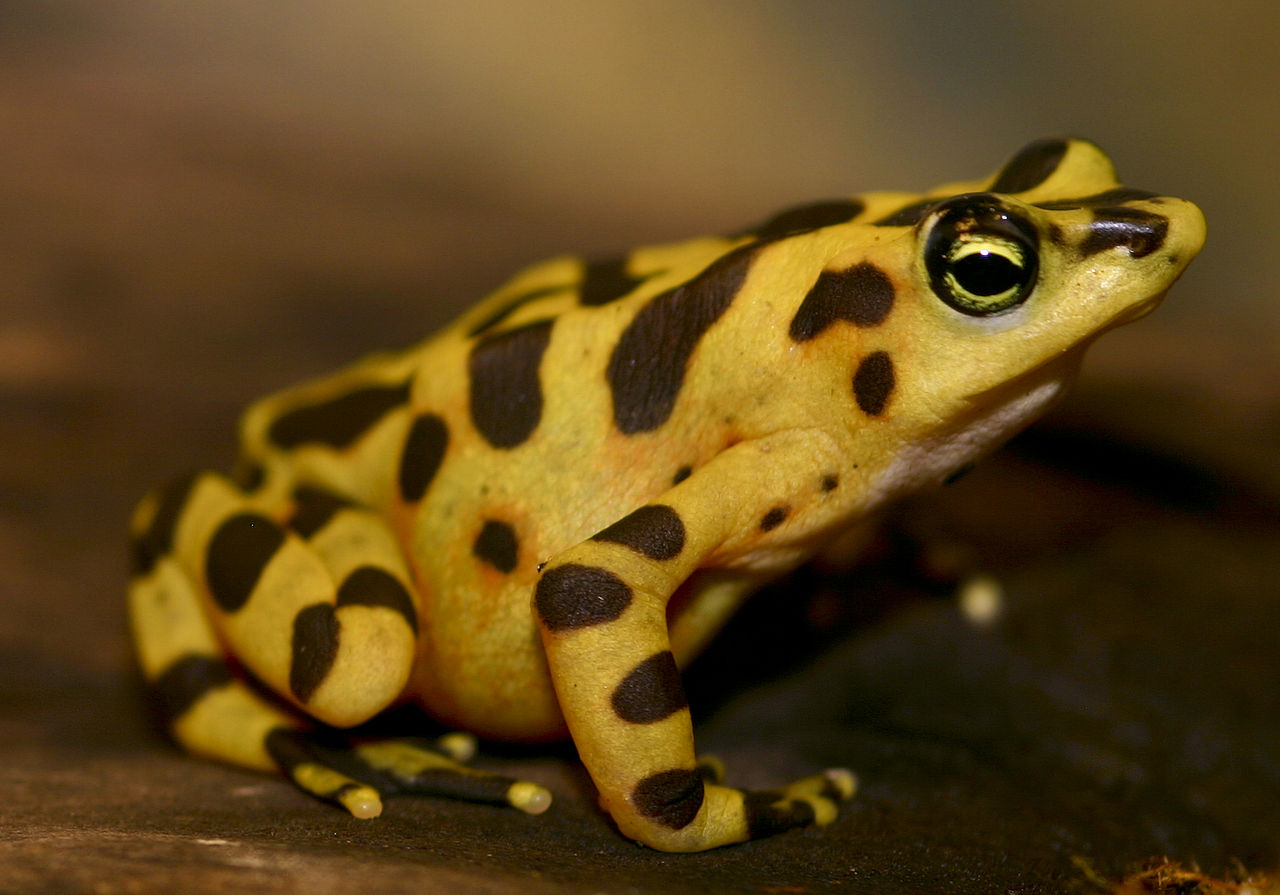

Appearance and biology
Atelopus species are generally small and slim, with smooth or slightly granular skin and bright patterns of red, yellow, green, black, white or combinations thereof. Coloration may serve multiple roles, including warning potential predators, camouflage among leaf litter and rocks, and species recognition during courtship. Many species produce skin secretions with compounds that can deter predators. Adults are often active by day and are frequently found on rocks or low vegetation near streams.
Life cycle and ecology
Reproduction in most Atelopus is tied to running water: adults lay eggs in or beside clear, well‑oxygenated streams and rivers, and tadpoles are adapted to life in currents. Tadpoles typically have flattened bodies and specialized mouthparts or suction structures that help them cling to substrates in flowing water. Because of these specific habitat requirements, Atelopus species are commonly associated with mid‑ to high‑elevation cloud forests and montane habitats where cool, clean streams are abundant.
Distribution and habitat
The genus spans a range of Neotropical montane regions. Many species have restricted ranges occupying narrow elevational bands or single watersheds, which makes them vulnerable to local changes. Their dependence on stream habitats links their status to watershed health, forest cover, and microclimatic conditions in cloud forests and páramo edges.
Declines, causes, and disease
Beginning in the late 20th century, numerous Atelopus populations experienced sudden and severe declines. The fungal pathogen Batrachochytrium dendrobatidis (chytrid) is widely implicated in these mass die‑offs, though habitat loss, pollution, climate variability, and interactions among stressors have also been identified as contributing factors. Small, isolated populations are especially susceptible, and in some regions multiple species appear to have become locally or globally extinct.
Conservation and research
Conservation responses have included field monitoring, establishment of protected areas, captive breeding and assurance colonies, and research into disease dynamics and mitigation. Reintroduction efforts have been attempted or considered where captive populations exist and habitat is suitable. Continued taxonomic and genetic research is important because many species are cryptic and new taxa continue to be recognized.
Taxonomy and discovery
The taxonomy of Atelopus remains active: researchers use morphology, vocalizations, and molecular data to delimit species. New species are still being discovered and formally described as field surveys and genetic studies reveal previously unrecognized diversity. Documentation of ranges, natural history, and threats is essential for prioritizing conservation actions.
- Key features: bright coloration, diurnal habits, stream‑associated reproduction.
- Main threats: chytrid disease, habitat loss, climate change and fragmentation.
- Conservation actions: monitoring, habitat protection, ex situ breeding and research.
For overviews of regional occurrences consult resources on Central and South American amphibians: see accounts for Central America and South America, and country‑level information such as records from Costa Rica and Bolivia. Specialist literature and conservation databases linked to the genus page Atelopus provide species lists and status updates, and habitat‑specific studies often focus on riparian or stream ecosystems where these frogs live.
Questions and answers
Q: What is Atelopus?
A: Atelopus is a large genus of true toads that are commonly known as harlequin frogs.
Q: Where do Atelopus frogs live?
A: Atelopus frogs live in Central and South America, ranging from Costa Rica to Bolivia.
Q: What are some characteristics of Atelopus frogs?
A: Atelopus frogs are small, diurnal, and generally brightly colored. Most species live near mid- to high-elevation streams.
Q: Why are many Atelopus species considered endangered or extinct?
A: Many Atelopus species are considered endangered or extinct due to the chytrid fungus Batrachochytrium dendrobatidis.
Q: Are new Atelopus species still being discovered?
A: Yes, many new Atelopus species have been described in the last ten years.
Q: What has caused the decline of many Atelopus species?
A: The chytrid fungus Batrachochytrium dendrobatidis is the main cause of the decline of many Atelopus species.
Q: What is the range of Atelopus species?
A: Atelopus species range from as far north as Costa Rica to as far south as Bolivia in Central and South America.
Related articles
Author
AlegsaOnline.com Atelopus (harlequin frogs): appearance, habitat, decline, and conservation Leandro Alegsa
URL: https://en.alegsaonline.com/art/6907