
Atheris — African bush vipers (arboreal venomous snakes)
Atheris is a genus of small to medium arboreal vipers native to African rainforests. Known as bush vipers, they have rough keeled scales, prehensile tails, live birth, potent venom, and conservation concerns.
Overview
Atheris is a genus of venomous vipers commonly called bush vipers. These snakes are adapted for life above ground and are principally found in the wet forest zones of Sub-Saharan Africa. Typically small to medium in size, members of this genus are notable for their vivid colors and unusual scalation that give many species a bristly appearance.
Image gallery
7 Images



Physical characteristics
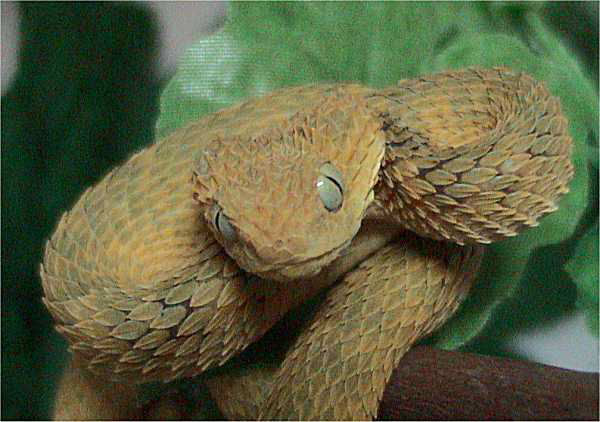
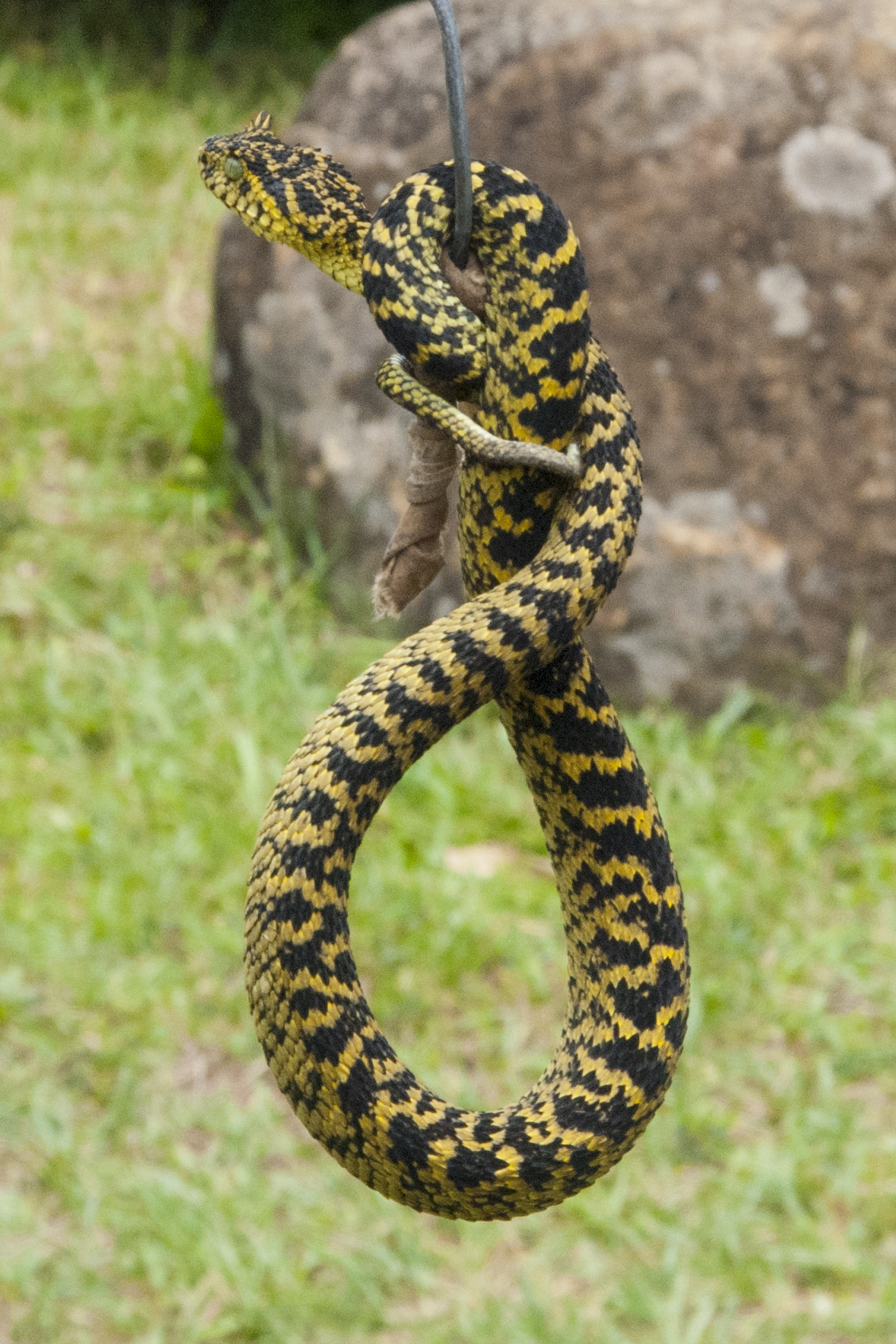
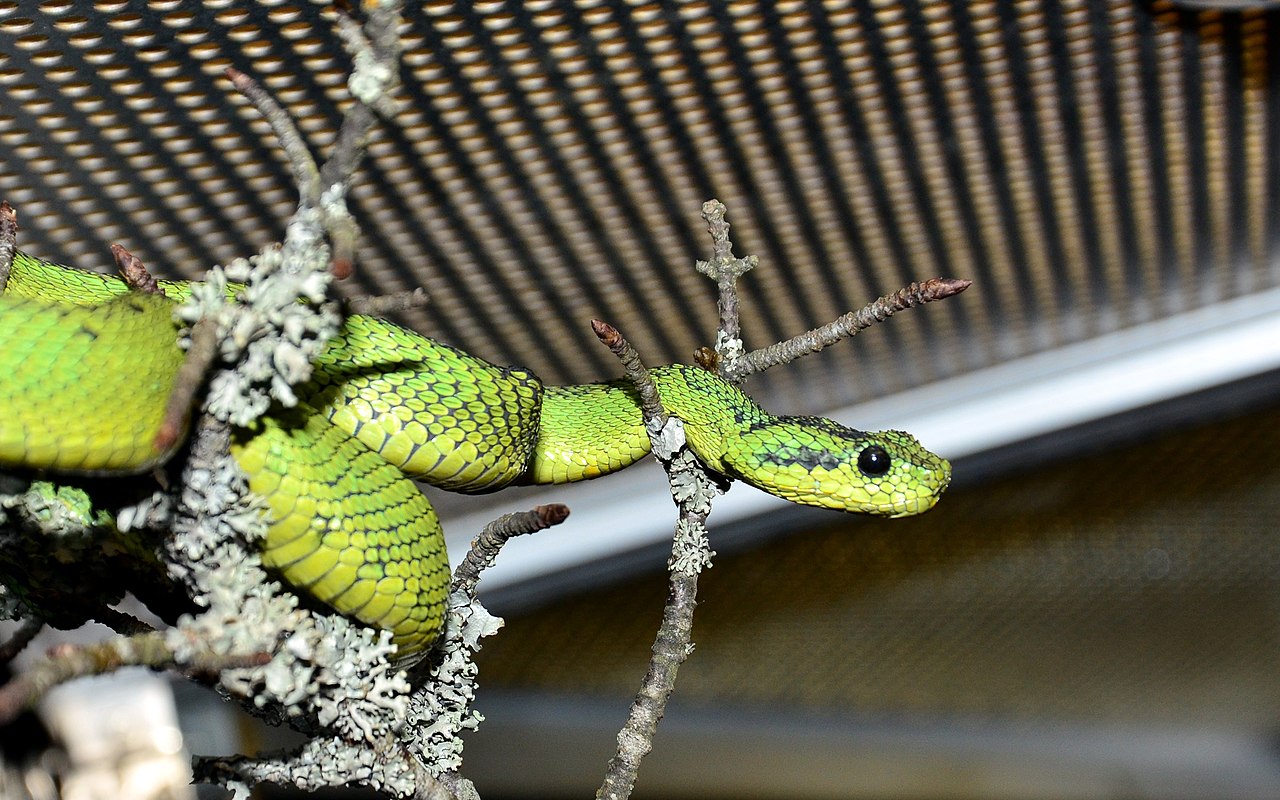
A typical Atheris shows a compact body, a well-developed prehensile tail for grasping branches, and strongly keeled dorsal scales. Their heads are distinct from the neck and bear the long, folding fangs of true vipers. Coloration varies by species and may include greens, yellows, browns and combinations that provide camouflage among leaves.
- Size: usually small to medium (not exceeding about one meter in most species).
- Scales: heavily keeled, sometimes giving a spiny look.
- Tail: prehensile, aiding arboreal movement.
- Fangs: front-fanged (solenoglyphous), delivering venom efficiently.
Habitat and distribution
All members of this genus are essentially arboreal and inhabit rainforest, montane forest, swamp forests and thick secondary growth. While they spend most of their time off the ground, individuals may descend to forage or move between trees. Their range is restricted to forested parts of Africa, and they are rarely encountered outside suitable woodland habitat.
Behavior, diet, and reproduction
Bush vipers are generally ambush predators: they sit motionless on a branch or among foliage and strike at passing prey. Their diet includes frogs, lizards, small birds and rodents. Like other vipers, many Atheris species are viviparous, giving birth to live young rather than laying eggs.
Venom and human interactions
Envenomation by Atheris can be medically significant. Venom composition and potency vary by species and are not as widely studied as that of some other vipers; bites are uncommon but can require urgent medical care. Antivenoms are not always species-specific or readily available, so caution is essential when encountering these snakes in the wild or in captivity.
Taxonomy, species and conservation
The genus contains several described species, each with localized distributions and varying degrees of study. Examples include the variable and spiny bush vipers known from different forest regions. Habitat loss, fragmentation and the pet trade pose threats to some populations, and field surveys are needed to clarify conservation status across the genus.
For general context on viper biology see vipers, more on regional distribution at Sub-Saharan Africa, and information about arboreal adaptations at trees.
Questions and answers
Q: What is Atheris?
A: Atheris is a genus of venomous vipers found only in rain forest areas of Sub-Saharan Africa.
Q: How many species are there of Atheris?
A: There are currently eight species of Atheris found in Sub-Saharan Africa.
Q: What are Atheris commonly known as?
A: Atheris are commonly known as "Bush Vipers".
Q: What is the habitat of Atheris?
A: Atheris is found only in rain forest areas of Sub-Saharan Africa and are arboreal, meaning they live in trees.
Q: Can Atheris be seen on the ground?
A: Yes, Atheris can sometimes be seen on the ground.
Q: Are all Atheris arboreal?
A: Yes, all Atheris snakes are arboreal.
Q: Are Atheris snakes venomous?
A: Yes, Atheris snakes are venomous.
Related articles
Author
AlegsaOnline.com Atheris — African bush vipers (arboreal venomous snakes) Leandro Alegsa
URL: https://en.alegsaonline.com/art/6930