
First Nagorno-Karabakh War (1988–1994): Conflict over the Armenian-populated enclave
Overview of the First Nagorno-Karabakh War (1988–1994): origins, combatants, major battles, displacement and casualties, international mediation, and the 1994 ceasefire that framed the Armenia–Azerbaijan dispute.
First Nagorno-Karabakh War was an armed conflict fought from February 1988 until May 1994 over the predominantly Armenian-populated enclave of Nagorno-Karabakh in the southwestern part of Azerbaijan. The main parties were the ethnic Armenians of Nagorno-Karabakh, who received military and political support from the Republic of Armenia, and the government of Azerbaijan.
Image gallery
10 Images


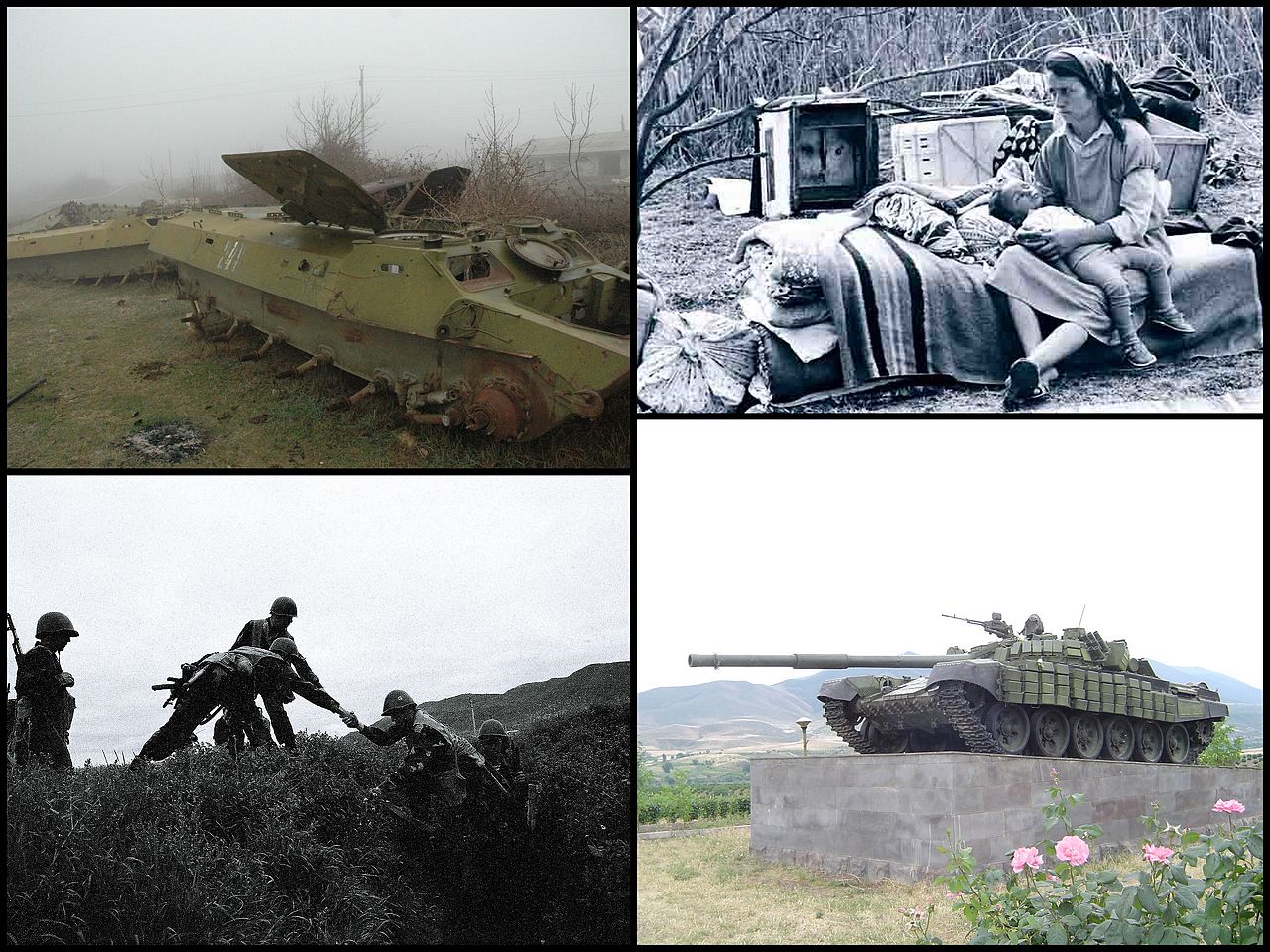



Historical background
Disputes over Karabakh have deep roots. After World War I and the disintegration of the Ottoman Empire, the South Caucasus saw competing territorial claims and the emergence of new states. During the 20th century the area was administratively placed within Azerbaijan, a situation contested by many Armenians who sought union with Armenia. Azerbaijan, for its part, emphasized its territorial integrity and the sovereignty of its internationally recognized borders.
Escalation and conduct of the war
Open hostilities grew in the late 1980s as Soviet institutions weakened. Local and national legislatures on both sides passed measures to assert control and mobilize support. The fighting involved large-scale population displacement and episodes of targeted violence, including incidents described as pogroms and other massacres, which contributed to cycles of reprisal and changing front lines.
The conflict unfolded while the Soviet Union was dissolving; afterward the Russian Federation remained a major external actor. Russia used diplomatic and military leverage at various moments, and events in Moscow and Moscow’s policies affected ceasefire efforts and the balance on the ground. Estimates place the number of people killed in the war at over 30,000 on all sides, with many more wounded and displaced.
International response and attempts to mediate
A range of foreign governments and organizations tried to mediate. European states, neighboring countries, the United Nations, and the United States were involved in diplomatic initiatives, sanctions, humanitarian relief, and negotiations. However, these actors often had differing priorities and constraints, which limited their ability to produce a definitive settlement during the fighting.
Ceasefire and aftermath
Active large-scale warfare concluded with a ceasefire brokered with significant Russian involvement; informal terms took effect at midnight between 11 and 12 May 1994. That ceasefire held as the primary framework for the conflict until a major escalation on 2 April 2016, when the line of contact experienced renewed heavy fighting.
Overview
- Dates: from February 1988 to May 1994
- Territory contested: the enclave of Nagorno-Karabakh within Azerbaijan
- Main parties: local ethnic Armenians backed by Armenia vs. Azerbaijan
- Key external actors: the Soviet Union (during its final years), Russia, regional neighbors, European states, the United Nations, and the United States
- Human cost: commonly cited estimates exceed 30,000 killed, with large-scale displacement and property loss
Related articles
Author
AlegsaOnline.com First Nagorno-Karabakh War (1988–1994): Conflict over the Armenian-populated enclave Leandro Alegsa
URL: https://en.alegsaonline.com/art/68108