
Mountain Time Zone (North America): MST and MDT overview
North American time zone one hour east of Pacific and west of Central. Standard time UTC−7 (MST), daylight time UTC−6 (MDT). Used in parts of the United States, Canada and Mexico; Phoenix is largest city.
The Mountain Time Zone is a principal time zone in North America used across portions of the United States, Canada and northern Mexico. It is defined relative to Coordinated Universal Time (UTC), observing an offset of UTC−7 during standard time and UTC−6 when daylight saving time is in effect. The zone is commonly called Mountain Time (MT), and its seasonal names are Mountain Standard Time (MST) in winter and Mountain Daylight Time (MDT) in summer.
Image gallery
2 Images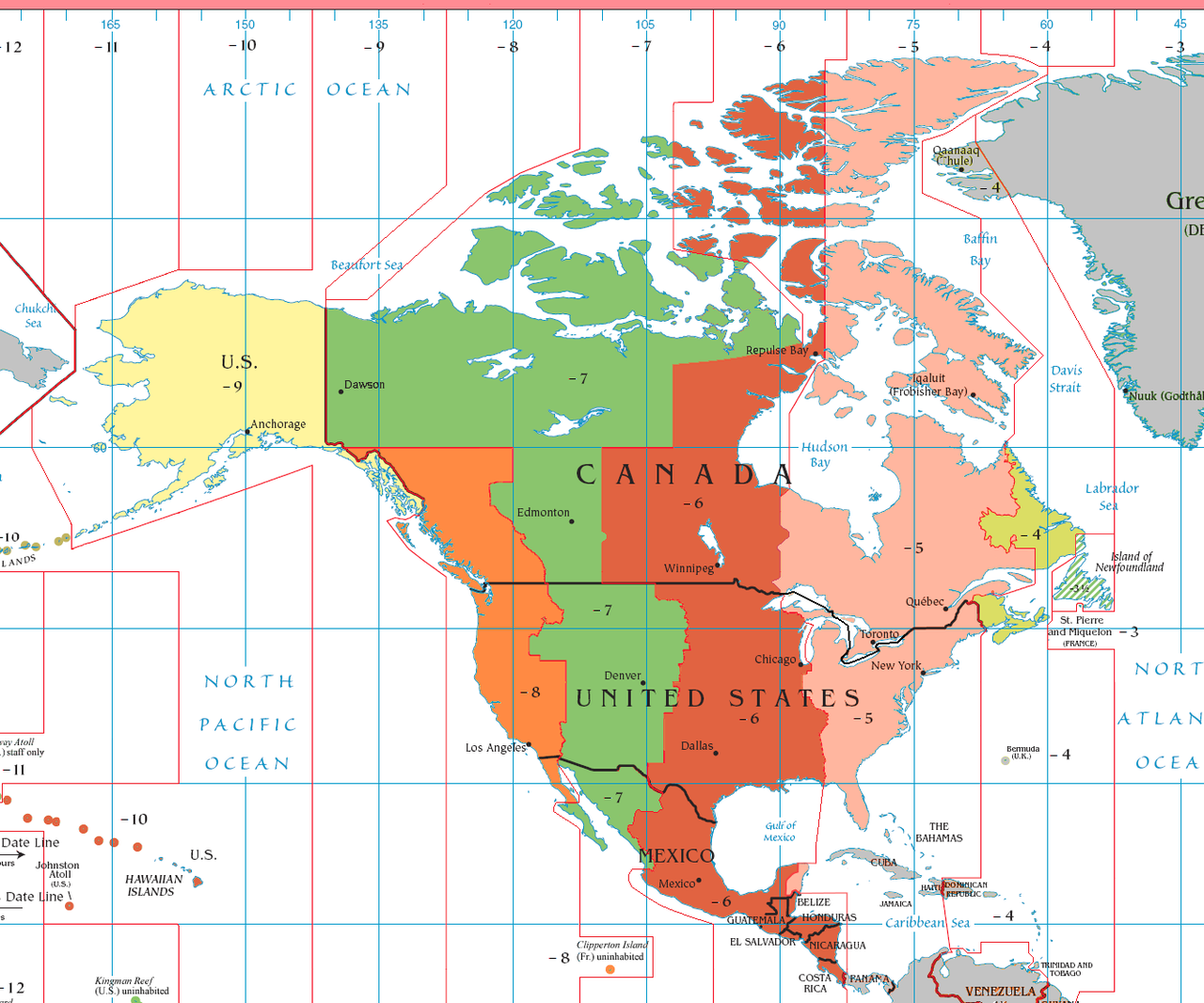

Characteristics and relationships
Mountain Time lies between two other major North American zones: it is one hour ahead of the Pacific Time Zone and one hour behind the Central Time Zone. During standard time the zone uses UTC−7; during daylight saving time the offset becomes UTC−6. The abbreviations MST and MDT indicate whether daylight saving is being observed. In routine scheduling and broadcasting the short form MT is often used when no distinction between standard or daylight arrangements is required.
Geographic extent and exceptions
In the United States the Mountain Time Zone covers all or parts of several western states, including Arizona, Colorado, Idaho, Montana, New Mexico, Utah and Wyoming, plus portions of adjacent states. Notable exceptions exist: most of Arizona remains on MST year‑round and does not observe daylight saving time, while the Navajo Nation in northeastern Arizona does observe DST. In Canada, Mountain Time includes most of Alberta and parts of British Columbia and the territories. Some municipalities in northern Mexico also use Mountain Time, especially close to the U.S. border.
Because of these local choices, the practical time in a given city can vary seasonally: for example, Phoenix, Arizona stays on MST all year, so during summer months it matches Pacific Daylight Time even though it is geographically in the Mountain zone.
History and standardization
The idea of standard time zones in North America arose in the 19th century as railroads and telegraph networks needed consistent schedules. Railroads implemented a set of standard zones in 1883, and governments later codified these divisions into law in the early 20th century. The current UTC‑based offsets and daylight saving rules have been refined over decades; local legislation still determines whether a state, province or municipality observes daylight saving time.
Uses, examples and practical notes
Mountain Time is used in government, commerce, broadcasting and daily life across the region. Computer systems and databases commonly reference specific zone identifiers (for example, IANA names such as America/Denver or America/Phoenix) to handle offsets and daylight rules correctly. For travelers and planners it is useful to remember the simple conversions: midday MST equals 19:00 UTC, while midday MDT equals 18:00 UTC. When arranging cross‑zone meetings, check whether participants’ locations observe DST to avoid one‑hour errors.
- Standard offset: UTC−7 (MST).
- Daylight offset: UTC−6 (MDT).
- Relations: 1 hour ahead of Pacific, 1 hour behind Central.
- Coverage: parts of the United States, Canada, and northern Mexico.
- Largest city: Phoenix (does not observe DST statewide).
- General info: see regional time authorities for local rules and transitions (time zone resources).
- Seasonal notes: Winter months use MST; Summer months use MDT where observed.
Because local laws and practices change, always confirm current local time rules for critical scheduling. Official state or provincial publications, transportation timetables and authoritative time services are the best sources for up‑to‑date information.
Questions and answers
Q: What is the difference between Mountain Standard Time and Mountain Daylight Time?
A: Mountain Standard Time is observed during standard time (Winter) and subtracts seven hours from UTC (UTC−7), while Mountain Daylight Time is observed during daylight saving time (Summer) and subtracts six hours from UTC (UTC−6).
Q: What is the time difference between Mountain Time Zone and Pacific Time Zone?
A: The Mountain Time Zone is one hour ahead of the Pacific Time Zone.
Q: What is the time difference between Mountain Time Zone and Central Time Zone?
A: The Mountain Time Zone is one hour behind the Central Time Zone.
Q: What is the largest city in the Mountain Time Zone?
A: Phoenix, Arizona is the largest city in the Mountain Time Zone.
Q: What is the name of the largest metro area in the Mountain Time Zone?
A: The Phoenix Metropolitan Area is the largest metro area in the Mountain Time Zone.
Q: What is the UTC offset during standard time in the Mountain Time Zone?
A: The Mountain Time Zone subtracts seven hours from UTC during standard time (UTC−7).
Q: What is the UTC offset during daylight saving time in the Mountain Time Zone?
A: The Mountain Time Zone subtracts six hours from UTC during daylight saving time (UTC−6).
Related articles
Author
AlegsaOnline.com Mountain Time Zone (North America): MST and MDT overview Leandro Alegsa
URL: https://en.alegsaonline.com/art/67141