
Mozambique Channel
The Mozambique Channel is the stretch of the western Indian Ocean between Madagascar and Mozambique, notable for strong currents, rich marine life, and historical importance including WWII operations.
Overview
The Mozambique Channel is the arm of the western Indian Ocean lying between the east coast of Mozambique and the island of Madagascar. It links broader ocean basins to the north and south and serves as a major conduit for water, heat and marine life moving along the southwest Indian Ocean. The channel is often described in regional geography and oceanography sources as part of the larger Indian Ocean system: Indian Ocean.
Image gallery
3 Images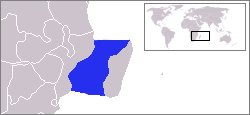

Location and physical characteristics
The channel is bounded to the north by the Somali Sea and the northern reaches of the East African coast, and to the east by Madagascar. Its western margin lies along Mozambique. At its narrowest point the channel is about 460 km across between Angoche (Mozambique) and Tambohorano (Madagascar). Bathymetry varies: shallow continental shelves give way to deep troughs, reaching roughly 3,292 m in places about 230 km off the Mozambican coast.
Oceanography and climate
The Mozambique Channel is a dynamic ocean region. The eastward-flowing South Equatorial Current splits on reaching Madagascar; part of the flow enters the channel and moves southward in a system that feeds into the Agulhas Current along South Africa. Within the channel, strong mesoscale eddies and transient currents—often referred to collectively with the regional Mozambique Current—play an important role in redistributing heat, nutrients and plankton. Tropical cyclones and seasonal wind shifts also affect surface circulation and coastal conditions.
History and human use
Human interaction with the channel spans centuries of navigation, trade and fishing between the African mainland, island groups such as the Comoros, and Madagascar. In the 20th century the channel figured in military operations; most notably the World War II campaign for control of Madagascar and surrounding waters, often cited as the Battle of Madagascar in historical accounts: Battle of Madagascar. Today the channel remains an important route for regional shipping and local maritime traffic.
Ecological and economic importance
Biologically the Mozambique Channel supports coral reefs, productive fisheries, and populations of large marine animals including tuna, dolphins and migrating whales. Coastal and offshore fisheries are vital to local economies in Mozambique and Madagascar, while the channel’s varied habitats are important for biodiversity and fisheries management. Scientific surveys and conservation initiatives target its unique ecosystems.
Notable features and related places
Nearby seas and territories often referenced in descriptions of the channel include the Somali Sea to the north (Somali Sea), the island of Madagascar to the east (Madagascar), and the nation of Mozambique to the west (Mozambique). Maritime researchers, navigators and policy makers study the channel for its role in regional climate, fisheries, and navigation safety.
For further reading and regional maps consult oceanographic surveys and regional maritime agencies. Historical overviews and modern studies provide complementary perspectives on the channel’s evolving environmental and geopolitical significance.
Related articles
Author
AlegsaOnline.com Mozambique Channel Leandro Alegsa
URL: https://en.alegsaonline.com/art/67226