
Mountaineering: techniques, history, risks and essential equipment
Mountaineering is the activity of ascending mountains by hiking, rock climbing or glacier travel. This article explains techniques, gear, history, hazards, and why people climb.
Mountaineering, often called mountain climbing, is the activity of ascending natural high places such as mountains by a combination of foot travel, scrambling and technical climbing. It ranges from non-technical hillwalking to highly technical expeditions that require specialized skills. Many practitioners enjoy it as a hobby or recreational activity, while others work professionally as guides, researchers or sponsored athletes (occupational roles).
Image gallery
10 Images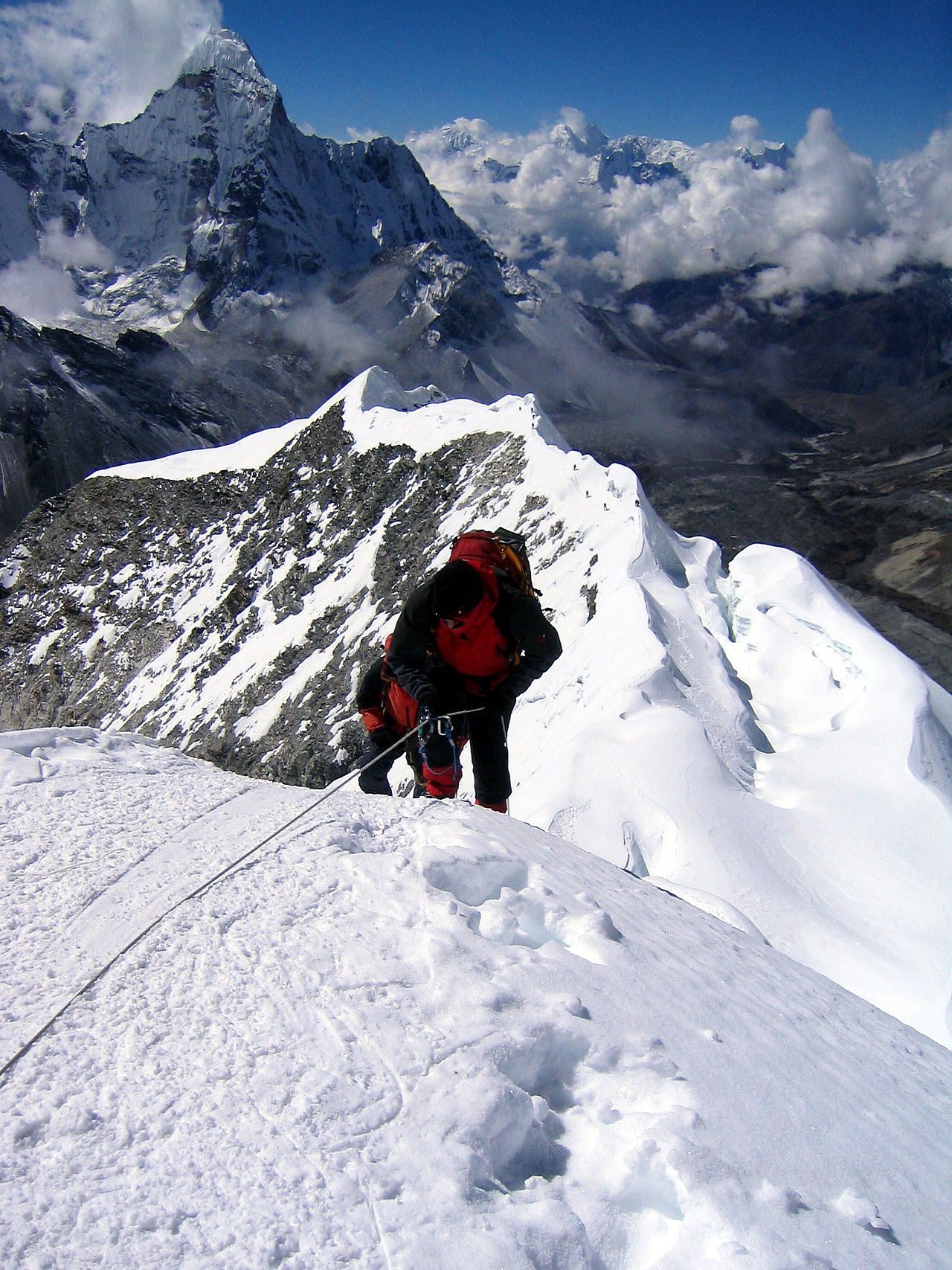


Core techniques and terrain
Mountaineering integrates multiple movement disciplines. Basic routes rely on walking and route-finding similar to hiking, but steeper or more exposed passages require rock-climbing techniques, ropework and protection placement like those used in rock climbing. In high mountains, climbers commonly encounter snow and ice fields and must practise glacier travel, crevasse rescue and use of crampons and ice tools. Efficient movement, balance, and the ability to switch between styles are defining skills of competent mountaineers.
Equipment and safety
Safety and self-reliance are central. Typical personal equipment includes boots, layered clothing, helmets and harnesses; climbers use ropes for protection and rappels and wear helmets to guard against rockfall. Navigation and survival gear such as a compass or GPS, a first aid kit, and communication devices are carried on most trips. In snow terrain, mountaineers also carry rescue tools—probes, transceivers and shovels—to locate and dig out buried partners.
- Personal protective equipment: harness, helmet, boots, ice tools.
- Rope systems and anchors for belaying and protection.
- Navigation and emergency supplies: compasses, first aid, radios.
- Winter and glacier gear: crampons, avalanche probes and shovels.
Risks and mitigation
Mountaineering carries inherent hazards. Falls and objective dangers such as rockfall or serac collapse pose constant risk. Climbers in snowy mountain environments must consider avalanches and the possibility of being buried; they also face cold-related injuries such as frostbite and hypothermia from extreme cold. High altitude introduces physiological challenges, notably altitude sickness, which can degrade judgment and performance.
Risk is managed through training, careful planning, conservative decision-making, and teamwork. Practised parties rehearse rope techniques, crevasse rescue, and avalanche rescue drills, and they use proper route selection, weather forecasting, and staged acclimatization to reduce exposure to hazards.
History, culture and uses
Mountaineering developed as a pursuit during the 18th and 19th centuries with the exploration of alpine regions and later spread worldwide as interest in exploration, sport and science grew. It has influenced outdoor ethics (for example, Leave No Trace principles), mountain literature and a global guide and rescue culture. Many climbers combine objectives: recreation and personal challenge, guiding clients, or conducting scientific work on geology, glaciology and ecology in remote ranges.
Forms and distinctions
Practices vary from non-technical walks to alpine and expedition mountaineering. Hillwalking and trekking emphasize endurance and route-finding with little technical equipment, while alpine climbing may require mixed snow, ice and rock techniques. Competitive climbing disciplines, such as sport or trad climbing, share skills with mountaineering but often differ in objective and environment.
Whether undertaken for sport, research, livelihood or personal challenge, mountaineering remains an activity that combines physical skills, knowledge of the natural environment, and careful risk management. For practical instruction and local route information consult experienced guides and relevant organizations (mountain sources, walking groups, climbing clubs, glacier safety, rope techniques, recreational advice, safety resources, professional services, avalanche information, cold-weather guidance, helmet standards, navigation tools, medical preparedness, rescue techniques).
Related articles
Author
AlegsaOnline.com Mountaineering: techniques, history, risks and essential equipment Leandro Alegsa
URL: https://en.alegsaonline.com/art/67127
Sources
- nepalmountaineering.org : "Nepal Mountaineering Association"
- mountaineersbooks.org : Mountaineering: The Freedom of the Hills