
Cryptobranchoidea — the primitive salamanders
Cryptobranchoidea is a suborder of ‘primitive’ salamanders found in eastern North America and East Asia. It includes giant salamanders and Asiatic stream salamanders, notable for ancestral traits and conservation concerns.
Cryptobranchoidea is a suborder of salamanders historically grouped as the «primitive» or basal salamanders. Members of this group occur in parts of eastern North America and across East Asia, including China, Taiwan and Japan. They are often contrasted with the more derived salamanders of the suborder Salamandroidea, sometimes called advanced salamanders.
Image gallery
6 Images


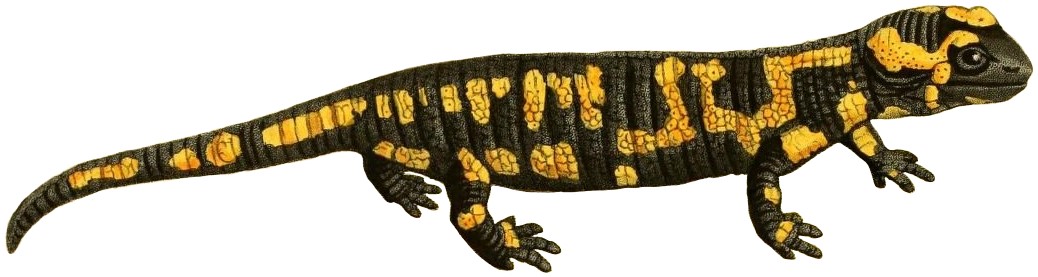

Key characteristics
Cryptobranchoids retain a number of ancestral anatomical and reproductive features. Many species have a robust, flattened body adapted to life in cold, flowing water, external gill or larval stages in some taxa, and reproductive modes that include external fertilization—traits regarded as plesiomorphic compared with those of advanced salamanders.
Taxonomy and representative groups
The suborder typically includes two family-level lineages: Cryptobranchidae, known for the large "giant salamanders" such as the hellbender and the Chinese and Japanese giant salamanders, and Hynobiidae, a diverse assemblage of mostly Asiatic salamanders often associated with streams and moist forests.
Evolution and fossil record
Fossil and molecular evidence indicate that cryptobranchoids represent an early branch of salamander evolution. Their long independent history makes them important for understanding how modern salamander diversity and life histories evolved.
Habitat, ecology and importance
Most species are aquatic or semi‑aquatic, inhabiting clear, well‑oxygenated streams or rivers. They are predators of invertebrates and small fish and can be locally abundant, playing a role in freshwater food webs. Their distinctive size and appearance make them subjects of public interest and scientific study.
Conservation and notable facts
Several cryptobranchoid species are threatened by habitat degradation, pollution, overharvesting and disease. Conservation efforts focus on habitat protection, captive breeding and research. Because they retain many ancestral features, cryptobranchoids are valuable for studies of vertebrate evolution and for raising public awareness about freshwater conservation.
Related articles
Author
AlegsaOnline.com Cryptobranchoidea — the primitive salamanders Leandro Alegsa
URL: https://en.alegsaonline.com/art/24453
Sources
- animaldiversity.ummz.umich.edu : "ADW:Family Cryptobranchidae: giant salamanders and hellbenders"