
Basal (phylogenetics): definition, use and common misunderstandings
In phylogenetics, 'basal' denotes a lineage or clade near the root of a rooted tree. It is a relative, neutral term—used to indicate earlier branching, not intrinsic primitiveness.
Overview
In evolutionary biology the adjective "basal" is used to describe a lineage, taxon or branch that diverged near the base (root) of a rooted phylogenetic tree. The term is common in biology and was popularized with the rise of cladistics. In discussions of evolution and systematic classification, calling a group basal indicates its position relative to other groups: it branched earlier in the history of that particular clade.
Image gallery
3 Images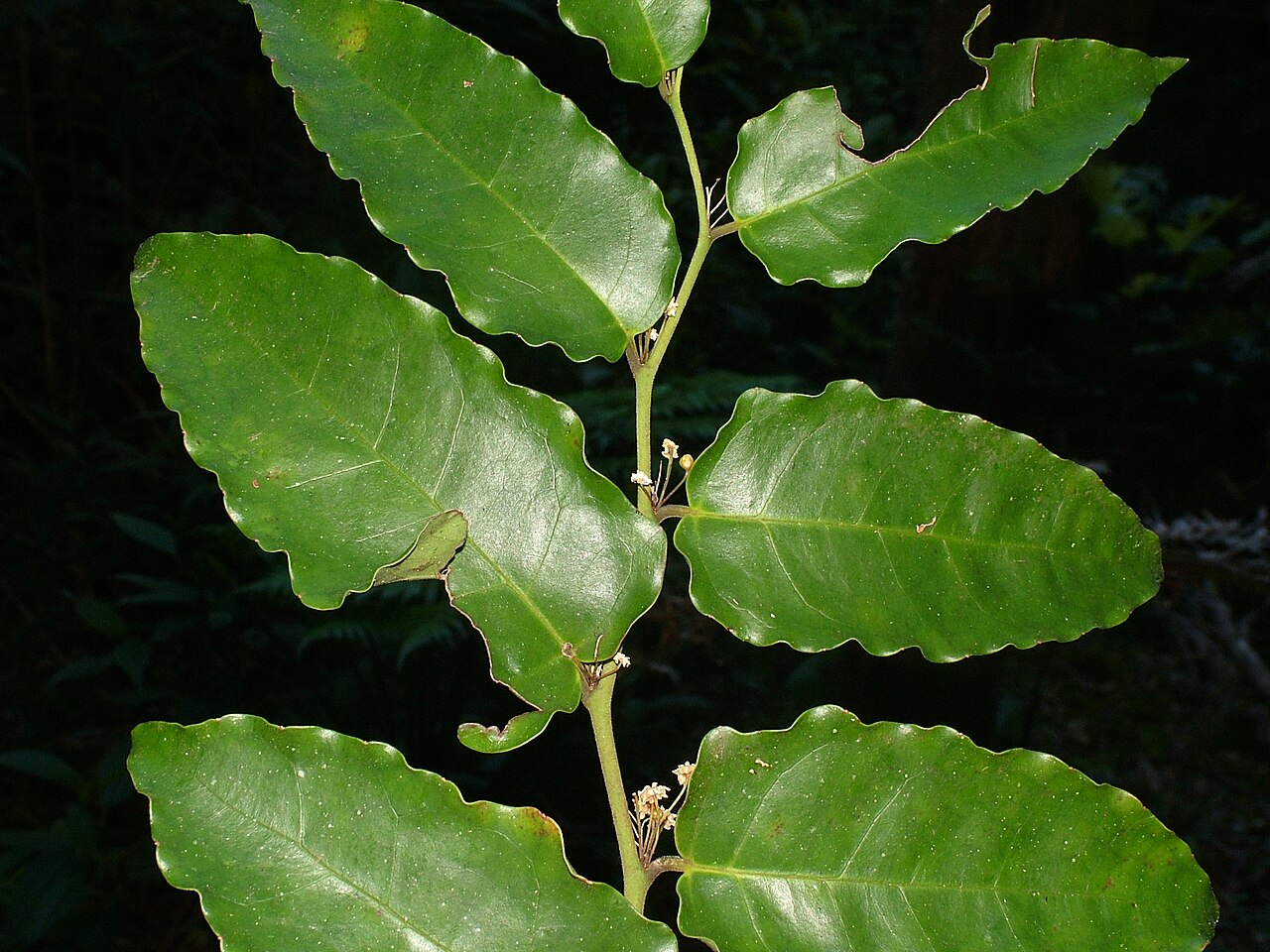


Meaning and usage
"Basal" is a relative descriptor, not an absolute judgment about complexity or value. A "basal species" or "basal clade" simply occupies an early-branching position on a given tree; it does not imply that the organism is unchanged or "primitive." The term is applied at different hierarchical scales: a basal species can be basal within a genus, or a whole clade can be basal within a larger group.
Traits: ancestral, derived and secondary loss
Biologists distinguish between ancestral (plesiomorphic) and derived (apomorphic) traits. A derived trait is one that appears in a group but was absent in the last common ancestor of that group. Simplified or reduced features can be secondarily derived rather than primitive. For example, some anaerobic protists that lack conventional mitochondria have either lost them or modified them during evolution; studies of anaerobic protists and species such as Entamoeba histolytica illustrate that absence of a structure is not proof of primitiveness.
Historical context
The neutral phrase "basal" became favored because older labels like "primitive" carried value judgments or implied inferiority. In cladistics, emphasis on branching order made a position-based adjective useful for describing relationships without implying progress or hierarchy.
Examples
- Consider primate evolution: a broad sequence might be cited as early primates → monkeys → apes → Homo. In that context, apes are derived relative to monkeys but basal with respect to our genus Homo.
- Other commonly discussed examples include taxa often called "living fossils" (e.g., coelacanths) where external similarity to ancient forms coexists with considerable evolutionary change.
Caveats and common misunderstandings
Two frequent mistakes are to equate "basal" with "unchanged" and to neglect the need for a rooted tree. Without an identified root, terms like basal and derived have no fixed meaning. Also, almost all living species are both modern and the product of long evolutionary histories; calling a living species "basal" only makes sense relative to specified sister groups and a rooted phylogeny.
Importance in classification
Used carefully, "basal" helps communicate branching order and ancestral relationships in phylogenetic trees. It is useful for teaching, comparative analyses and reconstructing character evolution, provided authors clarify the frame of reference (which clade is being considered and where the tree is rooted).
Questions and answers
Q: What does the term 'basal' mean in biology?
A: In biology, the term 'basal' is used to refer to something that is primitive or ancestral.
Q: How did the use of this terminology come about?
A: The use of this terminology came into use with cladistics.
Q: What does it mean for a group to be considered basal?
A: A basal group is one which gave rise to later forms and has evolved before other groups.
Q: What does it mean for a trait to be derived?
A: A derived trait is one that is present in an organism but was not present in the last common ancestor of the group being considered.
Q: Can living species ever be considered basal?
A: No, living species can only ever be considered derived.
Q: Is simplicity always primary or can it sometimes be secondary?
A: Simplicity can sometimes be secondarily derived; for example, no mitochondria in the anaerobic protist Entamoeba histolytica is a result of their secondary loss.
Q: Can you provide an example of a basal-derived pair? A: An example of a basal-derived pair would be early primates (basal) and monkeys, apes and Homo (derived).
Related articles
Author
AlegsaOnline.com Basal (phylogenetics): definition, use and common misunderstandings Leandro Alegsa
URL: https://en.alegsaonline.com/art/9186
Sources
- biolbull.org : "The effect of secondary loss on our views of eukaryotic evolution"
- doi.org : 10.2307/1542976
- jstor.org : 1542976
- tolweb.org : "Interpreting the tree diagram or list of subgroups on a Tree of Life page"
- amnh.org : The Compleat Cladist: a primer of phylogenetic procedures