
Assassin bug (Reduviidae): predatory true bugs and their significance
Assassin bugs (family Reduviidae) are a diverse group of predatory true bugs known for their raptorial proboscis, varied hunting strategies, and importance as both beneficial predators and, in some species, disease vectors.
Assassin bugs belong to the family Reduviidae, a widespread group within the order Hemiptera (the "true bugs"). They are found throughout the world and encompass several thousand described species. Most are terrestrial ambush or stalk-and-grab predators that feed on other arthropods, though a few lineages have adopted blood-feeding on vertebrates.
Image gallery
7 Images


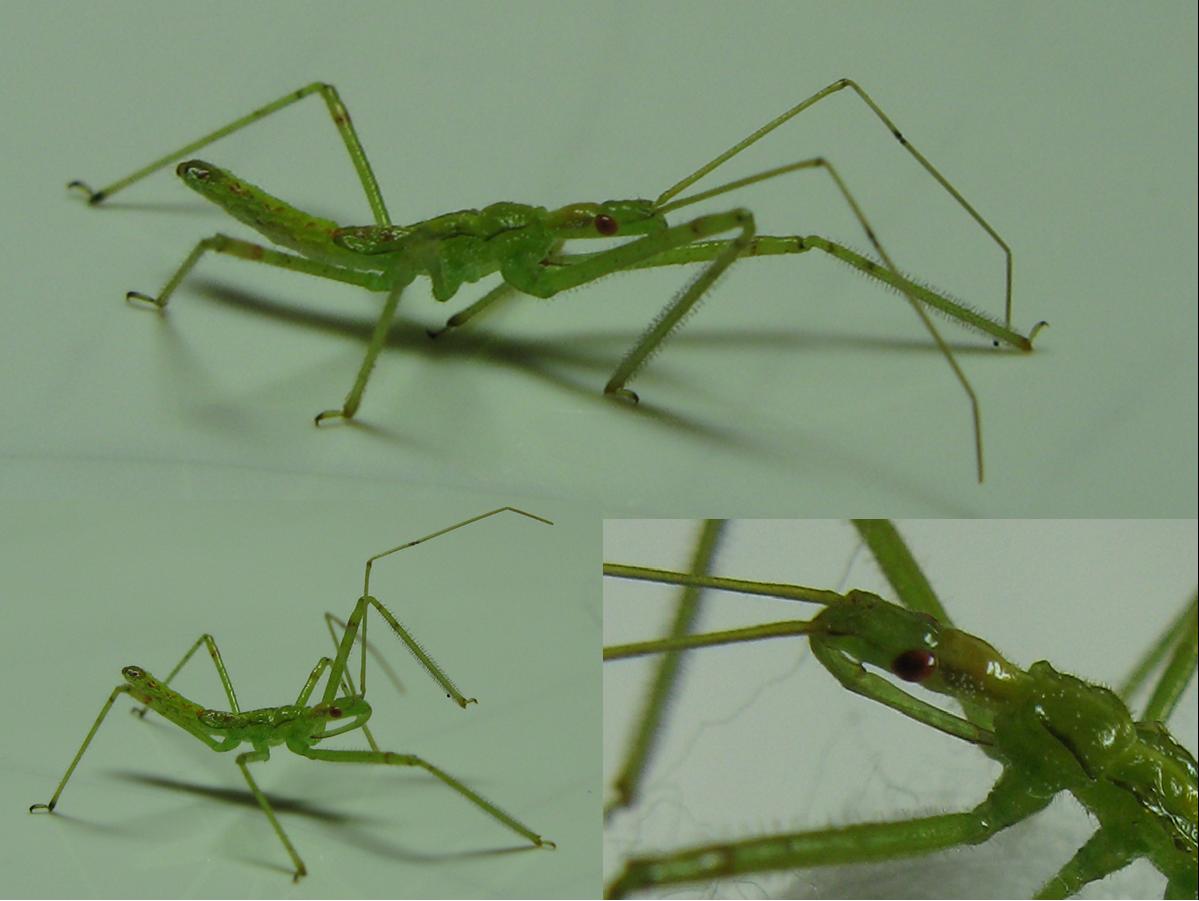
Physical features and hunting
Assassin bugs are recognisable by a typically narrow "neck" behind the head, a robust, elongated body, and a stout, curved piercing mouthpart called a proboscis or rostrum. This three-segmented beak fits into a groove on the underside of the body when not in use. They use the rostrum to inject saliva that immobilises and digests prey externally, then suck up the liquefied tissues. Many species are ambush hunters; others pursue prey actively or use lures and camouflage. Some species display mimicry (for example, resembling ants or twigs) to approach prey or avoid predators.
Life cycle and diversity
Reduviids undergo incomplete metamorphosis (hemimetaboly): eggs hatch into nymphs that resemble small adults and progress through several instars before becoming mature. The family includes a wide range of sizes and habits, from small leaf-dwelling predators to large species such as the North American wheel bug (Arilus cristatus). Overall diversity is high, with around 6,000–8,000 species catalogued worldwide and numerous undescribed forms in tropical regions.
Interactions with humans
Most assassin bugs are beneficial because they reduce populations of agricultural and garden pests. However, a few groups are medically important. The subfamily Triatominae, commonly called "kissing bugs," feed on vertebrate blood and can transmit the parasite Trypanosoma cruzi, the agent of Chagas disease in the Americas. In addition, several large predatory species can deliver a painful stab with their rostrum if handled; their saliva contains enzymes that can cause local pain, swelling, or allergic reactions in sensitive people.
- Ecological role: predators that help control insects and maintain food-web balance.
- Medical note: only a minority (triatomines) are blood-feeders and disease vectors.
- Defensive bite: painful but rarely medically serious for most people.
Assassin bugs are an ecologically and behaviorally diverse family, notable for their specialised mouthparts and predatory lifestyles. Their combination of pest control benefits, striking adaptations, and occasional risks to humans make them an important group for both naturalists and public-health professionals to understand.
Questions and answers
Q: What are assassin bugs?
A: Assassin bugs are a family of bugs called Reduviidae, which are terrestrial ambush predators.
Q: What kind of bugs are they?
A: They are "true bugs" or Hemiptera.
Q: How can you identify assassin bugs?
A: Most members of the family have a relatively narrow neck, a sturdy build and a formidable curved proboscis.
Q: Should large specimens of assassin bugs be handled with care?
A: Yes, large specimens should be handled with care, if at all, because they may defend themselves with a very painful stab from the proboscis.
Q: What is the special characteristic of assassin bug's proboscis?
A: The proboscis of the assassin bug is formidable and curved.
Q: Where can you find assassin bugs?
A: Assassin bugs are a cosmopolitan family and can be found almost everywhere on land.
Q: What is the hunting strategy of assassin bugs?
A: Assassin bugs are terrestrial ambush predators.
Related articles
Author
AlegsaOnline.com Assassin bug (Reduviidae): predatory true bugs and their significance Leandro Alegsa
URL: https://en.alegsaonline.com/art/6697