
Mono Lake: An alkaline, endorheic lake of the eastern Sierra Nevada
Mono Lake is a saline, endorheic lake east of the Sierra Nevada in California, noted for its tufa towers, unique brine-based ecosystem and a late-20th-century conservation effort that changed water-use policy.
Overview
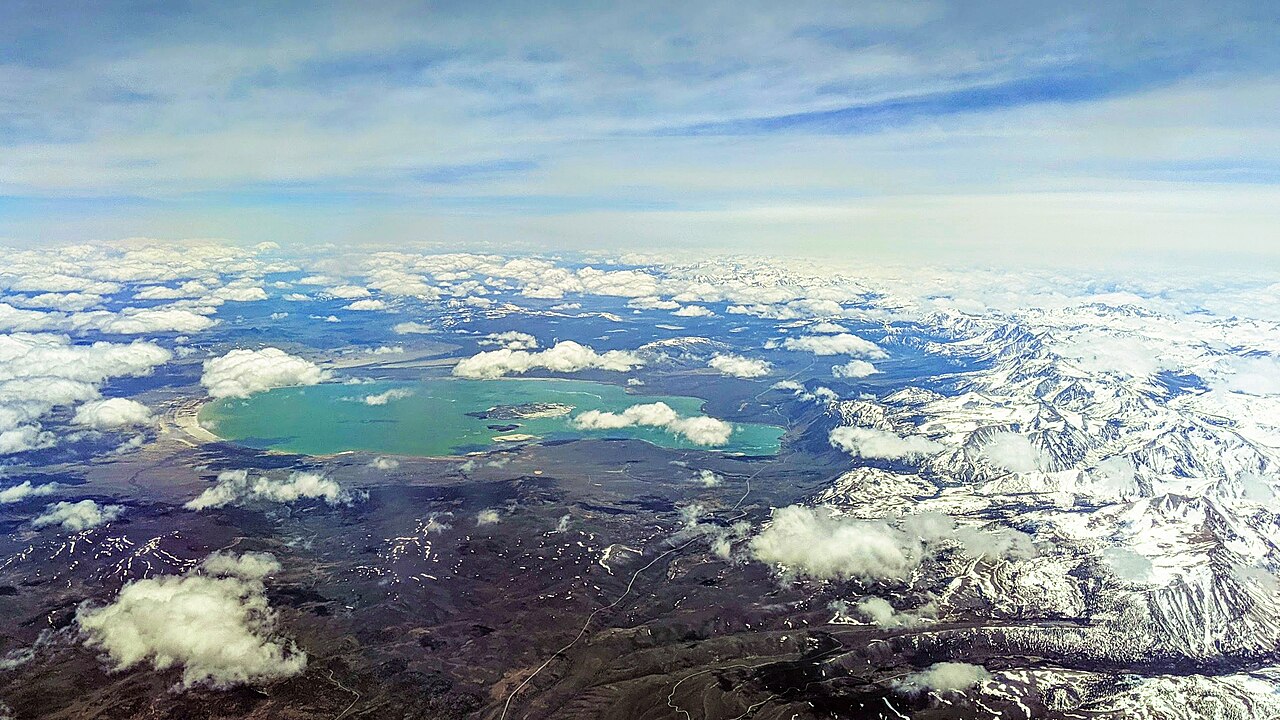
Mono Lake is a large, saline and alkaline lake located on the eastern flank of the Sierra Nevada in the United States. It lies within the state of California and occupies an isolated basin with no outlet to the ocean, a condition known as endorheism. The lake’s chemistry and isolation combine to produce distinctive geological structures and a specialized biological community.
Image gallery
10 Images




Physical characteristics
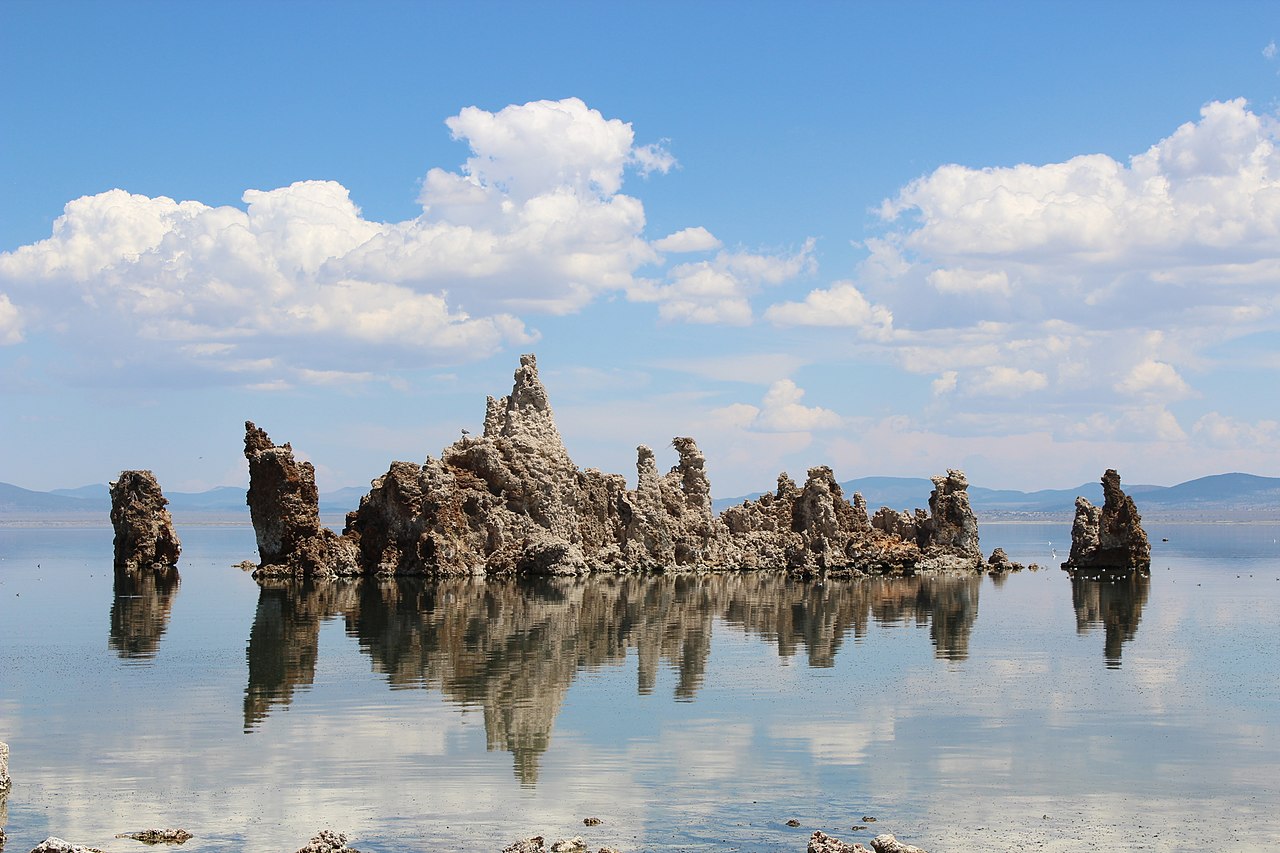
The lake has a surface area of roughly 69 square miles (180 km²), though the precise extent fluctuates with inflow and evaporation. Water flows into Mono Lake from several mountain streams but never leaves except by evaporation, concentrating salts and bicarbonates and creating highly alkaline conditions that support carbonate precipitation. The shoreline and subaqueous sediments host dramatic limestone towers called tufa that form where fresh spring water rich in calcium mixes with the lake’s alkaline waters.
Inflow and watershed
Main tributaries that feed the lake descend from the Sierra crest; notable examples include:
- Rush Creek
- Lee Vining Creek, whose headwaters lie near Tioga Pass and close to Yosemite National Park
- Mill Creek
These inflows arrive as snowmelt and mountain runoff and historically maintained higher lake levels before extensive upstream water withdrawals began.
Ecology and importance
Despite its high salinity and alkalinity, Mono Lake supports productive food webs dominated by microscopic algae, brine shrimp and alkali flies. These abundant invertebrates sustain millions of migratory and nesting birds, making the lake an internationally important stopover and breeding area for species such as gulls and shorebirds. The biological productivity and exposed tufa towers also make the lake a focus for scientific study and public education.
History, human impact and conservation
Mono Lake is geologically ancient and has existed in various forms through thousands of years of climatic change. In the 20th century, downstream diversions of the streams that feed Mono Lake by the city of Los Angeles caused measurable declines in lake level and exposed extensive tufa formations. Those changes prompted a prolonged campaign by scientists, conservation groups and local citizens that led to legal and policy actions to reduce diversions and initiate partial restoration of inflows. The case is often cited as a landmark example of regional water-management reform prompted by ecological concerns.
Visiting and notable facts
Mono Lake is accessible from nearby towns and highways and is a popular destination for naturalists, photographers and birdwatchers. Visitors can view tufa towers at shoreline sites, observe dense flocks of shorebirds, and learn about watershed stewardship at visitor centers and local organizations. Its combination of unusual chemistry, dramatic limestone formations and ecological value makes Mono Lake both a scenic landmark and a living classroom for conservation and geology.
Related articles
Author
AlegsaOnline.com Mono Lake: An alkaline, endorheic lake of the eastern Sierra Nevada Leandro Alegsa
URL: https://en.alegsaonline.com/art/66089