
Moeritherium — an early proboscidean of the late Eocene
Moeritherium is an extinct genus of small, semi‑aquatic proboscideans from the late Eocene of North Africa; it represents an early stage in the evolutionary lineage that led to elephants.
Overview
Moeritherium is an extinct genus of primitive mammals that occupied a basal position among the proboscideans, the group that later produced modern elephants. It lived during the later Eocene epoch in what is today North Africa. Although related to today's elephants and, more distantly, to the sea cow, Moeritherium looked very different from its large, trunked descendants.
Image gallery
9 Images


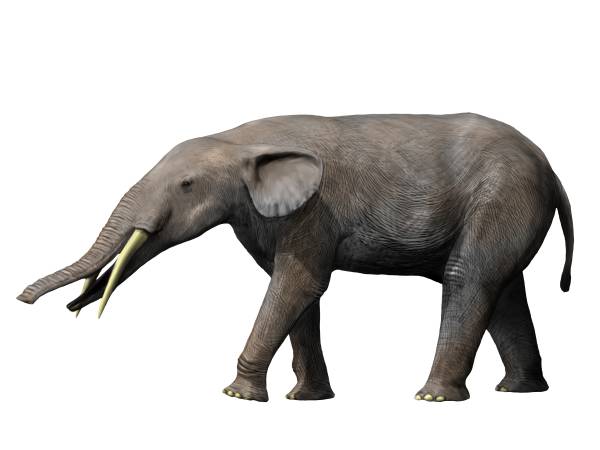
Physical characteristics
Moeritherium was roughly the size of a modern tapir rather than a contemporary elephant. Its body plan combined features that suggest a partially aquatic lifestyle with clear proboscidean affinities.
- Stout, short limbs and a relatively long body with a short tail;
- Broad feet with flattened, hoof‑like toes rather than fully plantigrade elephant feet;
- Skull and teeth showing the beginnings of tusk‑forming incisors, but no long trunk as in modern elephants—most reconstructions infer a short, flexible snout or enlarged lip.
Taxonomy and evolutionary context
As an early member of the proboscidean lineage, Moeritherium helps bridge primitive mammals and later, larger proboscideans. Its anatomy illustrates transitional adaptations: dental and cranial changes that foreshadow the tusks and heavy skull of later elephants, while retaining many primitive traits found in other Eocene mammals.
Habitat and paleobiology
Fossil evidence suggests Moeritherium inhabited marshy coastal plains and freshwater wetlands. This semi‑aquatic setting implies a diet dominated by soft aquatic vegetation and low browsing on reeds and water plants. Its limb proportions and hoofed toes would have suited wading and walking on soft substrates rather than supporting great terrestrial weight.
Fossil record and significance
Specimens of Moeritherium have been recovered from Eocene deposits in North Africa and have been important for reconstructing early proboscidean evolution. Although never large, Moeritherium illustrates how a lineage that began with small, semi‑aquatic animals eventually produced the fully terrestrial, trunked elephants of later epochs. Study of its remains informs debates about the timing and sequence of anatomical changes in the proboscidean family tree.
Notable distinctions
Moeritherium is often highlighted in popular accounts because it defies the expectation that ancient members of a lineage must resemble their modern relatives. Small size, broad feet, and a likely short snout set it apart from modern elephants, emphasizing that large trunked proboscideans evolved through a series of gradual modifications from modest, water‑adapted ancestors.
More on the genus • Mammal groups • Elephant evolution • Sea cow relations • Eocene epoch • North African fossils • Size comparison
Related articles
Author
AlegsaOnline.com Moeritherium — an early proboscidean of the late Eocene Leandro Alegsa
URL: https://en.alegsaonline.com/art/65744