
Tapir
Tapirs are stout, browsing mammals in the family Tapiridae, recognizable by a short prehensile snout. They inhabit American and Southeast Asian forests and have a long fossil record dating to the Eocene.
Overview
Tapirs are large, primarily nocturnal browsers belonging to the family Tapiridae. They are members of the odd-toed ungulates, a group often described as perissodactyl hoofed animals, and are true mammals. All living tapirs are placed in the single extant genus Tapirus, and they are best known for a short, flexible proboscis that helps them feed on leaves and fruits.
Image gallery
10 Images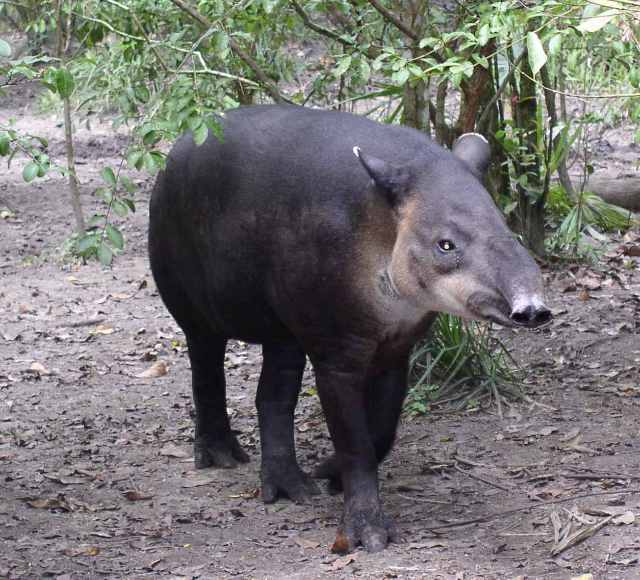
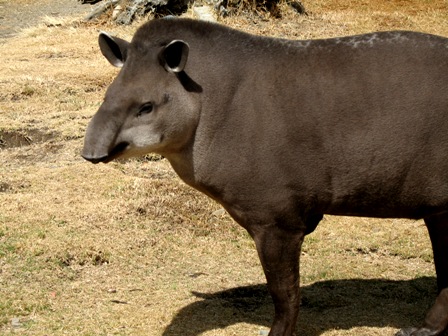
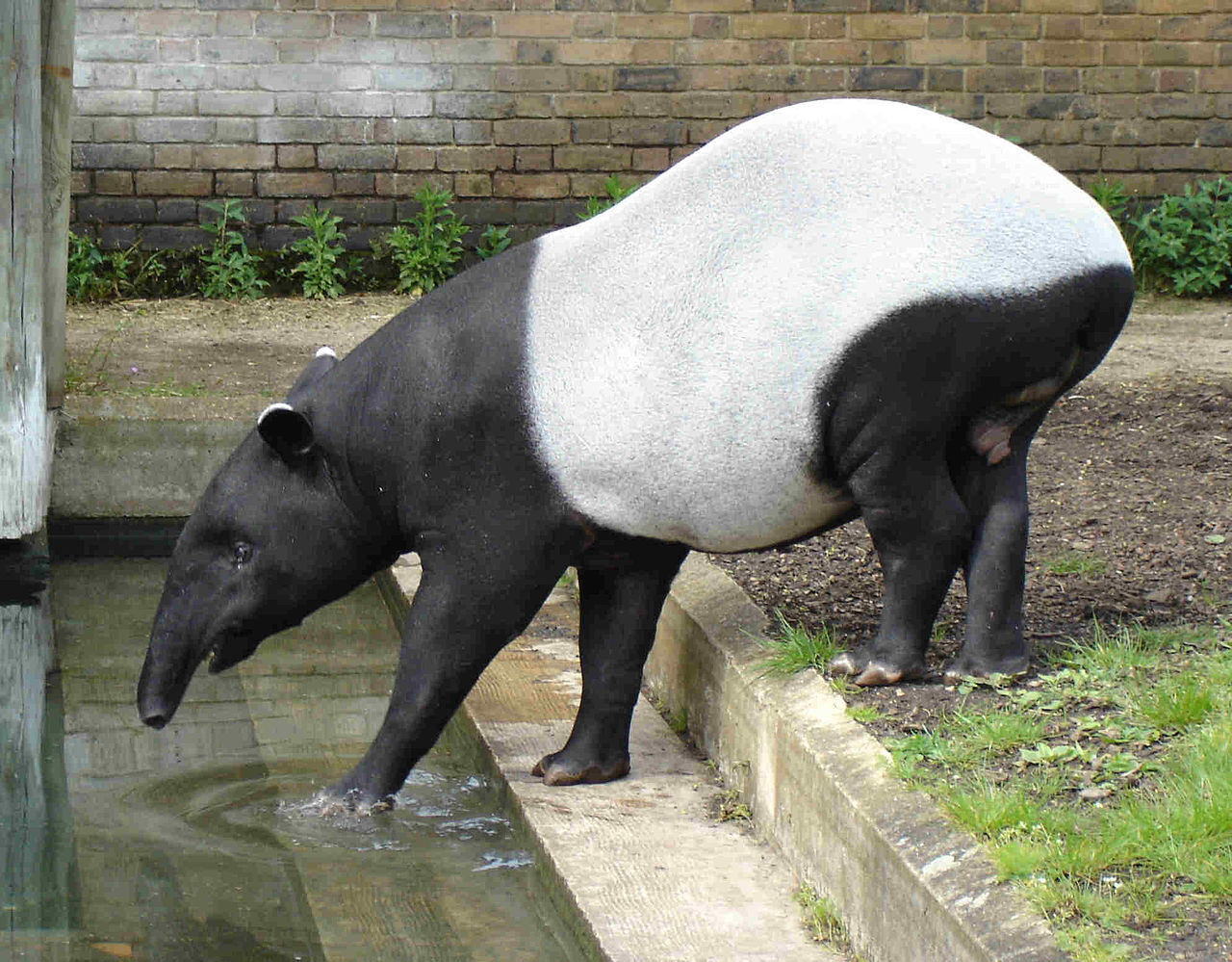
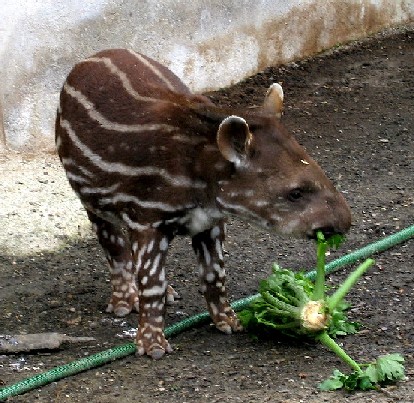



Physical characteristics
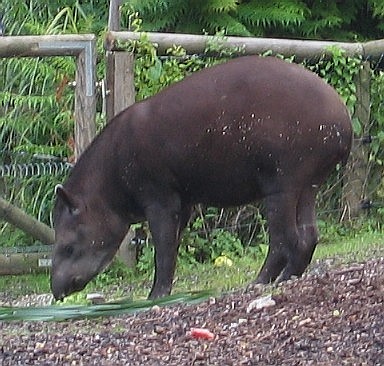
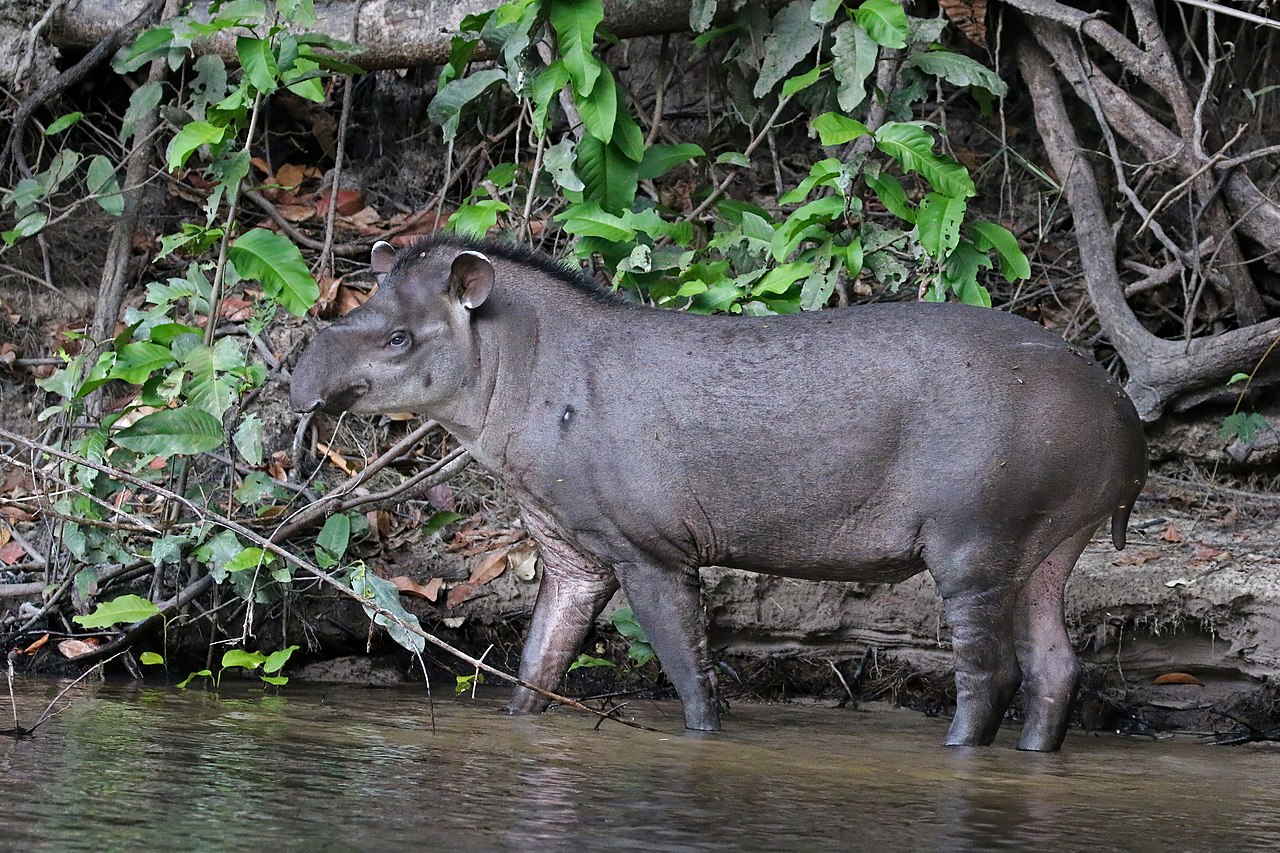
Tapirs have a compact, rounded body, short legs and a snout formed by the upper lip and nose. Their feet are adapted to soft ground: the front feet typically carry four toes while the hind feet have three. Size varies by species, but tapirs are generally stocky animals roughly the size of a large pig or small cow, capable swimmers and surprisingly agile in dense vegetation.
Habitat and behaviour
Tapirs live chiefly in forested environments and are often associated with rivers and wetlands. They are mainly solitary, feeding on foliage, shoots, fruits and aquatic plants. Their browsing habits and tendency to move seeds inside their digestive tract make them important seed dispersers in tropical ecosystems.
Evolutionary history
The tapir lineage has an ancient origin. The earliest tapirid relatives appear in the Eocene and continued through later intervals of the Cenozoic. By the Oligocene some fossil tapirids already resembled modern forms. That early history spans many geological intervals or epochs, and tapirs once ranged more widely across the Northern Hemisphere, with some species surviving there until the end of the last Ice Age. Modern tapir populations are relictual compared with that former distribution (present-day species occupy smaller, fragmented ranges).
Species, conservation and notable facts
- There are four widely recognized living species: the Malayan tapir (Asia) and several American species including Baird's, the lowland (Brazilian) tapir, and the mountain tapir.
- Tapirs face threats from habitat loss, hunting and fragmentation; many populations are classified as vulnerable or endangered and are the focus of conservation programs.
- Ecological importance: as large-fruited plant consumers and mobile seed dispersers, tapirs help maintain forest composition and regeneration.
For further reading on taxonomy, fossil record and conservation initiatives, consult specialist sources and field guides that focus on perissodactyls and tropical mammal conservation (family overview, genus details, fossil contexts).
Questions and answers
Q: What type of mammals are tapirs?
A: Tapirs are odd-toed ungulate mammals.
Q: What is the family name of tapirs?
A: Tapirs belong to the family Tapiridae.
Q: How many living genera of tapir are there?
A: There is only one living genus of tapir, which is Tapirus.
Q: When did the first tapirids appear?
A: The first tapirids appeared in the Eocene epoch.
Q: When did tapirs look similar to the present-day species?
A: Tapirs looked similar to the present-day species by the Oligocene.
Q: Were tapirs ever spread across the Northern Hemisphere?
A: Yes, for much of their history, tapirs were spread across the Northern Hemisphere.
Q: When did tapirs become extinct?
A: Tapirs became extinct as recently as 10,000 years ago.
Related articles
Author
AlegsaOnline.com Tapir Leandro Alegsa
URL: https://en.alegsaonline.com/art/96348