
Mikveh (Jewish ritual bath): overview, structure, history and uses
A mikveh is a Jewish ritual bath used for ritual immersion. This article explains its structure, religious uses, historical development, and modern variations and issues in practice.
The mikveh (Hebrew: מִקְוֶה), often rendered mikvah or mikve, is a specially prepared pool of water used in Judaism for ritual immersion. The practice, known as tevilah, serves to address ritual impurity, to mark transitions, and to accompany conversion. Immersion in a mikveh remains a core requirement in Orthodox practice for rites such as the conclusion of a woman's menstrual separation (niddah) and for converts completing the formal process of joining the Jewish people.
Image gallery
10 Images


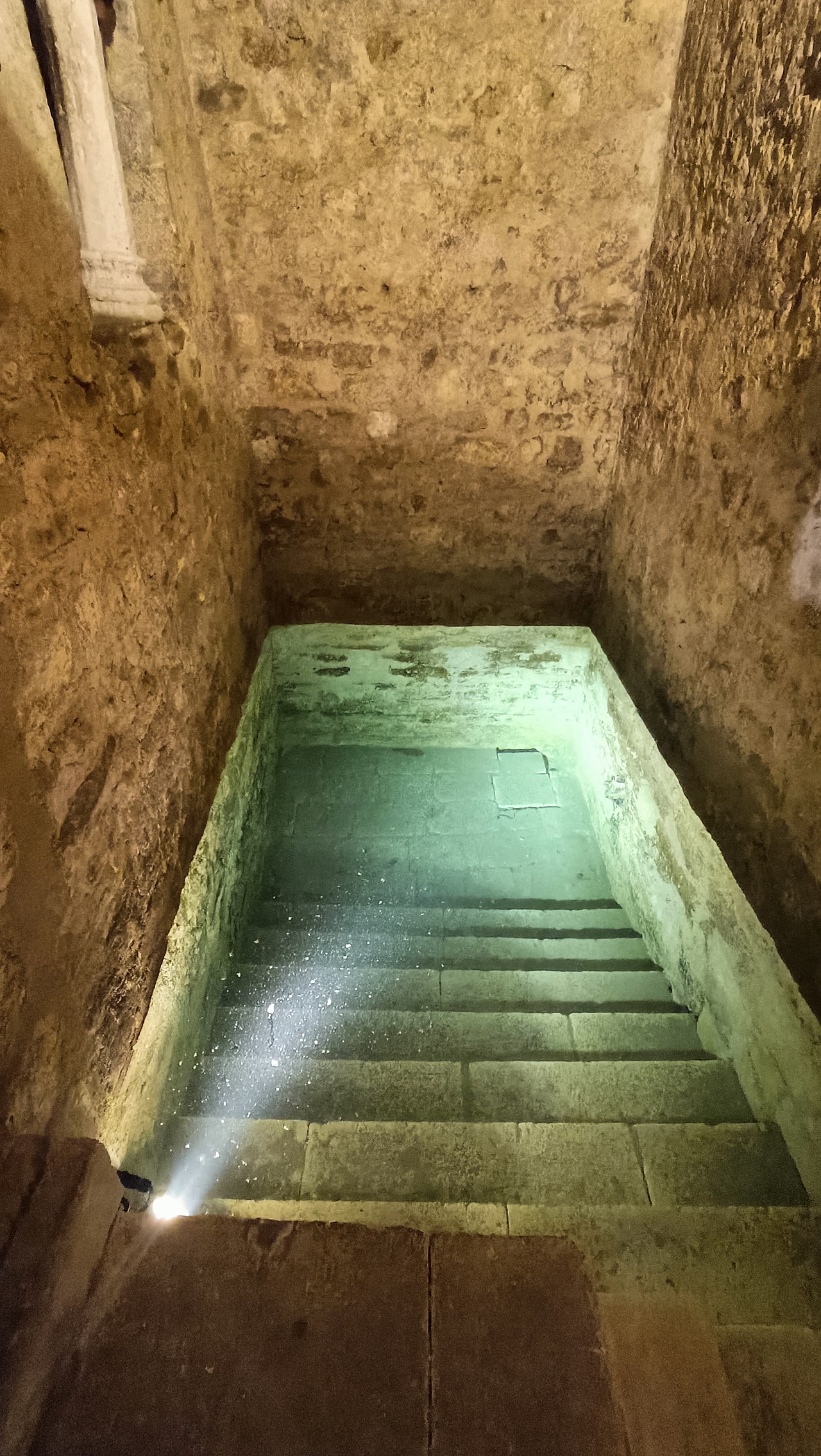


Characteristics and structure
A traditional mikveh is designed so that the immersion water is naturally collected or connected to "living water" (mayim chayim) such as rainwater, a spring, or groundwater. Rabbinic law commonly specifies a minimum water volume often approximated as 40 se'ah. Practical elements include a stepped entry, a deep main pool large enough to allow a complete, unobstructed immersion of the body, a private changing area, and facilities for thorough washing beforehand. Modern mikvaot often add showers, dressing rooms, and separate pools for ritual and ordinary water.
Common types and components
- Community mikveh: attached to synagogues or communal centers for general use.
- Conversion mikveh: used by those undergoing conversion to Judaism as a final ritual act.
- Domestic or private mikveh: smaller installations for household use in some communities.
For more on the Hebrew term and pronunciation see Hebrew term. For a plain-language explanation of immersion practices see ritual immersion resources.
History and development
References to ritual baths appear in the Hebrew Bible and in later rabbinic literature. Archaeological remains of mikva'ot are found in ancient Jewish settlements and in urban contexts from the Second Temple period onward. Over centuries, legal codifications by medieval authorities shaped rules about water sources, measurements, and proper immersion technique. In modern times, communities have adapted building methods while maintaining halakhic requirements, and new mikvaot have been established alongside revivals of traditional practice.
Uses, importance and practice
Mikveh immersion serves multiple functions: restoring ritual purity after certain life-cycle events, finalizing conversion to Judaism, preparing for major religious observances, and ritually purifying new kitchen utensils or ritual objects in some communities. The act is both legal (halakhic) and symbolic, signifying transition, renewal, and communal belonging. Educational resources and guides often describe the procedural steps and blessings; see guidance on use and common rituals.
Distinctions and contemporary issues
Practices vary between denominations. Orthodox communities typically follow stringent halakhic standards for construction and supervision, while Conservative and Reform communities may interpret requirements more flexibly. Contemporary conversations include accessibility, gender sensitivity, privacy, and the availability of mikvaot in diaspora communities. For historical overviews and archaeological findings consult historical resources and for modern institutional information see community resources.
Related articles
Author
AlegsaOnline.com Mikveh (Jewish ritual bath): overview, structure, history and uses Leandro Alegsa
URL: https://en.alegsaonline.com/art/64905
Sources
- archive.org : The New Bantam-Megiddo Hebrew & English dictionary