
Ritual purification
Religious practices that remove ritual impurity from people, objects or places; forms, historical development, social meaning, health implications, and distinctions from ordinary cleanliness.
Ritual purification denotes a set of prescribed actions in many religious traditions intended to remove what a community regards as ritual impurity. These rites may be performed by individuals, groups, or officials and can involve water, smoke, salt, sacrifice, fasting, or verbal confession. The aim is not always physical cleanliness in the everyday sense but restoration of a person, object, or place to a state considered suitable for worship, contact with the sacred, or re‑entry into ordinary communal life. For background on religiously prescribed rites see ritual.
Image gallery
10 Images
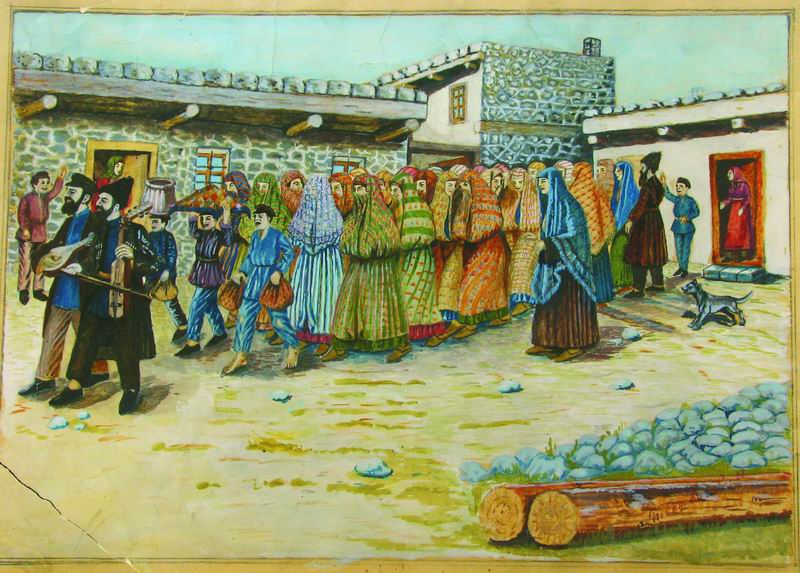


Forms and common elements
Common procedures include ablution (washing parts of the body), immersion, anointing, sprinkling, fumigation, and symbolic acts such as confession or offering. Specific examples across traditions include Islamic wudu and ghusl, Jewish laws of tumah and taharah and immersion in a mikveh, Christian baptism and liturgical blessings, Hindu snana and lineage rites, and Shinto misogi. Beyond persons, objects (vessels, textiles, tools) and places (homes, temples, gravesites) are often subject to purification before use. Many rituals single out bodily discharges, death, childbirth, and certain skin conditions as causes of temporary impurity.
Historical origins and development
Ritual purification appears in the record of many ancient societies and is prominent in the religious systems of the Ancient Near East and in classical Asian traditions. These practices predate modern germ theory and developed within frameworks that tied cleanliness, social boundaries, and religious obligation together. Over time the forms and meanings of purification rites have adapted: some remained closely regulated by religious law, others became symbolic or optional within communities, while still others declined or were reinterpreted in reform movements. The relation between these longstanding customs and later medical ideas is complex and not a direct lineage from ritual to science; see discussions of the germ theory for how modern understandings of infection differ from traditional religious rationales.
Functions and social importance
Ritual purification serves multiple functions. Practically, repeated ritual washing can reduce pathogens and may have incidental public‑health benefits; anthropologists and historians sometimes note this secondary effect. Socially and morally, purification marks transitions, enforces boundaries between sacred and profane, and helps regulate contact between individuals. Rituals help communities manage anxieties about contamination, morality, and disorder; the idea of taboo and boundary maintenance is closely linked to these practices, as explored in literature on cultural taboos and norms (taboos).
Distinctions and notable features
- Ritual impurity is not identical to ordinary dirt: an object may be ritually pure yet visibly soiled, or ritually impure while appearing clean.
- Impurities may be temporary (resolved by a prescribed rite) or permanent (requiring ongoing restrictions or exclusion).
- Purification often coincides with consecration: some rites both cleanse and dedicate an object or person to sacred service.
- Customs vary widely: what counts as impurity and the required remedy are defined by particular religious laws and cultural contexts.
Contemporary practice varies: many believers continue traditional rites unchanged, while others reinterpret them symbolically or align them with modern hygiene. Public health authorities sometimes accommodate religious practices when they affect communal well‑being. For further reading on concepts of ritual cleanliness and religious law see general resources on ritual purity and comparative studies that draw connections between social norms, purity symbols, and boundary maintenance. Historical and anthropological perspectives remain important for understanding why these practices endure and how they shape personal and communal life in diverse cultures (see ritual studies, science and medicine, taboo literature).
Questions and answers
Q: What is ritual purification?
A: Ritual purification is a religious practice that cleanses a person, object or place of uncleanliness according to a religion's prescribed rituals.
Q: What is ritual purity?
A: Ritual purity is a state of cleanliness that is achieved through ritual purification practices.
Q: Can ritual purification be applied to objects and places as well?
A: Yes, ritual purification can also be applied to objects and places, not just people.
Q: Is ritual uncleanliness the same as physical impurity?
A: No, ritual uncleanliness is not identical to physical impurity, but body fluids are generally considered ritually unclean.
Q: When did most of these purification rituals begin?
A: Most of the purification rituals existed long before the idea of germ theory or disease, and have been present in the earliest known religious systems of the Ancient Near East.
Q: What is the connection between these rituals and taboos?
A: Some writers connect these purification rituals to taboos, as they are often associated with social stigmas or moral codes.
Q: What is the 'dimension of purity' described in many religions?
A: The 'dimension of purity' is a universal concept in religions that aims to move individuals from a state of disgust or impurity towards a state of purity and divinity, as well as towards moral behavior within their cultural context.
Related articles
Author
AlegsaOnline.com Ritual purification Leandro Alegsa
URL: https://en.alegsaonline.com/art/83072
Sources
- patheos.com : The Happiness Hypothesis