
Michigan Territory (1805–1837)
Territorial government of the United States from 1805 to 1837, centered on Detroit; its development, institutions, economy, key events (War of 1812, Toledo dispute) and path to statehood.
Overview
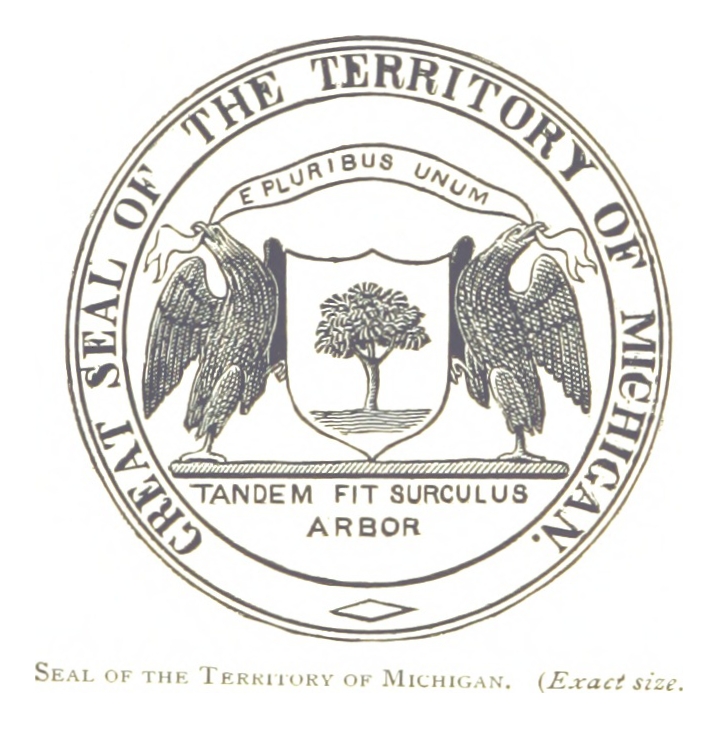
The Michigan Territory was an organized incorporated territory of the United States established on June 30, 1805. Its capital was Detroit. The territory existed until it entered the Union as the State of Michigan on January 26, 1837, becoming the 26th state (26th). During its two decades as a territorial government it grew in population, economic activity and political organization.
Image gallery
10 Images



Government and administration
Like other early U.S. territories, Michigan was administered by a federally appointed governor and judges, with gradually increasing local representation. Territorial institutions combined appointed officials with elected advisory councils, and local courts administered law as settlement expanded beyond Detroit into the peninsula and surrounding islands.
People, economy and lands
The territory was home to Native American nations including Ojibwe, Odawa and Potawatomi, and to French, British and American settlers. Economic life centered on the fur trade, timber, fishing and small-scale agriculture; later mining and wider commercial links developed as transport improved. Settlement patterns followed waterways and the Detroit hub.
Key events and path to statehood
- Its early years were shaped by the War of 1812, including the surrender and later recovery of Detroit.
- The 1835–1836 boundary dispute with Ohio, known as the Toledo War, affected the timing and terms of admission.
- Political organization and population growth in the 1820s–1830s led to a constitutional convention and admission as a state.
Legacy and significance
Michigan Territory was a formative stage in the settlement and governance of the Great Lakes region. Its institutions, treaties with Indigenous peoples, and conflicts over boundaries influenced the later states carved from the Old Northwest. For more detailed primary sources and maps see federal records, territorial journals at library collections and regional histories compiled online (archives, state collections, historic societies, museum exhibits, academic summaries, city histories).
Related articles
Author
AlegsaOnline.com Michigan Territory (1805–1837) Leandro Alegsa
URL: https://en.alegsaonline.com/art/64556