
Mid-Atlantic Ridge
A major underwater mountain range and divergent plate boundary in the Atlantic where seafloor spreading creates new oceanic crust and supports unique geological and biological systems.
Overview
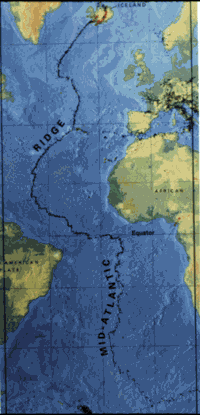
The Mid-Atlantic Ridge is a continuous submarine mountain chain that runs roughly down the center of the Atlantic Ocean. It is an active divergent plate boundary where the North American, Eurasian, South American and African plates move apart. This process, known as seafloor spreading, creates new oceanic crust and drives much of the Atlantic basin's evolution. Portions of the ridge rise above sea level, most notably on Iceland, where the ridge is exposed and visible on land.
Image gallery
10 Images






Structure and characteristics
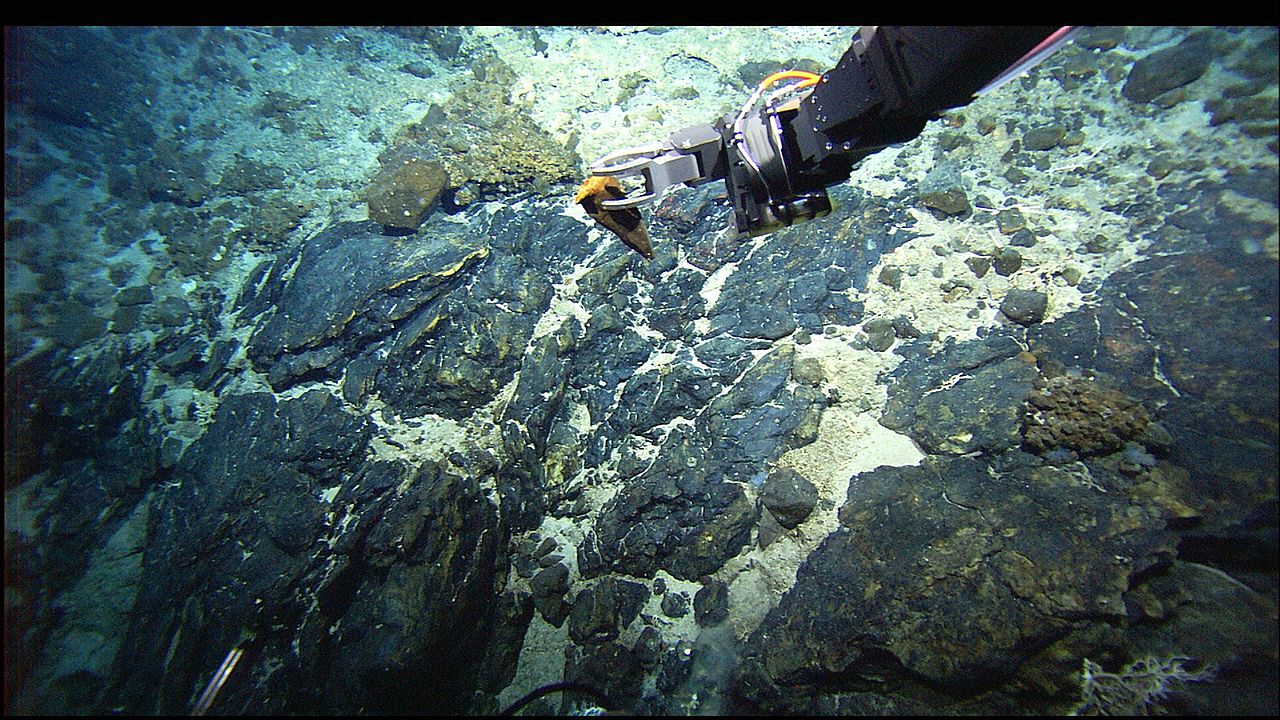
The ridge is composed of a crest of volcanic mountains, fissures and a central rift valley that marks the plate boundary. Along the axis, magma from the mantle wells up and solidifies, producing layers of newly formed rock. As lava cools and crystallizes, it typically forms basalt on the seafloor and gabbro in deeper crustal sections; these rock types are linked to the chemistry and cooling history of ridge magmatism (basalt, gabbro).
Geological processes
Spreading rates along the Mid-Atlantic Ridge are relatively slow compared with some other ocean ridges, typically on the order of a few centimeters per year. This slow divergence produces a pronounced rift valley and a segmented ridge geometry intersected by transform faults. Hydrothermal circulation is common; seawater penetrates fractured rock, is heated by magma, and returns to the ocean as mineral-rich vent fluids. These vents create chimneys and deposit metal sulfides on the seafloor.
Biological and economic importance
Hydrothermal vents along the ridge sustain chemosynthetic ecosystems that are independent of sunlight. Unique communities of tube worms, clams and bacteria thrive on chemical energy from vent fluids, making the ridge important to studies of life’s limits. Mineral deposits formed at vents and by alteration processes have attracted scientific and commercial interest for their concentrations of copper, zinc and other metals, though mining remains controversial.
History and scientific significance
The discovery and mapping of mid-ocean ridges in the 20th century were pivotal in establishing the theory of plate tectonics. Magnetic patterns in seafloor rocks, age relationships and direct observations of volcanic activity provided strong evidence for continuous creation of oceanic crust at ridges. Research on the Mid-Atlantic Ridge continues with submersibles, remote sensing and geophysical surveys to study mantle processes, crustal formation, and biological communities.
Key facts and distinctions
- The Mid-Atlantic Ridge is part of a global system of mid-ocean ridges that form the longest mountain chain on Earth, mostly underwater.
- Spreading along the ridge separates large oceanic plates and reshapes ocean basins over geological time scales; see map resources for context.
- Different segments of the ridge show variable volcanic activity and morphology, influenced by mantle temperature and spreading rate.
For further reading on the processes and discoveries associated with the Mid-Atlantic Ridge, consult specialist summaries and databases (seafloor spreading overview, magma and mantle, Icelandic exposures), and repositories of geological samples and vent biology (crystallization studies, basalt analyses, gabbro structure).
Questions and answers
Q: What is the Mid-Atlantic Ridge?
A: The Mid-Atlantic Ridge is where seafloor spreading takes place in the middle of the Atlantic Ocean.
Q: What is the Mid-Atlantic Ridge a part of?
A: The Mid-Atlantic Ridge is part of a world-wide system of mid-ocean ridges.
Q: Where is the longest mountain range in the world located?
A: The longest mountain range in the world is located underwater, except for short stretches like Iceland.
Q: What separates oceanic tectonic plates?
A: The Mid-Atlantic Ridge separates oceanic tectonic plates.
Q: How much do the plates move apart per year at the Mid-Atlantic Ridge?
A: The plates move apart at about 2.5 cm per year at the Mid-Atlantic Ridge.
Q: What runs along the middle of the Mid-Atlantic Ridge?
A: A deep rift valley runs along the middle of the Mid-Atlantic Ridge along almost its entire length.
Q: What emerges onto the ocean floor near the ridge axis?
A: New magma emerges onto the ocean floor near the ridge axis at the Mid-Atlantic Ridge.
Related articles
Author
AlegsaOnline.com Mid-Atlantic Ridge Leandro Alegsa
URL: https://en.alegsaonline.com/art/64646
Sources
- pubs.usgs.gov : "Understanding plate motions"