
Luger pistol (Parabellum P08)
The Luger is an early 20th-century German semi-automatic pistol, noted for its toggle-lock action, association with the 9×19mm Parabellum cartridge, high craftsmanship, and service use through both world wars.
Overview
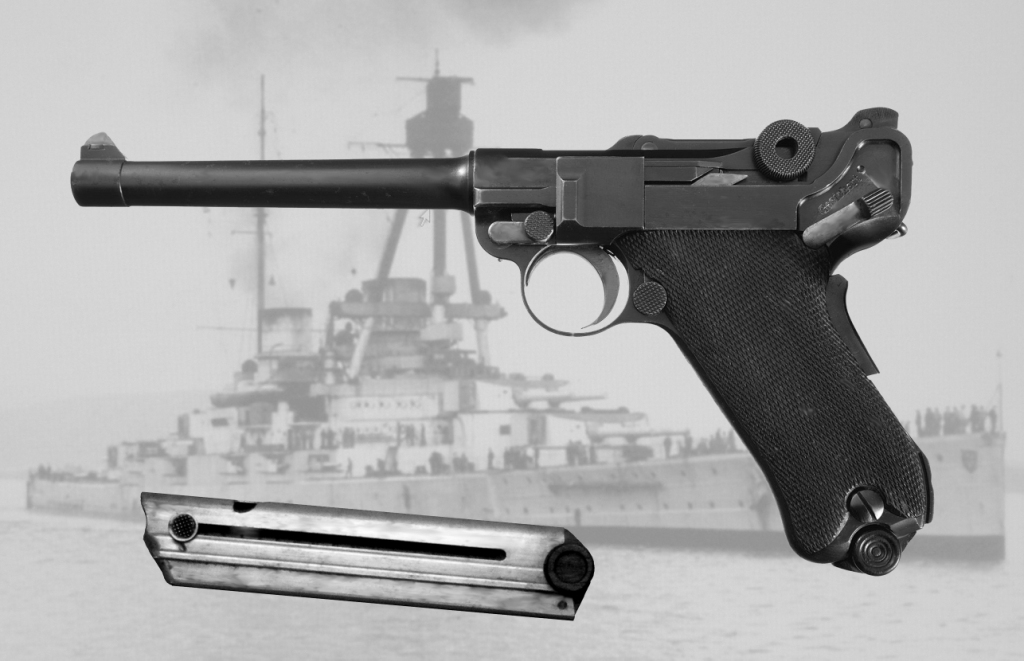
The Luger is a concise name for a family of semi-automatic pistols designed by Georg Luger and commonly identified by the military designation P08 or "Parabellum" models. Introduced into German service in the early 20th century, the pistol became closely associated with the 9×19mm Parabellum cartridge and is widely known for its distinctive toggle-lock action and ergonomic grip angle. Its appearance and mechanism make it one of the most recognizable handguns of the era.
Image gallery
8 Images



Design and key characteristics
The Luger uses a short recoil, toggle-lock mechanism that differs from the slide designs of most modern pistols. Notable features include a single-column magazine, a grip shaped to fit the hand angle ergonomically, and finely finished metalwork. Typical service magazines hold eight rounds for the 9×19mm version, and the pistol is often praised for a crisp trigger and accurate barrel alignment in serviceable condition.
- Action: Toggle-lock recoil-operated mechanism.
- Cartridge: Closely linked to the 9×19mm Parabellum cartridge; early examples also used other calibres.
- Magazine: Single-stack, commonly eight rounds in service models.
- Build: High-quality machining and fit typical of early 20th-century German armsmaking.
History and military service
Developed from earlier experimental designs, the Luger entered formal service with German forces around 1908 and saw widespread use among officers and specialist troops. It was produced for military and commercial markets and issued in a variety of barrel lengths and configurations. During World War II the Luger remained in use even after the Walther P38 began to replace it in official procurement, with many examples still carried by personnel for reasons of familiarity, prestige, or limited supply.
Legacy, influence and use today
The cartridge most associated with the Luger—the 9×19mm Parabellum—went on to become one of the world’s most successful handgun cartridges and later became a standard for many NATO forces. The pistol itself is valued by collectors and museums for its historical significance, distinctive mechanism, and the high level of original finish on many surviving examples. In practical terms, modern users note that the toggle action is sensitive to dirt and fouling compared with more contemporary locked-breech slides.
Variants and notable facts
Several commercial and military variants were produced, and later manufacturers and ateliers supplied replacement parts or licensed examples. The Luger’s association with national service and popular culture has made it a frequent subject of study among enthusiasts of early semi-automatic pistols. For further technical background see design and development resources, original patents and documents at archival references, and period manuals at service manuals. For a discussion of later service replacements and comparisons, consult materials linked at replacement and comparison and analyses of the cartridge’s adoption at ammunition history sources. Additional general information is available from dedicated firearms history collections at research collections.
Related articles
Author
AlegsaOnline.com Luger pistol (Parabellum P08) Leandro Alegsa
URL: https://en.alegsaonline.com/art/59811
Sources
- chuckhawks.com : chuckhawks.com/dwm_luger.htm