
M129 40 mm automatic grenade launcher
A helicopter-mounted American 40 mm automatic grenade launcher developed in 1966 as an improved, higher-rate-of-fire successor to the M75, used for aerial suppressive and offensive fire.
The M129 is an American 40 mm automatic grenade launcher designed for airborne use. It was introduced in the mid-1960s as a purpose-built weapon for rotary-wing platforms and became notable for its higher cyclic speed compared with earlier designs. The launcher fires 40 mm grenades intended for direct aerial suppression and close-support roles.
Image gallery
3 Images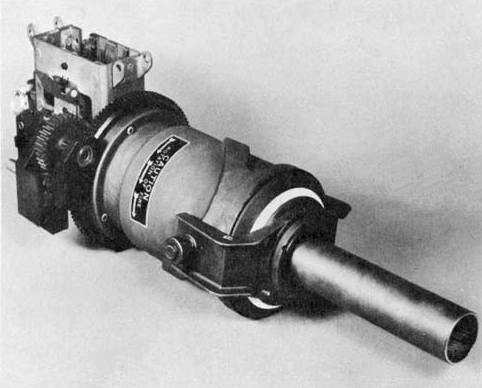

Characteristics
The M129 is an automatic, high-rate-of-fire launcher optimized for mounting on aircraft. Its distinguishing traits include a compact form factor suitable for helicopter hardpoints and pintle mounts, a cyclic rate substantially greater than its predecessor, and the ability to deliver rapid, concentrated explosive fire against ground targets. It was engineered to be compatible with the standard 40 mm aerial grenade family and to operate reliably in the vibration and environmental conditions typical of helicopter service.
Development and history
The system was developed by Ford Aerospace in 1966 as an advanced version of the earlier M75. One of the primary goals of the redesign was to increase the rate of fire: the M75 had a cyclic rate around 225 rounds per minute, while the M129 raised that figure into the neighborhood of 400 rounds per minute. The improvement allowed aircrews to place more explosive ordnance on target in a shorter time, improving suppressive and offensive capability during engagements.
Use and platforms
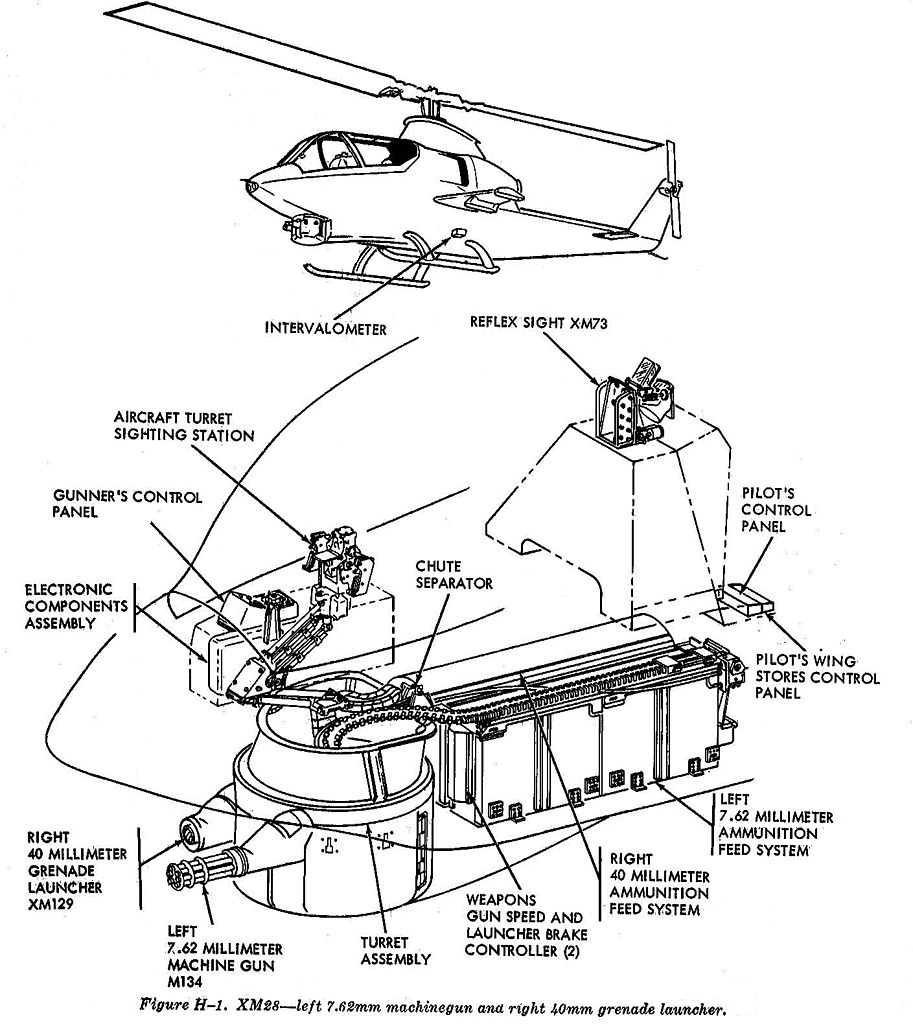
The M129 was intended for use aboard attack and utility helicopters. It was commonly fitted to door mounts, pylons, and turret or pod arrangements on Vietnam-era rotary-wing aircraft and later platforms. Typical applications included defensive suppression during troop transport, close air support for ground forces, and perimeter security when aircraft operated at low altitude. Examples of helicopter families that carried similar aerial grenade launchers include the UH-1 and AH-1 families, though specific fitments varied by mission and era.
Operational role and notable facts
- Designed primarily as an aerial weapon to deliver rapid explosive fire against soft and lightly armoured targets.
- Represents an evolutionary step from the M75, trading lower recoil impulse and simpler mechanism for higher volume of fire and increased delivered ordnance.
- Was produced during the Vietnam era and continued to influence later automatic grenade launcher designs and aerial weapon integration practices.
- Used in conjunction with mounting hardware, sighting systems, and ammunition types tailored for airborne employment.
The M129 occupies a specific niche in aerial armament history as a compact, higher-rate automatic grenade launcher developed to meet the demands of helicopter-borne firepower. For technical references and broader context on aerial automatic grenade launchers and rotary-wing armament, see additional resources and historical accounts of airborne weapons integration and tactics (helicopter armament overview, 40 mm systems).
Related articles
Author
AlegsaOnline.com M129 40 mm automatic grenade launcher Leandro Alegsa
URL: https://en.alegsaonline.com/art/60205
Sources
- securityarms.com : "GRENADE LAUNCHER M75 40mm"