
M1 Abrams main battle tank
American main battle tank introduced in 1980, known for powerful turbine engine, layered armor and long service life; exported to several nations and continually upgraded.
The M1 Abrams is a United States-designed main battle tank that entered service in 1980. Built for modern combined-arms warfare, it combines heavy protection, strong firepower and high mobility for its class. The vehicle has been exported to a number of foreign armed forces and remains in active use with several partners. Weight and equipment vary by model, but Abrams tanks are among the heaviest in service, at roughly around or just under the scale of almost seventy short tons depending on configuration (approximate).
Image gallery
10 Images


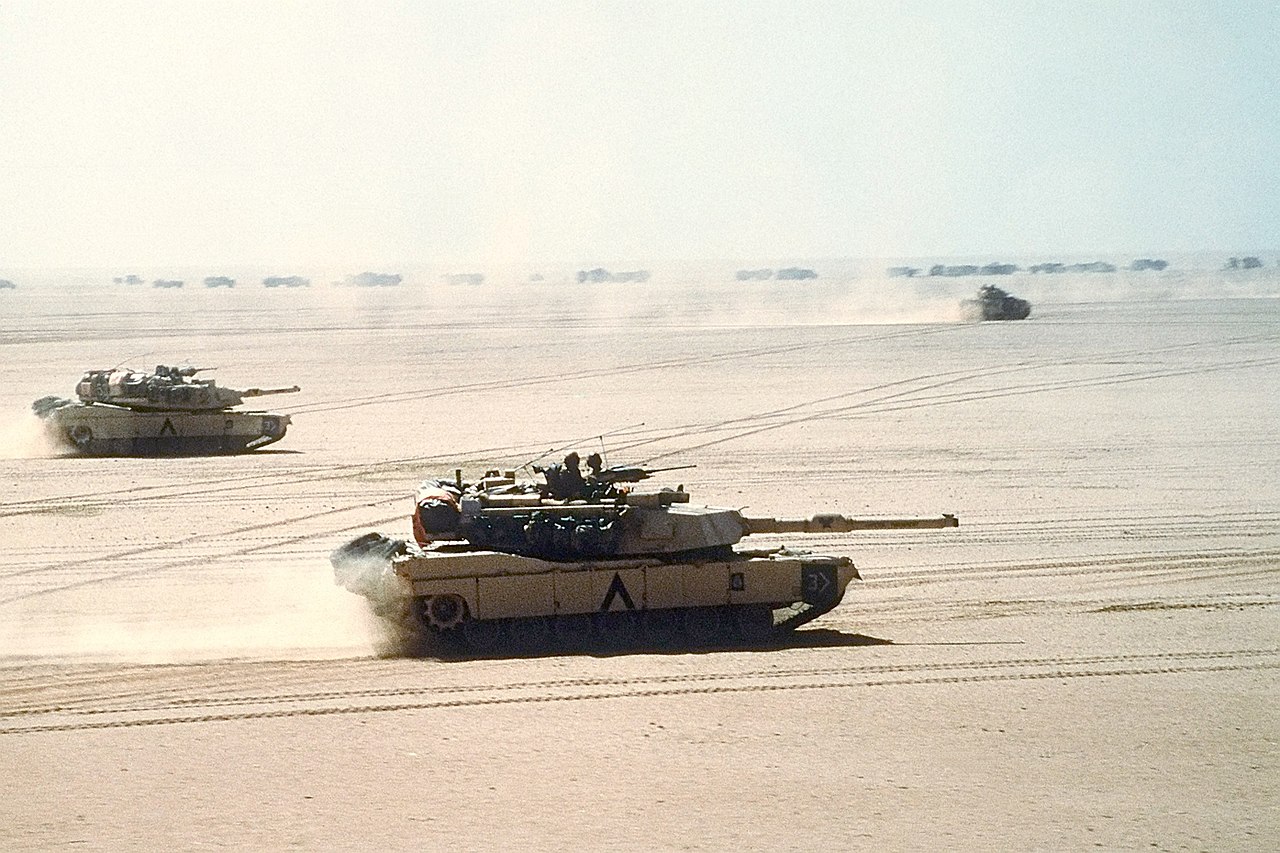


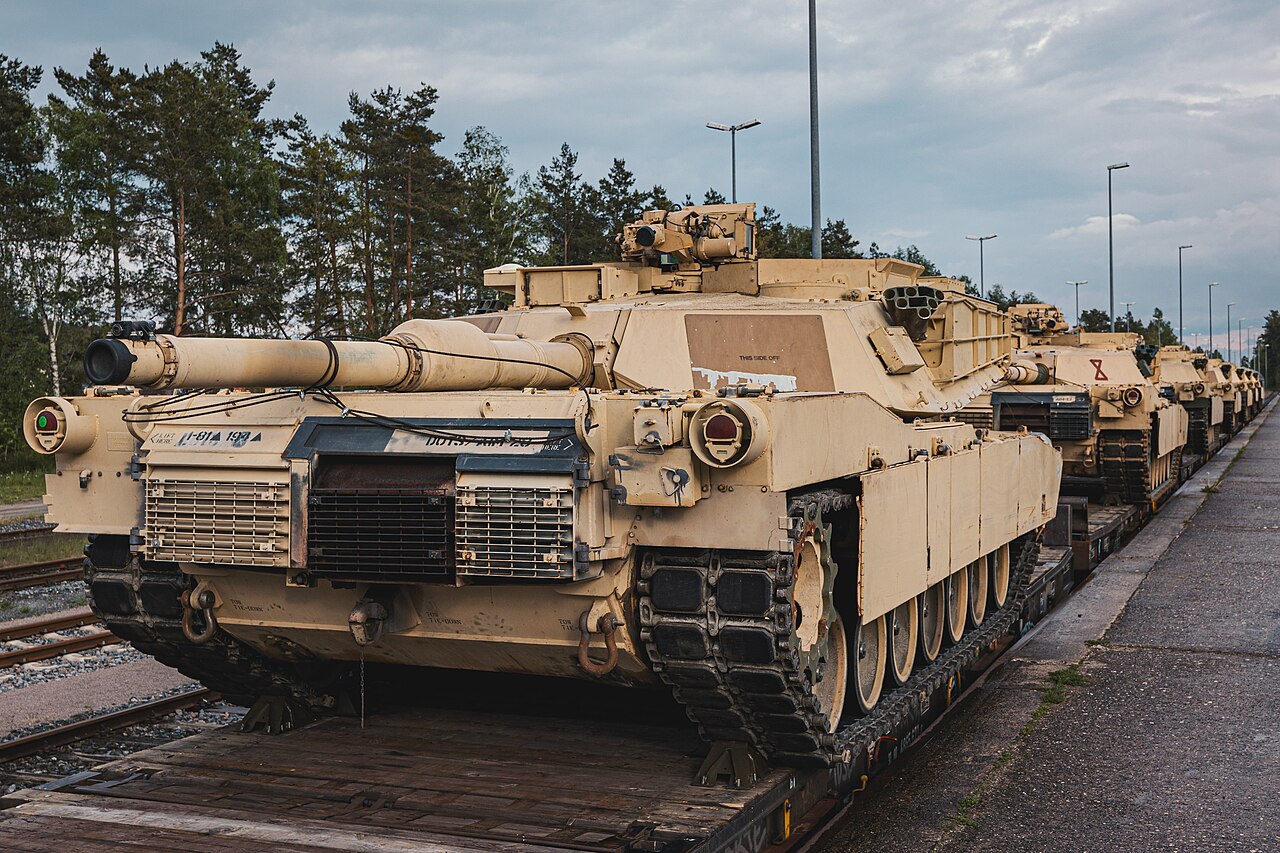


Design and features
The Abrams was designed with survivability and crew effectiveness as priorities. Its protection relies on composite armor with multiple layers; some later variants incorporate additional dense materials to improve resistance to kinetic and shaped-charge threats. Mobility is provided by a powerful gas turbine engine that gives rapid acceleration and a high power-to-weight ratio compared with many diesel-powered tanks. The main armament has been upgraded across versions to improve range and lethality, and a modern fire-control suite provides accurate target engagement while on the move.
Typical crew layout includes four personnel: commander, gunner, loader and driver. The gun is manually loaded (no automatic autoloader), and the vehicle carries secondary armament for close defence and anti-infantry roles. Electronics and battlefield networking have been expanded in successive upgrades, giving later models improved situational awareness and digital communications.
Service history and operators
The M1 replaced the older M60 series in U.S. service and has served as the principal heavy tracked tank of the U.S. Army and U.S. Marine Corps. Over decades it has been upgraded through the M1, M1A1 and M1A2 families, with ongoing modernization programs intended to keep the platform relevant into the mid-21st century. The vehicle has been sold or supplied to several countries, including Egypt and others, and has been used in major conflicts and operations where heavy armour and sustained mobility were required.
Key characteristics
- Protection: multilayer composite armor with improvements in later variants.
- Firepower: large-caliber main gun with advanced fire control.
- Mobility: gas turbine propulsion allowing rapid response and high cross-country speed.
- Crew: four-person crew with manual loading.
- Upgradability: extensive electronics, armour and armament upgrades across service life.
Several distinctive traits separate the Abrams from many contemporaries: its turbine engine (which provides high power but greater fuel consumption), substantial weight and a focus on layered protection. These design choices emphasize battlefield survivability and sustained combat power rather than minimal logistical footprint.
Because of continuous modernization and additional armor kits, the platform has remained in front-line service many years after introduction. Periodic upgrade packages and planned next-generation improvements aim to extend its operational relevance while adapting to evolving threats and networked battlefield requirements.
For more information on the tank family and current programs see manufacturer and defense service sources: overview, export details, and official service pages for the Army and Marines. Historical lineage can be traced back to the platform that succeeded the M60 Patton, with operators including countries such as Egypt, Kuwait and others.
Questions and answers
Q: What is the M1 Abrams?
A: The M1 Abrams is a modern main battle tank used by the United States and several other countries.
Q: What are some notable features of the M1 Abrams?
A: Notable features of the M1 Abrams include a powerful engine, layered armor, and a low profile.
Q: How heavy is the M1 Abrams?
A: The M1 Abrams is one of the heaviest tanks in service, weighing almost 70 short tons.
Q: When did the M1 Abrams enter U.S. service?
A: The M1 Abrams entered U.S. service in 1980, replacing the M60 Patton.
Q: What are the three main versions of the M1 Abrams?
A: The three main versions of the M1 Abrams are the M1, M1A1, and M1A2, incorporating improved armament, protection and electronics.
Q: In which countries is the M1 Abrams currently in service?
A: The M1 Abrams is the principal (main) main battle tank of the United States Army and Marine Corps, and the armies of Egypt, Kuwait, Saudi Arabia, Australia, and in 2010 Iraq.
Q: How long is the M1 Abrams anticipated to be in U.S. service?
A: The M1 Abrams is anticipated to be in U.S. service until the 2050s.
Related articles
Author
AlegsaOnline.com M1 Abrams main battle tank Leandro Alegsa
URL: https://en.alegsaonline.com/art/60200
Sources
- gulflink.osd.mil : gulflink.osd.mil/du_ii/index.htm
- archive.gao.gov : PDF
- fas.org : "M1 Abrams Main Battle Tank"
- www4.army.mil : "TUSK to update Abrams for urban battle"
- armytimes.com : Army Times - Two soldiers die in attack on Abrams tank, October 29, 2003
- defenselink.mil : DoD News: DoD Identifies Army Casualty - Dec 25, 2005 attack
- defenselink.mil : DoD News: DoD Identifies Army Casualties - June 04, 2006 incident