
Clinton–Lewinsky scandal (1998)
A widely publicized political controversy during Bill Clinton's presidency involving his relationship with Monica Lewinsky, the ensuing investigation by independent counsel Ken Starr, and the 1998 impeachment of the president.
Overview
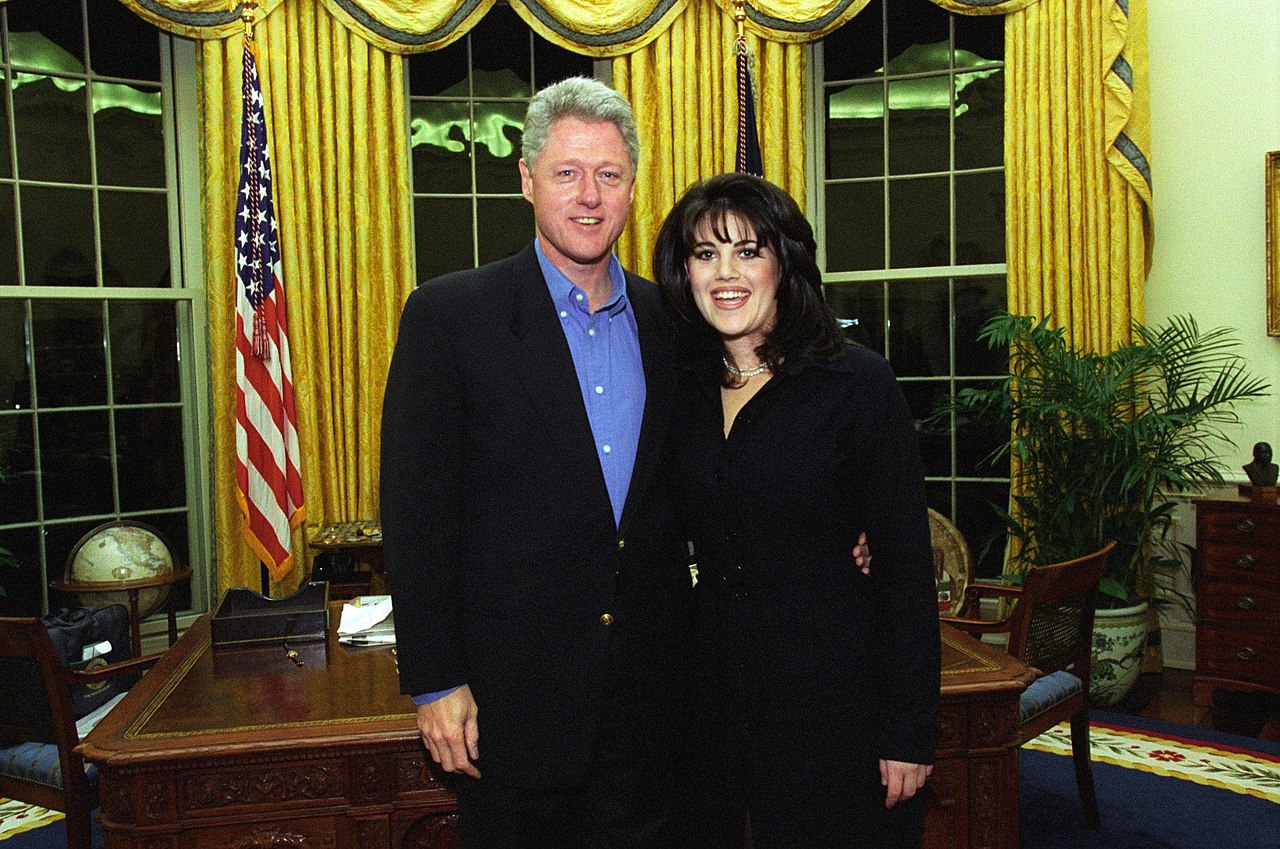
The Clinton–Lewinsky affair was a high‑profile American political scandal that unfolded in 1998 after revelations about an intimate relationship between President Bill Clinton and Monica Lewinsky, a White House intern. The story blended questions of personal conduct, legal procedure and presidential accountability, and it dominated news coverage and political debate for months. Observers often describe it simply as a political scandal, but it also raised broader issues about privacy, media treatment of individuals, and the standards to which public officials are held.
Image gallery
5 Images


Key facts and timeline
Publicly acknowledged interactions between the president and Lewinsky took place during the mid‑1990s, with Lewinsky later telling investigators the relationship occurred several times between 1995 and 1997. The controversy intensified when private conversations were recorded by White House staffer Linda Tripp, who provided them to federal investigators. A condensed timeline includes:
- Mid‑1990s: intimate encounters and social contact at the White House.
- Early 1998: questions arise during unrelated civil litigation and deposition testimony.
- 1998: an investigative report prepared by Independent Counsel Ken Starr expanded earlier inquiries to include the Lewinsky matter.
- Late 1998: House proceedings culminated in formal impeachment votes on charges including perjury and obstruction of justice.
- Early 1999: the United States Senate acquitted the president and he remained in office.
Evidence, testimony and controversy
The investigation relied on a mix of witness statements, recorded conversations, physical evidence and sworn testimony. A dress belonging to Lewinsky that contained biological evidence played a notable role in corroborating parts of her account. The matter also involved disputes over sworn depositions, denials issued in public statements, and the legal and ethical propriety of how evidence was collected and used. The president initially issued denials that became central to later accusations of perjury.
People involved
Beyond the two principal figures, other key participants included the president's wife, the First Lady Hillary Clinton, investigators, legal counsel and religious leaders who were present when the president made a later public admission. On the day he publicly acknowledged wrongdoing, he addressed clergy and others at a national service attended by ministers and priests, among others, and said he had behaved improperly.
Impact and legacy
The scandal had several consequences: it produced an era‑defining media spectacle; shaped debates over the private conduct of elected officials; and set legal precedents about independent counsel investigations. It also affected the lives of the individuals involved—Monica Lewinsky later became a public commentator on cyberbullying and social stigma—and contributed to long‑term partisan polarization. Legal scholars and political scientists continue to examine its effects on institutional norms and how the public weighs personal misconduct against official performance.
Further reading and context
For additional background, contemporary documents and analysis, see summaries of the investigative report and official records, including contemporaneous scheduling details cited in some accounts (for example, a published schedule referenced during testimony). Contemporary editorial and legal commentaries remain a useful resource for understanding how the episode combined elements of personal failure, legal process and political consequence.
Although the term "Lewinsky scandal" is often used colloquially to refer to the episode, its full story intersects with questions about power dynamics, procedural fairness and the role of the press in democratic life. Discussion of those broader themes continues to inform how similar allegations are handled today.
Related topics and primary sources include investigative memos and the public record of proceedings compiled by the Independent Counsel Ken Starr team, contemporaneous press coverage and legal filings connected to the civil suits and subsequent government actions.
See also references to the nature of the encounters described (for instance, allegations that they included oral sex) and the legal and political labels applied throughout the controversy, including references to the impeachment process and accusations of perjury.
The episode remains a landmark case in U.S. political history and a prominent example of how personal behavior can intersect with institutional accountability.
Additional contemporary sources and commentary are available for those who wish to explore primary documents and retrospective analysis of the events and their consequences.
Related articles
Author
AlegsaOnline.com Clinton–Lewinsky scandal (1998) Leandro Alegsa
URL: https://en.alegsaonline.com/art/57587
Sources
- usatoday.com : "Lewinsky and the first lady"