
Liberal Democrats (UK)
Centrist UK political party formed in 1988 by the merger of the Liberal Party and the Social Democratic Party; advocates liberalism, electoral reform, civil liberties, environmentalism and pro‑Europeanism.
The Liberal Democrats, often known as the Lib Dems, are a centrist political party in the United Kingdom that promotes liberal and social liberal policies. Formed in 1988 by the formal merger of the Liberal Party and the Social Democratic Party, the party positions itself between the Conservative and Labour parties on many economic and social issues. It has campaigned consistently for civil liberties, electoral reform, devolution, environmental action and a pro‑European international stance.
Image gallery
10 Images


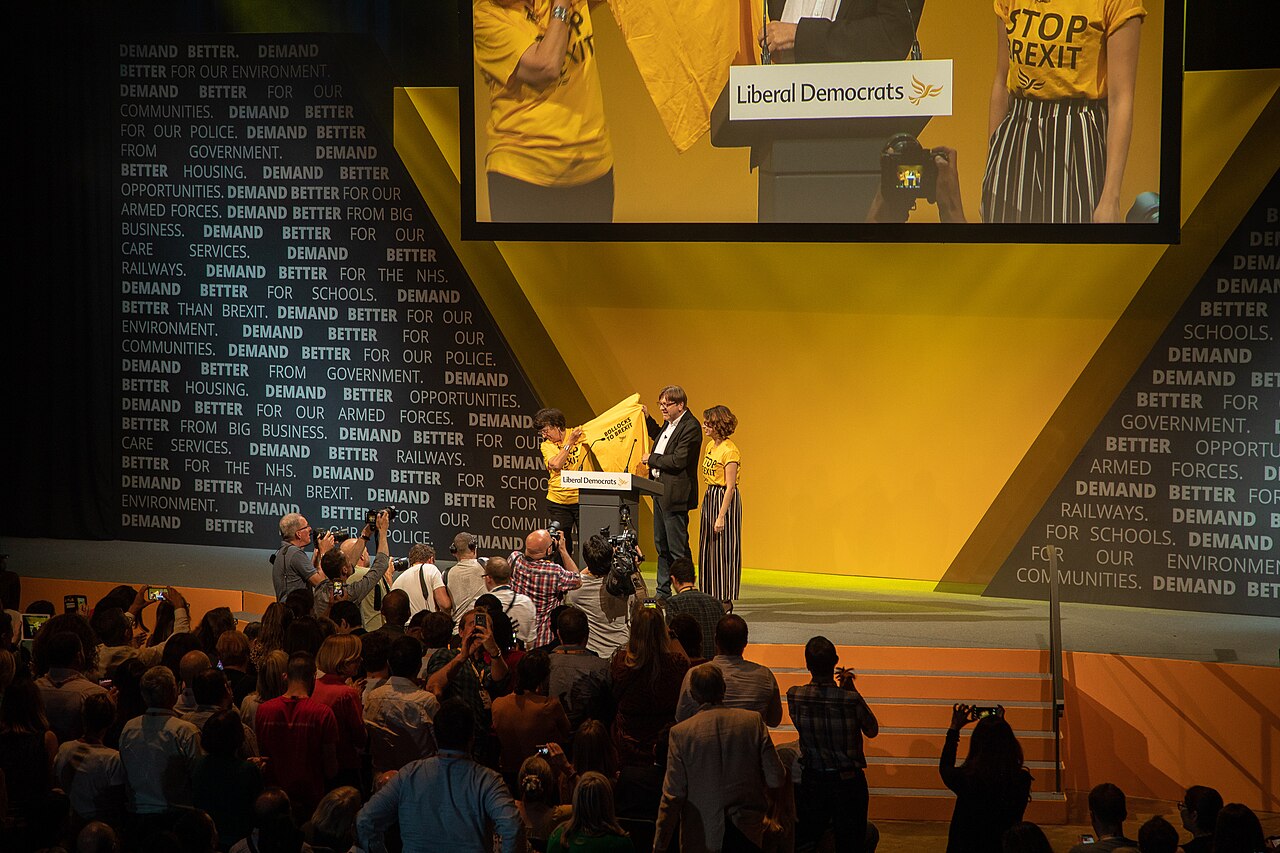


Origins and development
The party draws on two political traditions. The Liberal Party was one of the great parties of 19th‑ and early 20th‑century Britain, associated with free trade, individual rights and parliamentary reform, while the Social Democratic Party emerged in the early 1980s when several centre‑left politicians left the Labour Party and sought a new moderate social democratic home. After several years of electoral cooperation the two organisations agreed to merge and founded the Liberal Democrats in 1988. Since then the party has adapted to changing political circumstances, building a profile in local government, regional assemblies and in UK-wide politics.
Ideology and policy priorities
The Lib Dems describe themselves as champions of liberal democracy and human rights, combining support for a mixed-market economy with commitments to social justice and strong public services. Core policy themes include:
- Electoral reform: the party has long advocated a move from first‑past‑the‑post to a proportional voting system for the House of Commons.
- Civil liberties: protections for individual freedoms, privacy and the rule of law are emphasised in party platforms.
- Environment and climate: action on climate change, support for renewable energy and conservation are prominent policy goals.
- Decentralisation and devolution: strengthening the powers of devolved governments and local authorities is a recurring theme.
- Internationalism and Europe: historically pro‑European, the party supports close international cooperation and development aid.
Organisation and membership
The party is organised with national and federal structures, an elected leader, and local parties and associations across the UK. It has active youth and student groups, and a network of councillors in many local authorities. Membership tends to include a relatively high proportion of university‑educated members and professionals, though the party also seeks wider social and regional appeal.
Electoral profile and representation
The Liberal Democrats have often found it difficult to translate national vote share into a proportionate number of parliamentary seats because of the UK's first‑past‑the‑post electoral system. Their electoral strength has historically been concentrated in particular regions and constituencies, including parts of south‑west England, areas of south‑west London, and some seats in Scotland and Wales. The party has also held representation in devolved legislatures and in the House of Lords, where peers from the party have contributed to legislative scrutiny.
Role in government and notable leaders
Although the Lib Dems have rarely been the largest party at Westminster, they have exercised influence through coalition arrangements and parliamentary cooperation. The most notable national role in recent decades was the coalition government formed after the 2010 general election, when the party entered government with the Conservative Party and its leader at the time served as Deputy Prime Minister. Prominent leaders of the Liberal Democrats and their antecedent parties since the merger have included figures who shaped the party's public profile and policy direction.
Contemporary challenges and disputes
The party faces several enduring challenges: persuading voters that its policies are distinct and electorally viable under the current voting system; rebuilding trust after controversial policy decisions while in government; and balancing priorities such as fiscal responsibility, social liberalism and a strong environmental agenda. Internally, debates continue over strategy, coalition doctrine and how best to advance electoral reform.
Local government and civic activity
At local level the Liberal Democrats have often been competitive, winning council seats and running local administrations in towns and districts. Local government provides a base for policy experimentation and community engagement, and many of the party's best‑known initiatives have originated from council or regional work. The party also participates in civic campaigns on issues such as planning, education and health services.
Further reading and links
- Official party information and statements
- Overview of party structure
- Constitutional and devolved policy summaries
- Liberal political philosophy and history
- History of the Liberal Party before 1988
- Origins of the Social Democratic Party
- Relations with the Labour Party
- Party position on the European Union
- Environmental and climate policy
- Electoral reform proposals
- Foreign policy and military interventions
- Parliamentary representation and strategy
- House of Lords involvement and peers
- European Parliament history and representation
- Presence in the Scottish Parliament
- Coalition government 2010–2015
- Relationship with the Conservative Party
- Profiles of recent party leaders
- Regional electoral strongholds
- Support in London and urban areas
- Support in southwest England and other regions
- Support and representation in Wales
Questions and answers
Q: What is the Liberal Democrats?
A: The Liberal Democrats is a centrist political party in the United Kingdom that promotes liberal policies.
Q: When was it started?
A: The Liberal Democrats were started on 2 March 1988 by joining the Liberal Party and the Social Democratic Party.
Q: What are their main policies?
A: The main policies of the Liberal Democrats include being strong supporters of the European Union, environmentalism and creating a new British House of Commons elected using proportional representation. They also disagree with Britain being part of conflicts like the Iraq War.
Q: How many seats do they have in various parliaments?
A: The Liberal Democrats have 18 out of 650 seats in the House of Commons, 105 out of 793 seats in the House of Lords, 16 out of 73 British seats in the European Parliament, 5 out of 129 seats in the Scottish Parliament and 1 out of 60 seats in the Welsh Assembly.
Q: Who was their former leader?
A: Their former leader was Nick Clegg who served as Deputy Prime Minister until May 2015 general election.
Q: Where do they usually get most votes during elections?
A: During elections, they usually get most votes in places like northern Scotland, south-west London, south-west England and mid-Wales.
Q: Who are members mostly composed off?
A: Members are mostly more middle-class people that went to university.
Related articles
Author
AlegsaOnline.com Liberal Democrats (UK) Leandro Alegsa
URL: https://en.alegsaonline.com/art/57711
Sources
- libdemvoice.org : "Breaking: The new Party President is..."
- libdems.org.uk : "Mike Dixon"
- search.electoralcommission.org.uk : "Registration summary" · web.archive.org
- twitter.com : "Registered supporters 2019" · web.archive.org
- parties-and-elections.eu : "United Kingdom" · web.archive.org
- books.google.com : Europe, A Political Profile: An American Companion to European Politics [2 volumes]: An American Companion to European Politics · web.archive.org
- libdems.org.uk : "Brexit" · web.archive.org
- theguardian.com : "Tim Farron: Lib Dems' pro-European strategy will be proved right" · web.archive.org