
Impeachment of Bill Clinton
The 1998–1999 impeachment of President Bill Clinton: origins in the Paula Jones case, House proceedings, Senate trial and acquittal, legal issues, and political consequences.
Overview
The impeachment of Bill Clinton was a major constitutional and political event in the United States that culminated in late 1998 and early 1999. The House of Representatives initiated formal impeachment proceedings, referred the case to the Senate for trial, and approved two articles of impeachment. The Senate then tried the president and ultimately did not convict, leaving him in office for the remainder of his term.
Image gallery
7 Images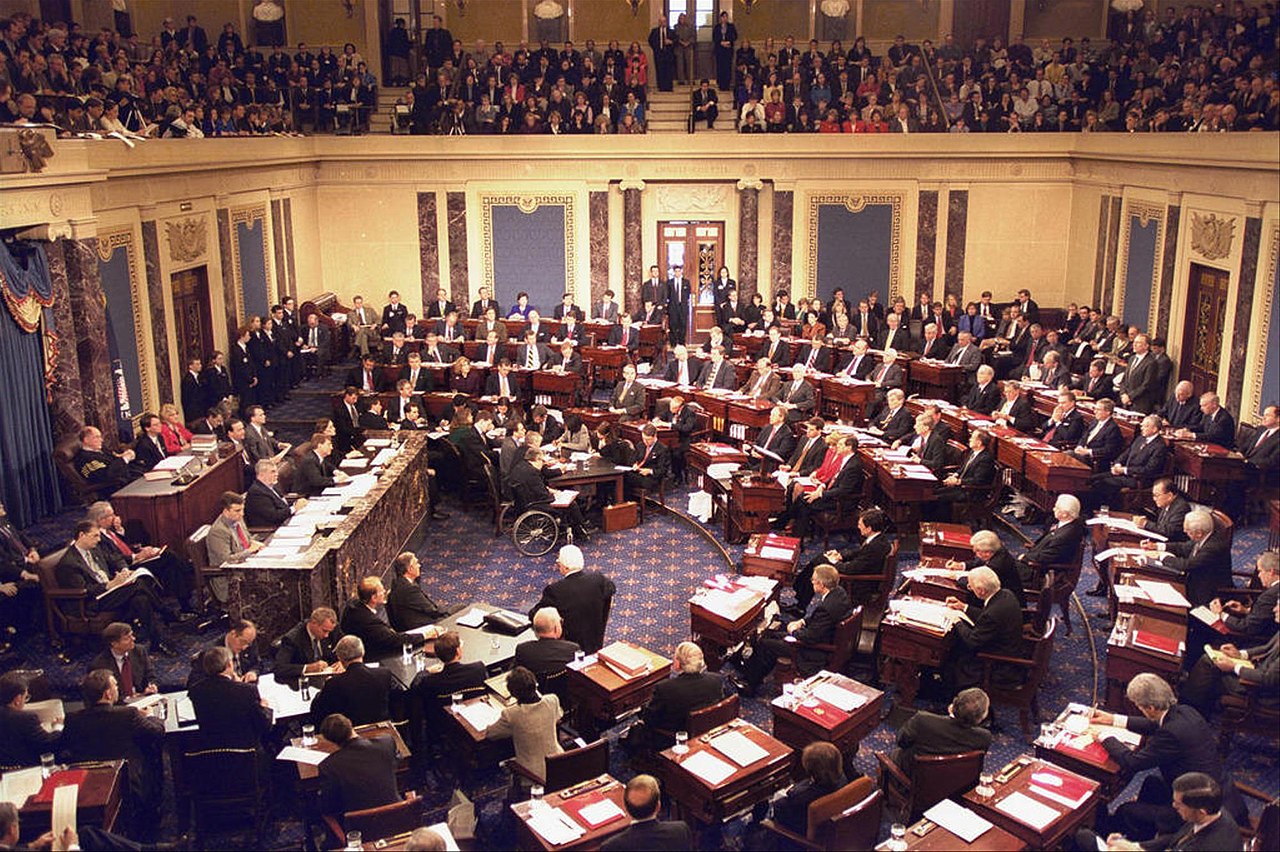



Background and origins
The controversy arose from a civil lawsuit filed by Paula Jones, and from related allegations about President Clinton's conduct and testimony. Questions about whether the president gave truthful statements and whether actions were taken to influence witnesses became central to the inquiry. Public attention focused on the legal standards for impeachable conduct and on how a president's private behavior relates to official duties.
Charges considered
The House considered multiple possible grounds for impeachment. Two articles were approved by the full chamber and sent to the Senate for trial. These articles alleged:
- Perjury—claims that the president made false statements under oath during legal proceedings and depositions, a matter addressed in testimony and documentary evidence.
- Obstruction of justice—allegations that steps were taken to impede investigations or the administration of justice related to the underlying civil case and other inquiries.
These allegations were the focus of debate over whether they met the Constitution's standard of "high crimes and misdemeanors." The House vote made Clinton the second U.S. president ever impeached.
House proceedings and votes
Impeachment proceedings were conducted by committees and then by the full House of Representatives. Committees held hearings, gathered evidence, and debated which articles to recommend. After committee reports and floor debate, the articles of impeachment were approved by the House, with the formal transmission to the Senate initiating a trial. The process involved legal counsel, evidentiary matters, and political maneuvering within and between parties.
Senate trial and acquittal
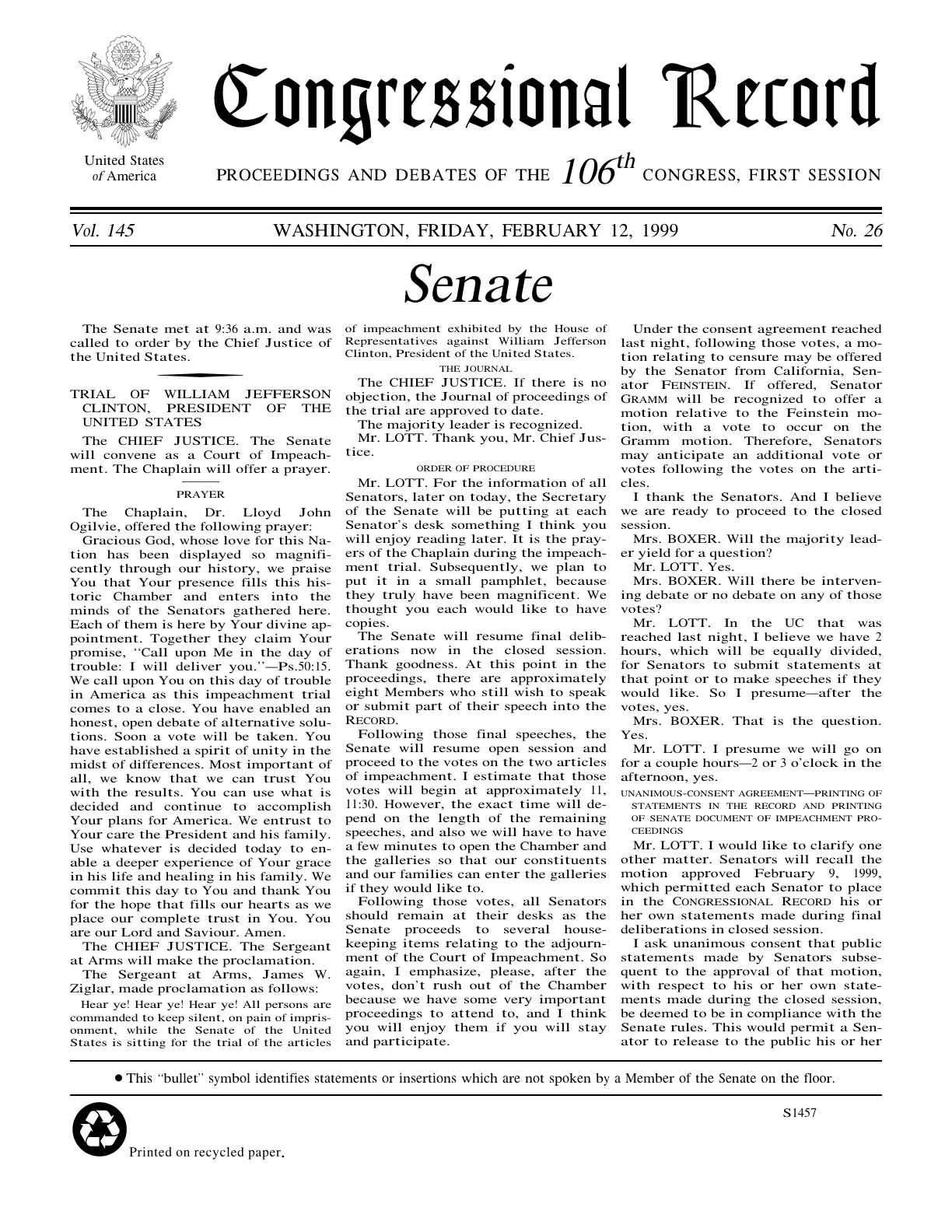
The Senate established procedures for trying the president, heard arguments from managers appointed by the House and from the president's counsel, and considered testimony and exhibits. To remove a president from office requires a two-thirds majority in the Senate, a threshold not reached in this case. On February 12, 1999, the Senate voted to acquit the president on both the perjury and the obstruction charges. As a result, he completed his elected term as the 42nd President.
Historical context and significance
Clinton's impeachment was only the second successful impeachment by the House in U.S. history; the first was that of Andrew Johnson in 1868. The episode stimulated debate about the proper role of impeachment, the relationship between personal misconduct and public office, and the interaction between legal processes and political accountability. It also influenced later discussions about presidential investigations, standards for testimony under oath, and the conduct of congressional oversight.
Notable participants and legal points
Key individuals involved included the president, the complainant Paula Jones, members of the House who pursued the case, and senators who judged it. Legal issues raised by the proceedings included the meaning of perjury under federal law (perjury), the scope of obstruction of justice statutes, the evidentiary standards used in congressional trials, and the precedents for when impeachment is appropriate. Observers have continued to study and debate those questions in subsequent years.
Aftermath and public response
Public reaction was deeply divided, with opinion polls and media commentary reflecting partisan and cultural cleavages. While the Senate's acquittal allowed the president to remain in office, the impeachment left a lasting imprint on American politics and on how future allegations of presidential misconduct would be handled. The procedures and arguments from 1998–1999 remain a reference point for later inquiries into presidential behavior and for discussions about checks and balances in the U.S. system.
For summaries and primary documents, see materials compiled by congressional offices and legal commentators. Further reading can be found through institutional and academic sources that analyze the legal and political dimensions of the case. For details about the chambers involved, see the House and the Senate. For biographical and historical context, see resources on Bill Clinton and the presidency, and on earlier impeachments such as Andrew Johnson.
Related topics include constitutional impeachment provisions, standards for removal from office, and the interplay between civil litigation and criminal or congressional investigations—issues that were central to debates over the impeachment and remain relevant to discussions of presidential accountability.
Related articles
Author
AlegsaOnline.com Impeachment of Bill Clinton Leandro Alegsa
URL: https://en.alegsaonline.com/art/46873
Sources
- openscholarship.wustl.edu : "The Trial of Queen Caroline and the Impeachment of President Clinton: Law As a Weapon for Political Reform"
- worldcat.org : 1546-6981
- washingtonpost.com : "The Senate Acquits President Clinton"
- clerk.house.gov : "Final vote results for roll call 543" · web.archive.org
- clerk.house.gov : "Final vote results for roll call 544" · web.archive.org
- clerk.house.gov : "Final vote results for roll call 545" · web.archive.org
- clerk.house.gov : "Final vote results for roll call 546" · web.archive.org