
Table (furniture)
A table is a flat-topped piece of furniture supported by legs or a pedestal, used for dining, work, display and many other activities; it varies in form, material and cultural meaning worldwide.
Overview
A table is a piece of furniture with a flat horizontal surface supported by one or more legs or a central column. Its basic purpose is to hold objects at a convenient height: during a meal it holds food, knives and forks, while at other times it may carry books, maps, tools or decorative items. Tables are found in private homes, workplaces, restaurants and public spaces, and they serve practical, social and symbolic roles.
Image gallery
10 Images


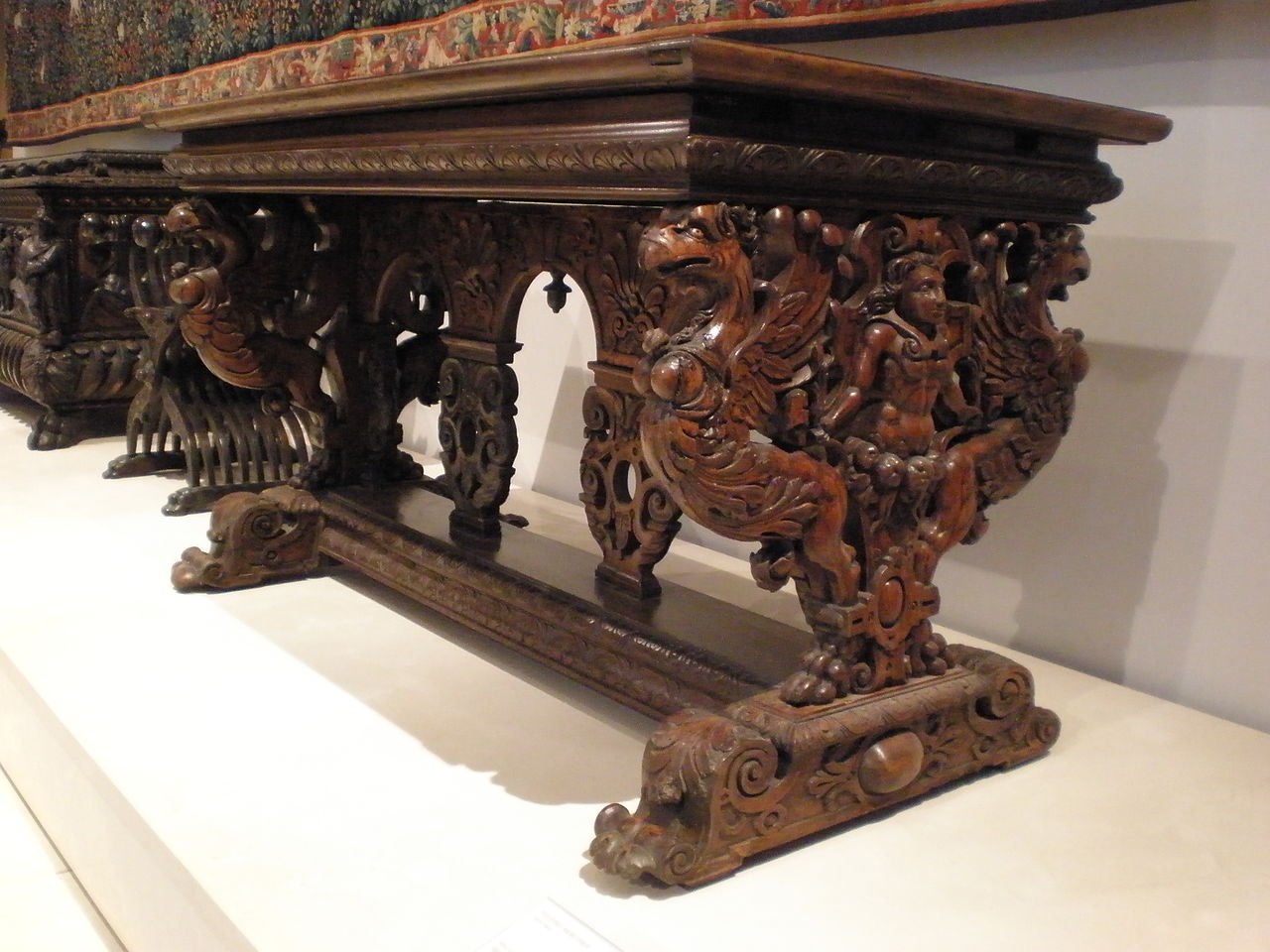


Design and components
Most tables have a top or tabletop, supports (legs or a pedestal), and often an apron or frame to increase rigidity. Tabletops are produced from solid wood, plywood with a veneer, glass, stone, metal, laminate or engineered composites. Functional additions include extending leaves for larger seating, folding mechanisms for storage or transport, drawers and shelves for storage, casters for mobility, and built-in features such as power outlets or cable management for desks. Some round designs include a rotating tray known as a Lazy Susan, often used on round dining tops.
Common types and typical uses
Tables are classified by use and form. Common types include dining tables, coffee tables, side or end tables, desks and worktables, console tables, and specialized pieces such as drafting tables or sewing tables. Outdoor variants include picnic tables and patio sets. Portable and folding tables are employed for events, camping and travel, and smaller folding trays are used on trains and planes for convenience. A worktable often accommodates a computer and writing implements like paper, while hobbyists may use benches for crafts and model-making related to hobbies.
Sizes, proportions and standards
Tables vary in height and proportion according to purpose: dining tables are typically higher than coffee tables to allow comfortable seating, while low tables such as the Japanese chabudai are used with floor seating for tea and meals. The choice of tabletop area depends on seating capacity and intended activities; large conference tables support meetings and display needs, while small side tables provide temporary surfaces for drinks or a lamp.
History and cultural variations
Tables have ancient origins and developed in different forms across cultures. In many societies the table evolved from simple platforms used for food preparation and trade into specialized furnishings for dining, writing and ceremony. Social customs influence setting and arrangement: formal place settings, cloths and serving rituals reflect local etiquette. The Latin word mensa (table) survives in modern names such as the society Mensa, which adopted the term as a metaphor for a round table of equals.
Care, maintenance and sustainability
Appropriate care depends on material. Wood benefits from regular cleaning, waxing or oiling and protection from moisture and extreme temperatures; stone surfaces may need sealing; glass requires frequent wiping to remove smudges; metal can be prone to corrosion and may be protected by coatings. Use of placemats and tablecloths preserves finishes during meals and craft work. Contemporary manufacturing also emphasises sustainable materials and reuse: reclaimed wood, low-emission composites and modular designs extend service life and reduce environmental impact.
Practical considerations and social uses
Choosing a table involves matching surface area, height, shape and material to intended uses. Rectangular tables suit linear seating arrangements, while round tables encourage conversation. Some designs expand with leaves to host larger gatherings. Tables are central to many organized activities—meetings, study, crafts and games—providing a shared surface for collaboration. They also function as display surfaces in retail and exhibition settings and serve symbolic roles in governance and ceremony as focal points for discussion.
Manufacture, repair and modification
Construction ranges from hand-crafted joinery to industrial production. Common joinery includes mortise-and-tenon, dowels and metal fasteners; finishes are applied for appearance and protection. Repairing a table may involve gluing loose joints, replacing or refinishing tops, reattaching legs or replacing hardware. Many tables are designed to be modified or upgraded—adding a leaf, swapping a top, or fitting casters for mobility—which extends their usefulness across changing needs.
Notes and everyday examples
At home a table may hold dinner settings, a cup of tea or coffee, or be the temporary resting place for keys and mail. In offices desks hold documents and electronic devices, while in public spaces benches and tables support communal activities. Maps and plans are often spread on tabletops for shared viewing, and small work surfaces are valued in travel and recreational settings. The table’s combination of simple geometry and versatile function explains its ubiquity and continuing reinvention in design and craft.
For further practical information on selection and care see sources about leg types, tabletop materials, folding mechanisms and cultural variations in dining and display. Additional resources on travel furniture and portable surfaces describe solutions for trains, planes and camping, and many hobbyist communities discuss specialized benches for crafts and modelmaking.
Questions and answers
Q: What is a table?
A: A table is a piece of furniture with a flat top supported by one or more legs.
Q: What do we put on tables?
A: We put things on tables for both short and long periods of time, such as food, drinks, books, writing paper, decorations and electronics like TVs and computers.
Q: How can we make some tables bigger?
A: Some tables can be made bigger by pulling the top out.
Q: How do we transport some tables?
A: Some tables can be folded to make them easier to transport, such as for camping.
Q: What are small tables in trains and planes called?
A: Small tables in trains and planes are often foldable or openable.
Q: What is a Lazy Susan?
A: A Lazy Susan is a rotating piece of wood in the center of a round table.
Q: What is an outdoor table called?
A: An outdoor table is called a picnic table.
Q: Where does the name Mensa come from?
A: The name Mensa comes from the Latin word for 'table'.
Author
AlegsaOnline.com Table (furniture) Leandro Alegsa
URL: https://en.alegsaonline.com/art/95796
Sources
- commons.wikimedia.org : Tables