
Centipede
Centipedes (class Chilopoda) are elongated, many-legged predators found worldwide. This article covers their anatomy, behavior, ecology, relationship to millipedes, and interactions with people.
Centipedes are terrestrial arthropods in the class Chilopoda, recognized by elongated, segmented bodies and numerous legs. They are predominantly predators that hunt small invertebrates and are mostly active at night. There are roughly eight thousand described species worldwide, occupying leaf litter, soil, under stones and logs, and sometimes homes. Many centipedes possess venom delivered through modified front limbs to subdue prey; bites to humans are usually painful but seldom life‑threatening except in rare allergic cases (venom and effects).
Image gallery
10 Images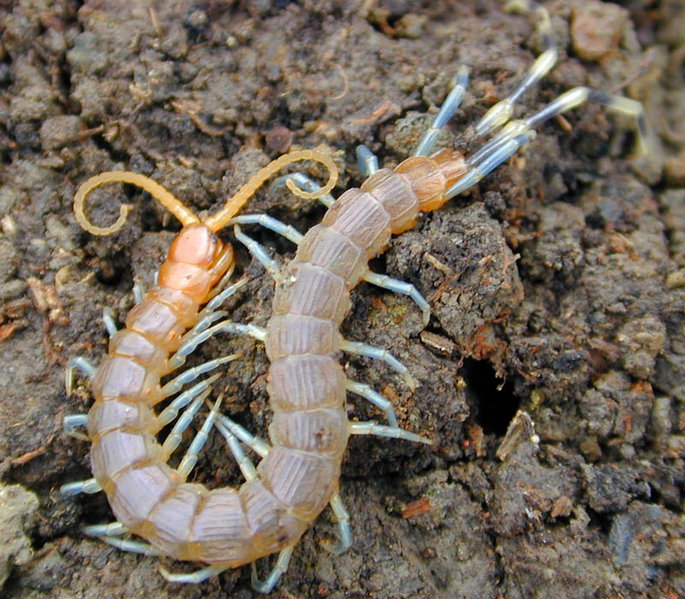






Physical characteristics
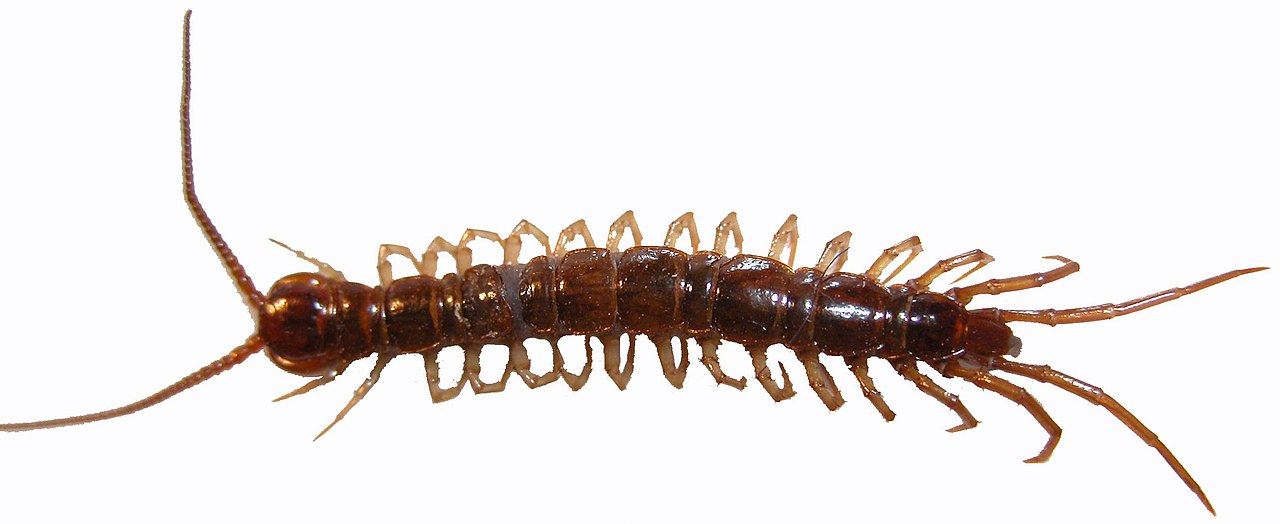
Centipedes have a flattened or slightly rounded body made of multiple segments. Unlike millipedes, which have two pairs of legs per double-segment, centipedes bear one pair of legs per body segment and tend to be faster-moving. The first pair of limbs is modified into pincer-like forcipules that inject venom. Other common features include a pair of antennae on the head, simple eyes or ocelli on many species, and a muscular trunk suited for quick bursts of movement. For comparison with their relatives, see millipedes and differences.
Behavior and diet
Most centipedes are nocturnal hunters that feed on insects, spiders and other small arthropods. They rely on speed, sensory antennae and venomous forcipules to capture and immobilize prey. Some larger tropical species can take small vertebrates, such as lizards or frogs. The common house centipede (Scutigera coleoptrata) is a familiar example: it is an efficient carnivore that preys on common household pests, including cockroaches, house flies and other domestic pests, and so can be considered beneficial despite its unsettling appearance.
Habitat, distribution and life history
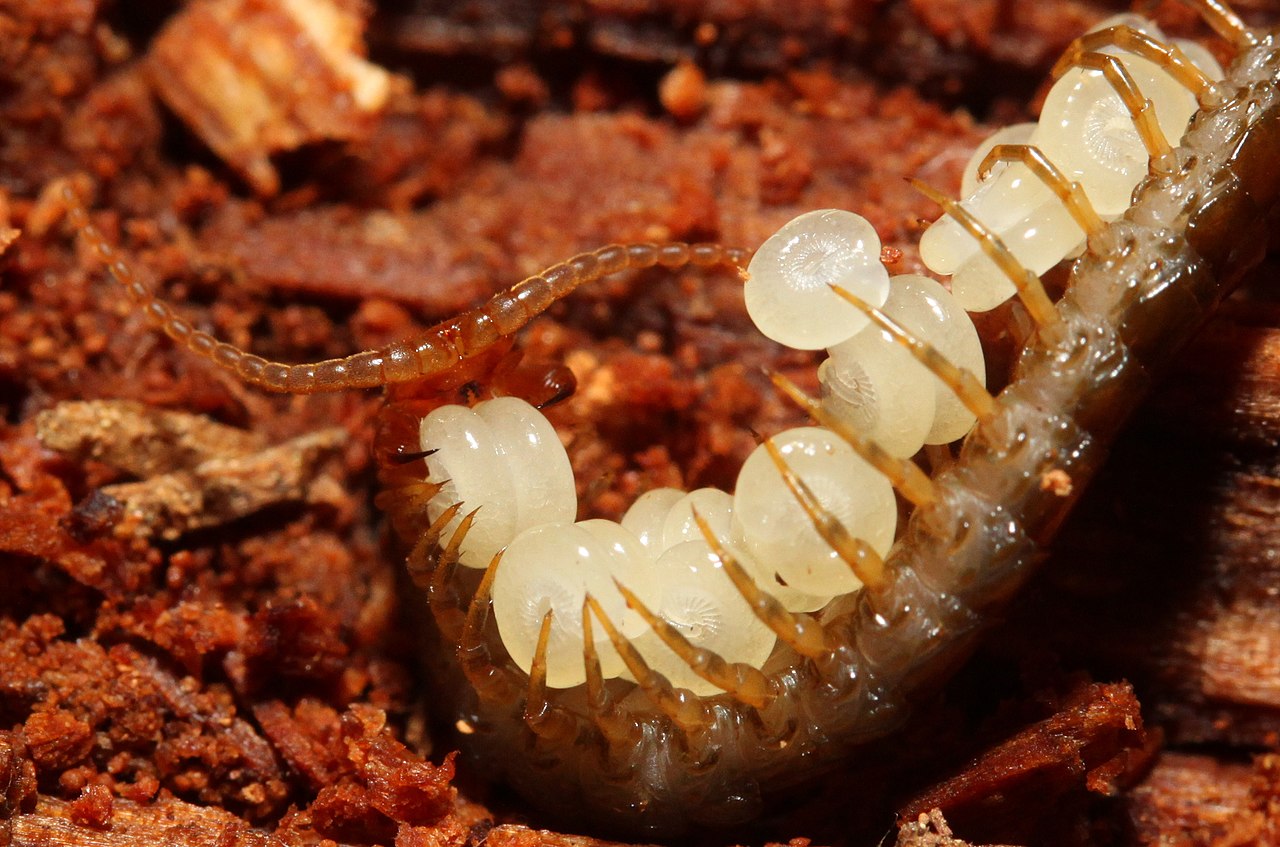
Centipedes are distributed globally except in the coldest polar regions. They favor moist microhabitats because they are prone to desiccation. Reproduction varies among groups, from direct egg-laying in soil to more elaborate behaviours where parents guard eggs. Young centipedes hatch with fewer segments and add segments and legs through successive molts. Lifespans range from a single year in small species to several years in larger ones.
Ecological role and human interactions
As predators of insects and other invertebrates, centipedes play an important role in controlling pest populations and in the balance of soil and litter ecosystems. They are often misunderstood because their many legs and rapid movements can be alarming to people; consequently, centipedes found indoors are sometimes killed even though they reduce numbers of nuisance pests. Most bites are minor, causing localized pain and swelling; severe medical reactions are uncommon but possible, especially in allergic individuals (see effects).
Notable facts
- Centipedes are separate from millipedes: centipedes are mainly carnivorous and have one pair of legs per segment, while millipedes are generally detritivores with two pairs per double-segment.
- They have existed for hundreds of millions of years and are among the earliest known terrestrial predators.
- House centipedes, though unwelcome by many, can reduce indoor pest populations and are part of household ecosystems (house centipede information).
For further reading and resources, consult specialist sources and field guides that cover local species, safety around venomous bites and the ecological importance of centipedes in your region.
Related articles
Author
AlegsaOnline.com Centipede Leandro Alegsa
URL: https://en.alegsaonline.com/art/17994
Sources
- commons.wikimedia.org : Chilopoda
- wikidata.org : Q43447
- species.wikimedia.org : Chilopoda
- animaldiversity.org : Chilopoda
- bugguide.net : 20
- eol.org : 576
- gd.eppo.int : 1CHILC
- eu-nomen.eu : 11598
- fauna-eu.org : cfb2a34c-02db-456e-9df7-e54ae2db0e9c
- fossilworks.org : 205077
- gbif.org : 360
- inaturalist.org : 49556
- irmng.org : 1272
- itis.gov : 154400
- ncbi.nlm.nih.gov : 7540