
Leptospira — spirochete bacteria that cause leptospirosis
Leptospira is a genus of thin, motile spirochete bacteria found in water, soil and animal hosts. Some species cause leptospirosis, a zoonotic disease ranging from mild to life‑threatening illness.
Overview
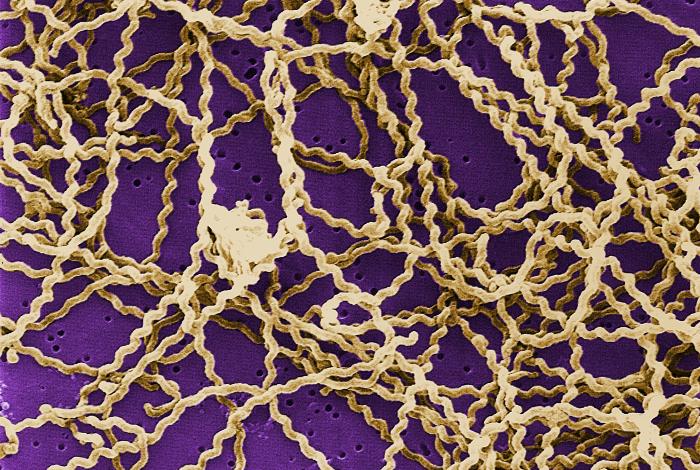
Leptospira is a genus of helical, highly motile bacteria known as spirochetes. Members of the genus occur both as free‑living organisms in the environment and as parasites of animals. Several Leptospira species are pathogenic for humans and other mammals and are the causative agents of leptospirosis, a zoonotic illness with a broad spectrum of clinical presentations.
Image gallery
3 Images

Characteristics
Leptospires are long, thin cells with a tight spiral shape and internal flagella (endoflagella) that produce a characteristic corkscrew motion. They are Gram‑negative in general cell envelope structure and do not stain well with standard Gram methods. Leptospira are aerobic and typically require specialized culture media for growth in the laboratory. Molecular taxonomy has clarified the genus into pathogenic, intermediate and saprophytic groups; studies have identified numerous named pathogenic species and several undescribed strains.
Ecology and reservoirs
These bacteria survive for extended periods in warm, moist environments such as fresh water, wet soil and mud. Many mammal species—particularly rodents, livestock, dogs and wildlife—act as reservoir hosts, carrying leptospires in the kidneys and shedding them in urine without necessarily showing disease. Human infection usually occurs through direct contact with contaminated water or soil, or through exposure to infected animals or their bodily fluids.
Transmission and risk factors
- Entry of the organism is commonly via cuts or abrasions in skin, or across mucous membranes (eyes, nose, mouth).
- Risk increases in tropical, flood‑prone, agricultural or periurban environments where contaminated water is common.
- Occupational and recreational exposures—such as farming, sewage work, or freshwater sports—are recognized risk settings.
Clinical disease and importance
Leptospirosis produces a wide range of symptoms. Many infections are mild or asymptomatic. When symptomatic, the illness can begin with fever, severe headache, chills, muscle aches and vomiting. It may progress to involve jaundice with yellowing of skin and eyes, kidney dysfunction, bleeding tendencies, red eyes, abdominal pain, diarrhea or a rash. Severe forms—historically called Weil's disease—can include liver and renal failure, pulmonary hemorrhage and shock, and may be life‑threatening if untreated.
Diagnosis and management
Diagnosis is based on clinical suspicion supported by laboratory testing. Methods include serologic assays (for example, microscopic agglutination tests), nucleic acid detection by PCR and, less commonly, culture from blood or urine in specialized media. Prompt antibiotic therapy (commonly doxycycline or penicillin derivatives, depending on clinical circumstances) and supportive care reduce complications and mortality. Preventive measures for humans focus on avoiding contaminated water, protective clothing and, in some settings, prophylactic antibiotics for high‑risk exposures.
Prevention, control and public health
Control of leptospirosis emphasizes reducing animal reservoirs and environmental contamination: rodent control, vaccination of domestic animals, improved sanitation and safe water management are central strategies. Public‑health surveillance and outbreak response are important in flood situations and areas with poor infrastructure. Research into diagnostics, vaccines and the ecology of Leptospira continues to inform prevention programs.
History and research
Leptospira have been recognized for more than a century as agents of a severe febrile illness; the severe form associated with liver and kidney involvement is commonly referred to as Weil's disease. Modern molecular methods have refined classification within the genus and improved understanding of host range and pathogenic mechanisms. Public health agencies and research laboratories study Leptospira to improve diagnosis, treatment and prevention; authoritative information is available from organizations such as the CDC and national public‑health institutions (further resources).
Related articles
Author
AlegsaOnline.com Leptospira — spirochete bacteria that cause leptospirosis Leandro Alegsa
URL: https://en.alegsaonline.com/art/57283