
Lalande 21185 — nearby red dwarf in Ursa Major
Lalande 21185 (Gliese 411) is a nearby M-type red dwarf about 8.31 light‑years away in Ursa Major. It is too faint to see unaided and is frequently studied for its proximity, motion and potential companions.
Overview
Lalande 21185 (also catalogued as BD+36 2147, Gliese 411 and HD 95735) is a nearby red dwarf star in the northern constellation Ursa Major. With an apparent visual magnitude near 7 it is too faint to be seen without optical aid but is a common target for small telescopes and study by astronomical surveys. At a measured distance of approximately 8.31 light‑years (about 2.55 parsecs), it ranks among the closest stellar neighbors to the Sun.
Image gallery
6 Images

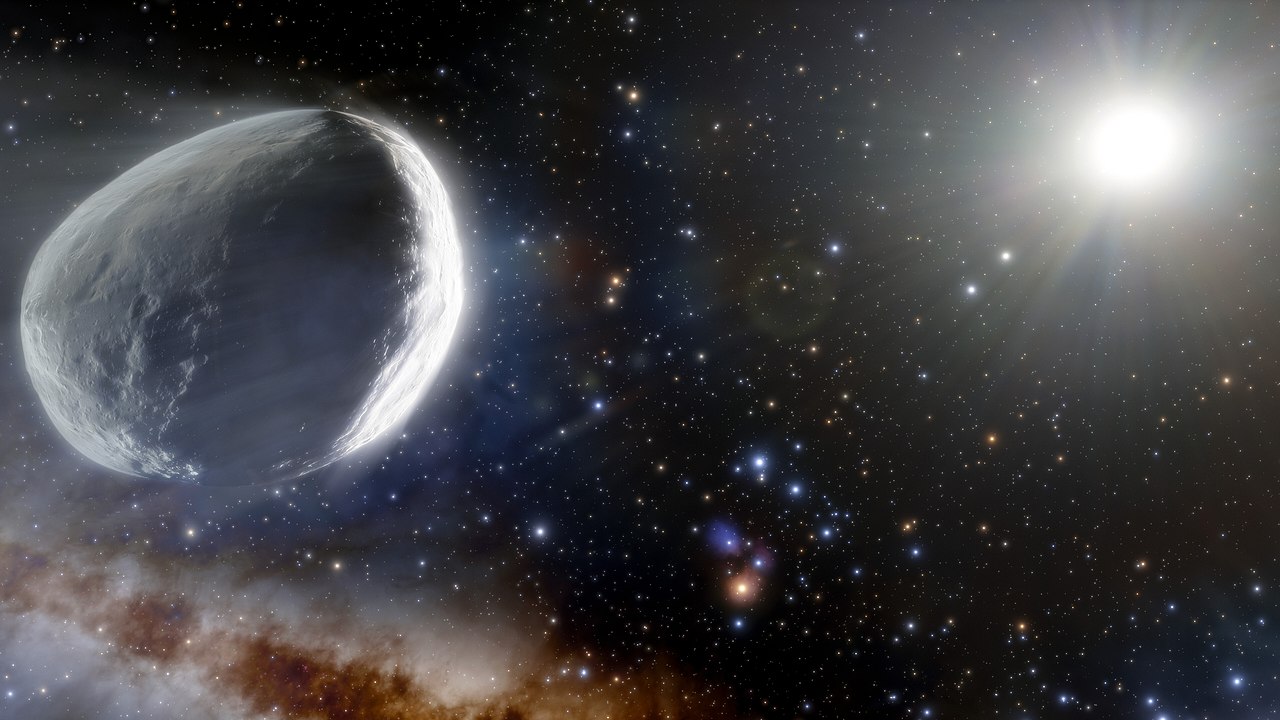



Physical characteristics
Lalande 21185 is a cool, low‑mass main‑sequence star of spectral type commonly listed among M‑class dwarfs. It emits most of its energy at red and infrared wavelengths and has a surface temperature substantially lower than the Sun's. The star’s radius and mass are a fraction of solar values (typical estimates place such M dwarfs at a few tenths of a solar mass and radius) and its total luminosity is only a few percent of the Sun’s output. These properties make nearby M dwarfs faint in visible light despite their proximity.
Proper motion and distance
The star exhibits high proper motion — a relatively fast apparent motion across the sky compared with more distant background stars — which historically helped establish its proximity. Because it is one of the nearest stellar systems it has been included in many catalogs and surveys of the local neighborhood, including lists of the closest stellar systems to the Sun.
Observation and cataloguing
The name Lalande 21185 reflects the star’s listing in the catalogue of the French astronomer Jérôme Lalande. Other widely used identifiers include its entries in the Gliese catalog (Gliese 411) and in various modern surveys. Amateur and professional observers benefit from its relatively northern declination, which makes it accessible from mid‑northern latitudes.
Activity and variability
Like many M dwarfs, Lalande 21185 shows magnetic activity at levels that have been studied with spectroscopic and photometric observations. Chromospheric emission and occasional flaring are phenomena that astronomers monitor to learn about magnetic cycles, stellar rotation, and the impact of activity on potential close‑in planets. The star’s activity level and variability are important when interpreting radial‑velocity and transit measurements.
Searches for planets and companions
Because of its proximity, Lalande 21185 has been the subject of repeated radial‑velocity, astrometric and photometric searches for planetary companions. Over the years various analyses have reported candidate signals; however, the detection of planets around this star has been debated and refined as new data and techniques became available. At times proposed signals have not been widely accepted as confirmed, and ongoing observations continue to improve constraints on possible planets and low‑mass companions.
Scientific importance
Nearby red dwarfs such as this one are valuable for studies of stellar structure, the physics of low‑mass stars, and the architecture of planetary systems around small stars. Their proximity allows relatively precise measurement of parallax, proper motion and spectral properties, and makes them priority targets for high‑precision instruments and surveys searching for small exoplanets and for characterizing stellar activity.
Context within the solar neighborhood
At roughly 8.31 light‑years from the Sun, Lalande 21185 is commonly listed among the nearest stars. It is often given as one of the closest systems, after systems such as Alpha Centauri, Barnard's Star, WISE 1049‑5319 and Wolf 359. Its membership in samples of nearby M dwarfs makes it a regular entry in observational programs mapping the local stellar population.
Practical observing notes
- Location: northern constellation Ursa Major, accessible from northern latitudes.
- Visibility: apparent visual magnitude near 7, visible with small amateur telescopes and binoculars under good conditions.
- Identifiers: BD+36 2147, Gliese 411, HD 95735 and Lalande 21185 in historical catalogs.
Further reading and data sources
Readers interested in the most recent measurements, candidate planet claims, or detailed stellar parameters should consult up‑to‑date catalogs and peer‑reviewed studies, as well as current data releases from astrometric and spectroscopic surveys. General summaries of nearby stars and red‑dwarf research provide useful context for understanding ongoing work on objects such as Lalande 21185 and the broader local stellar neighborhood. See entries on red dwarfs and closest stars for broader context and technical references (red dwarf resources and local‑neighborhood catalogs at observatory and survey pages are particularly relevant).
Related articles
Author
AlegsaOnline.com Lalande 21185 — nearby red dwarf in Ursa Major Leandro Alegsa
URL: https://en.alegsaonline.com/art/55628
Sources
- simbad.u-strasbg.fr : "SIMBAD query result: HD 95735 -- Flare Star"