
Leda (moon of Jupiter)
Leda is a small, irregular prograde moon of Jupiter and a member of the Himalia group. Discovered in 1974, it is non-spherical and probably a captured or collisional fragment sharing similar orbits with related satellites.
Overview
Leda is one of Jupiter's small natural satellites and differs from the large, spherical Galilean moons by being an irregularly shaped, non-spherical body. It is faint and only observable with moderate to large ground-based telescopes using long exposures and careful astrometric techniques. Such non-spherical satellites are typical among the distant, irregular satellite populations of the giant planets.
Image gallery
1 Image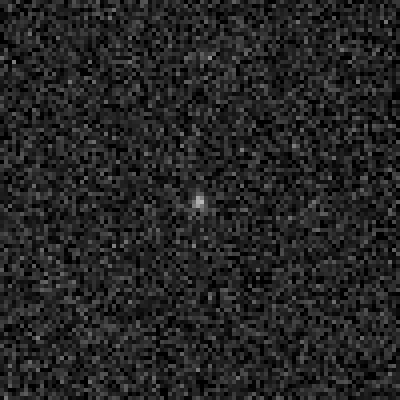
Discovery and naming
Astronomer Charles T. Kowal discovered Leda while working at the Mount Palomar Observatory. He examined photographic plates taken over several nights in September and identified the moving object in images from mid-September 1974; the observing program and site are associated with Mount Palomar Observatory. Kowal proposed the mythological name Leda and the International Astronomical Union accepted it in 1975. The name recalls Leda, a figure in Greek myth linked to Zeus, who in the stories approached her in the form of a swan.
Physical characteristics
Detailed information on Leda's composition and surface is limited because there has been no close spacecraft flyby. From telescopic photometry and comparisons with other small Jovian moons, Leda appears dark and likely rock-rich or carbonaceous, resembling many asteroids and minor satellites. It has low surface gravity and cannot retain an atmosphere; its irregular outline reflects a small size, typically described as ranging from a few to a few tens of kilometres across.
Orbit and group association
Leda follows a prograde, inclined orbit around Jupiter and is classified as a member of the Himalia group. This cluster of five known moons orbits at distances of roughly 11,000,000 to 13,000,000 kilometres from Jupiter and shares an inclination of about 27.5° relative to Jupiter's equator. The similar semimajor axes and inclinations of group members suggest a related history; see the Himalia group for context and notes on orbital inclination.
Origin hypotheses
Scientists consider two principal explanations for Leda's origin. One is that it and its Himalia-group companions are captured objects from the outer Solar System. The other is that they are fragments of a once larger parent body that was captured and later disrupted by a collision. The common orbital characteristics of the group support the collisional-fragment hypothesis, though capture followed by collisional evolution is also plausible.
Observation and research methods
Research on Leda relies on ground-based astrometry to track its orbit and photometry to estimate brightness, rotation, and surface properties. Repeated observations refine orbital elements, which change over time under perturbations from the Sun and other planets. Because Leda is faint, improving detectors and larger telescopes gradually increase the quality of available data, but most detailed knowledge is indirect and comparative rather than from spacecraft imaging.
Relation to other Jovian moons
As Jupiter XIII in older catalogs, Leda is part of a diverse satellite system that includes large regular moons, inner small satellites, and many irregular outer satellites. Studies of Leda and similar bodies help constrain processes of satellite capture, collisional fragmentation, and the dynamical evolution of the Jovian system over the age of the Solar System.
Significance and future study
Although small, Leda contributes to the broader picture of how planetary satellite systems form and evolve. Future observational campaigns may measure its rotation period more precisely, detect variations in surface reflectivity, or reveal additional members of its dynamical family. Any spacecraft missions to the outer Jovian system could provide definitive close-up information, but until then Leda remains primarily an object of telescopic study and orbital monitoring.
Notable facts
- Designated Jupiter XIII in older literature and catalogs.
- Discovered from photographic plates; confirmation required comparison of images across nights.
- Associated with the Himalia group, suggesting a possible common origin with other small prograde satellites.
For further reading and aggregated data on observations, surveys and group classification see resources linked to the discovery site and group studies (observatory information, group surveys, shape and photometry).
Related articles
Author
AlegsaOnline.com Leda (moon of Jupiter) Leandro Alegsa
URL: https://en.alegsaonline.com/art/56869
Sources
- adsabs.harvard.edu : "Thirteenth satellite of Jupiter"
- doi.org : 10.1086/316817
- solarviews.com : "Leda Statistics"
- cfa-www.harvard.edu : IAUC 2702: Probable New Satellite of Jupiter
- cfa-www.harvard.edu : "Satellites of Jupiter"